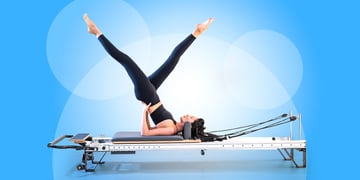
Mat Pilates started during COVID-19 as a way to keep fit. The trend then morphed into Reformer Pilates, which is now becoming a whole lifestyle and status symbol. And there is another new kid on the block: Asian Pilates.
At first glance, it resembled traditional Pilates, with precise attention to form, a focus on core engagement, and mindful breathing. Yet subtle differences soon emerge: Tai Chi-inspired transitions, the incorporation of meridian theory in exercise sequences, and the emphasis on balancing energy alongside physical strength. This is the essence of Asian Pilates — the dynamic fusion between traditional Eastern practices and Western fitness.
The harmony between seemingly disparate traditions is fascinating and begs a deeper dive.
-
Asian Pilates fuses classical Pilates with Eastern movement philosophies.
-
Asian Pilates varies by region and trainer.
-
Asian Pilates suits most people looking for low-impact exercise to improve their mobility, increase core strength, or try something new.
What is Asian Pilates?
Asian Pilates is an evolution of Joseph Pilates’ classical method. It maintains the foundational principles but blends them with Eastern movement philosophies. The fusion integrates local values, knowledge, movement vocabulary, and mind-body practices, resulting in a unique style.
The essential elements of Pilates are: breathwork, precision, control, alignment, and core engagement. In Asian Pilates, these principles are entwined with Tai Chi, Qigong, yoga, and traditional Chinese medicine, resulting in a unique experience focusing not only on strength and flexibility but also on energy flow, balance, mindfulness, and holistic wellness.
Unlike traditional Mat or Reformer Pilates, this variation is less defined, and practices vary greatly between locations and even trainers in the same studio, as each brings their cultural heritage into the blend.
Download the Simple app today and start your wellness journey.

Key differences from traditional Western Pilates
Here are some of the practices that are incorporated into Asian Pilates:
- Eastern movement philosophies. Flowing, circular movements reminiscent of Tai Chi and Qigong are incorporated. They emphasize soft transitions and mindful pacing, rather than cutting from one sequence of movements to the next.
- Energy work and meridian theory. Some classes incorporate traditional Chinese medicine practices, such as working along meridian lines or integrating acupressure, which aim to promote well-being and energy balance alongside physical improvements.
- A holistic mind, body, and spirit focus. All Pilates classes are mindful, but Asian Pilates explicitly focuses on spiritual well-being and connection with the deeper self, encouraging the participant to align their breath, intention, and presence with each session.
Regional variations
Asian Pilates is a very broad term with vast regional variations.
Japanese Pilates often reflects the cultural appreciation for simplicity and ritual, sometimes incorporating elements of Zen meditation or Shin-shin-toitsu-do (unification of mind and body). Studios may offer fusion classes pairing Pilates with yoga, or use wooden props inspired by traditional crafts.
Korean Pilates uses advanced Reformer equipment and focuses on shape and posture, inspired by Korean and K-pop beauty standards. Instructors are known for integrating K-pop music, dynamic sequencing, and even combining Pilates with Korean breathing exercises reminiscent of SunDo or DahnHak yoga.
In China, studios sometimes weave traditional exercises such as Tai Chi and Qigong directly into the flow of Pilates sequences. The focus is on energy cultivation, meridian stretches, and movement for longevity, drawing parallels between Pilates’ emphasis on spinal health and traditional Chinese medicine philosophy.
In countries like Singapore, Thailand, and Malaysia, Pilates is often adapted to the tropical climate and multicultural context. In Southeast Asia, classes usually fuse Pilates elements with yoga, martial arts, and meditation, emphasizing community and inclusivity.
Research-backed benefits of Asian Pilates
There is a lack of research specifically on Asian Pilates, but its benefits generally overlap with those of classical Pilates and Eastern movement practices.

Improved core strength and posture
All types of Pilates are based on core engagement and stability, which results in increased core muscle strength. Pilates also targets the deep core muscles, which are essential for good posture.
However, performing these exercises with proper form is crucial to avoid injury or straining your back.
Increased flexibility and range of motion
Lower-intensity Pilates classes sometimes focus on improving flexibility and mobility. Furthermore, the addition of Tai Chi, Qigong, or yoga-inspired stretches in Asian Pilates further supports flexibility and joint mobility.
A small study found that Pilates twice a week for six weeks significantly improved functional mobility, postural balance, and overall physical activity in healthy older adults.
A meta-analysis found that Qigong, yoga, and Tai Chi may improve balance in people with Parkinson’s. Tai Chi also enhanced functional mobility in people with Parkinson’s and motor function in stroke patients. However, such results should be taken cautiously as study designs had big variations.
No studies have looked into Asian Pilates, but both traditional Pilates and Eastern movement practices are known to improve mobility and flexibility as they involve slow and controlled movements, often outside everyday movement patterns. However, the effect depends on the type of Pilates class, genetics, and adherence. If the class is more taxing, you may need to add additional stretches after or later in the day to reap the full benefits.
Improved balance and coordination
Balance and coordination are the core principles in both traditional Pilates and Eastern movement philosophies. Pilates often involves one-sided sequences that require balancing on one leg while moving your arms or doing leg lifts in a plank position. Tai Chi and yoga also usually require balancing on one leg or even on your head. Naturally, blending all of these demands requires balance and coordination, which improves over time with advancing exercises.
Potential stress reduction
Mindful and controlled breathing is key to both traditional and Asian Pilates. Research shows that breathwork may reduce stress and improve mental well-being.
While Asian Pilates is not the same as meditative breathwork, classes often end with a few minutes of just breathing and thanking yourself for showing up. Also, practicing breathwork while moving may be a good start for beginners or those who find it difficult to keep their minds focused. I found Pilates challenging enough that the only thing I could think about was my breath and the correct posture to perform the movements.
Mind-body connection
Pilates and Eastern movement disciplines demand being in tune with your body and always paying attention to your form, posture, core engagement, and breath. You need to be mentally present and in tune with your body.
Practicing Pilates can help build a mind-body connection that goes beyond the class. In a short time, you will feel yourself engaging your core when lifting something, feeling if some part needs some stretching, whether you need more movement or more rest, and so on.
Low impact
Asian Pilates tends to be low-impact with variable intensity and exercise progression. Most classes are taught by certified trainers or physiotherapists and are safe for beginners, people after trauma, and the elderly, as long as you have not been banned from exercise by your doctor.
Getting started with Asian Pilates
If you are interested in practising Asian Pilates, here’s how to get started:
- Find a studio or a qualified instructor that offers Asian Pilates
- Get the basic equipment if needed (grippy socks, yoga mat)
- Commit to 2–3 sessions weekly for at least a month to track progress
- Evaluate the financial commitment
- Focus on mastering the basic movements first
- Focus on learning proper breathing techniques
The most crucial step is finding a qualified instructor who matches your training style preferences. Do not be afraid to try a few different classes or studios first to find what type of training resonates with you the most. Even the music played in class can make a huge impact.
Who is Asian Pilates for?
Asian Pilates isn’t for a specific group, but some people may find it particularly enjoyable and others less so.
| Ideal candidates | Less suitable for |
| People who prioritize the mind-body connection | People who want maximal strength gains |
| People interested in exploring Eastern movement philosophies | People who wish to have a high-intensity workout |
| Recovery-focused individuals | People who prefer classic Pilates or traditional Eastern movement philosophies |
| People want to improve mobility and flexibility | |
| Sedentary adults | |
| Older adults |
Pilates is sometimes recommended for recovery if you have past injuries, but it is essential to consult with your healthcare team beforehand. The gentle movement that Pilates offers may benefit the older population significantly. Still, again, it is vital to consult with your doctor beforehand and find an instructor who can provide modifications and keep a close eye on your form.
Risks and considerations
Pilates is generally safe for most people, but there are some things to consider.
- Limited research. There is insufficient evidence regarding the safety of doing Pilates with certain medical conditions and the benefits of Asian Pilates.
- Safety and injuries. It is essential to pick appropriate progressions with proper supervision and not sacrifice form and precision for ‘energy work.’
- Cultural considerations. Commercialization or Western interpretation may dilute the traditional principles. The practice may also lack the historical and philosophical context.
- Limited accessibility. Asian Pilates is not yet widely available and may depend on location. The classes may also be costly, hard to get into, or require commuting.
Bottom line
In essence, there is little information and no studies about Asian Pilates. However, both traditional Pilates and Eastern movement philosophy have their own undeniable benefits. When blended together in Asian Pilates, these offer versatility, variability, improved core strength and balance, mind-body coordination, and are low-impact and safe for most age groups.
I would love to try this fusion class; however, the main limitation is that it is not yet widely available. If you have the opportunity to explore it, enjoy lower-impact classes, want to work on your mobility and core strength, or simply try something new, give it a go!
FAQ
Is Asian Pilates harder than traditional Pilates?
Asian Pilates is not necessarily harder than traditional Pilates, but it may contain more flowing transitions or new movements that require some practice.
Is Asian Pilates cultural appropriation?
When taught respectfully by instructors knowledgeable in both Pilates and Eastern movement traditions, Asian Pilates can represent thoughtful cultural exchange rather than appropriation. Look for studios that acknowledge source traditions, avoid exoticizing Eastern practices, and demonstrate a genuine understanding of underlying philosophies.
How does Asian Pilates differ from yoga fusion classes?
Both blend Eastern and Western practices; Asian Pilates maintains Pilates' focus on core strength, precise movements, and controlled breathing patterns, incorporating Eastern elements as complementary features. Yoga fusion typically centers yoga's postures and philosophical system while adding Pilates elements for core engagement.
4 resources
- Muscles, Ligaments and Tendons Journal. Pilates: how does it work and who needs it?
- Journal of Bodywork and Movement Therapies. Six weeks of Pilates improved functional mobility, postural balance, and spatiotemporal parameters of gait to decrease the risk of falls in healthy older adults.
- Complementary Therapies in Medicine. Are movement-based mindful exercises (QIGONG, TAI CHI, AND YOGA) beneficial for stroke and Parkinson’s disease? A scoping review.
- Scientific Reports. Effect of breathwork on stress and mental health: a meta-analysis of randomised-controlled trials.



Your email will not be published. All fields are required.