
Unwanted weight gain during menopause is a familiar struggle for many women. It’s a difficult enough time as it is, full of many emotional and hormonal shifts. And, the addition of stubborn menopause belly fat can feel like yet another mountain to climb during a major life change. This guide will offer some of the latest diet and exercise advice for menopause belly, helping you find the right diet and lifestyle choices to feel confident in your body again.
-
Menopause belly is caused by declining estrogen that shifts fat storage to the abdomen.
-
It’s important to focus on a diet rich in protein, fiber, and healthy fats to help reduce stubborn belly fat.
-
A combination of nutritional support, strength training, and stress management may deliver the best results.
What is menopause belly?
Menopause belly is the term used to describe increased fat around your midsection that occurs during perimenopause and menopause. This type of fat is known as visceral fat, and it settles deep in your abdominal cavity. It’s also hormonally active, which means it can exacerbate already fluctuating hormones. These fluctuations can make perimenopause and menopause symptoms feel like even more of a rollercoaster ride.
As your estrogen levels decline, your body begins to store fat differently. Instead of the subcutaneous fat that you see on your hips and thighs, you’ll notice more being stored in your belly, creating that frustrating and sometimes uncomfortable bulge. Declining estrogen also means that your metabolism slows down and muscle mass decreases, which unfortunately means that you burn fewer calories at rest.
While these changes can often feel like an unfair challenge on top of everything else, it’s really important to stress that menopause belly is a completely normal part of this transition.
Does menopause belly go away?
Shifting menopause belly fat can definitely be somewhat of a challenge, but it’s absolutely possible with the right approach to diet, exercise, and stress management. While I wish I could say there was a magic supplement that could do the hard work for you, the reality is that it will take consistent effort and commitment.
Quick fixes are definitely tempting, but they simply won't work. Managing hormonal changes demands a strategic approach that might require you to restructure some of your old habits. Your body is changing, and it’s asking you to change with it. And, if you can move forward with curiosity, compassion, and commitment, it’s possible that you’ll see positive changes in both your emotional and physical well-being within a few short months.
How to lose menopause belly fat
The following diet and exercise advice offers a simple blueprint so you could approach new lifestyle choices with confidence.
Best diet for menopause belly
- Prioritize protein. Aim for 20–25 grams per meal to maintain muscle mass and stay fuller for longer.
- Load up on fiber. Increasing your daily intake of soluble fiber may help with belly fat, so aim for at least 25 grams every day.
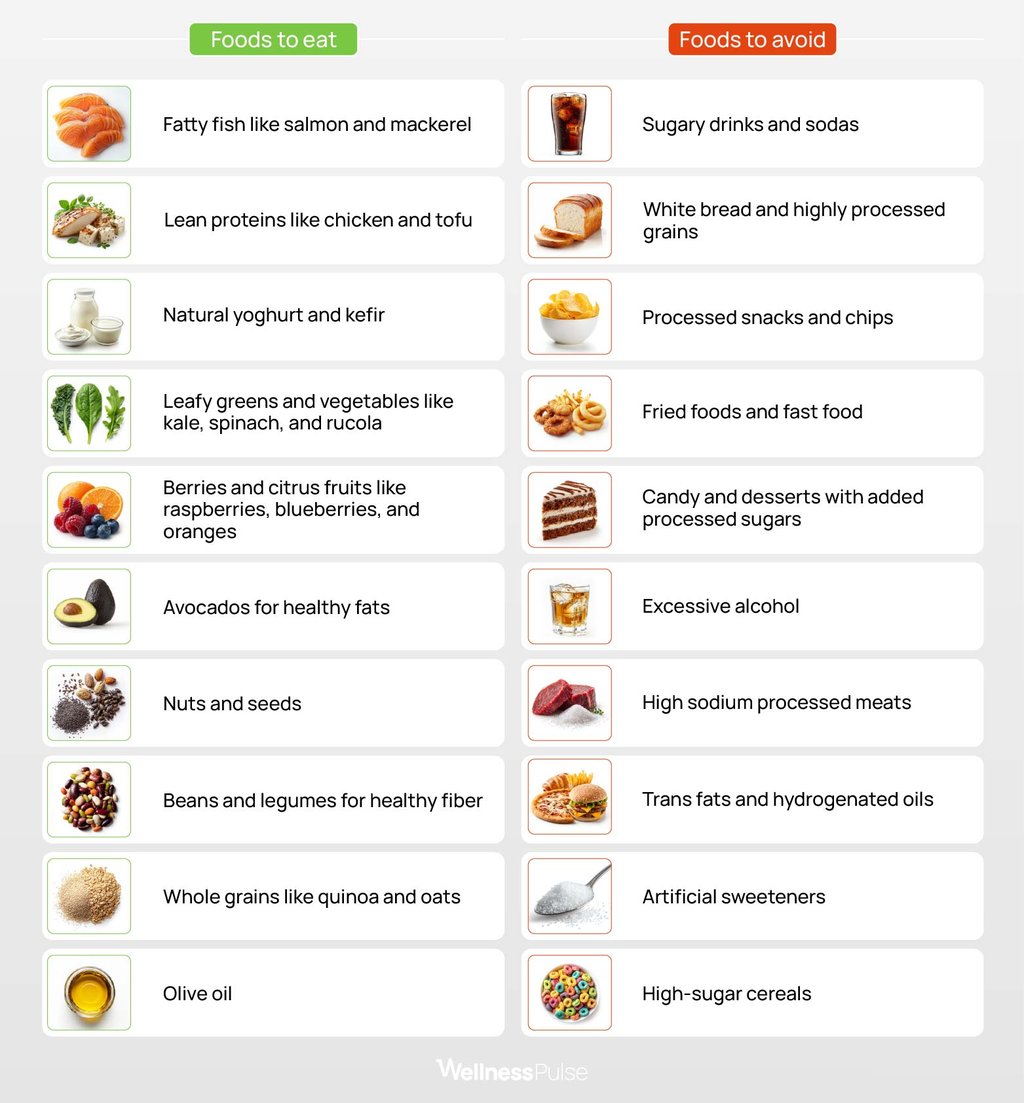
- Choose healthy fats. Omega-3s in salmon, walnuts, and flaxseeds lower inflammation and support healthy cortisol levels while improving insulin sensitivity.
- Cut out the added sugars. Limit your sugar intake by avoiding sugary drinks, processed snacks, and desserts. Choose fresh fruits when you get the craving for something sweet.
Foods to eat vs. foods to avoid
The table below offers an easy-to-follow guide on the best foods to eat and avoid during perimenopause and menopause. You’ll find proteins, sources of fiber, and healthy fats to support your body through this enormous change.
Best exercises to flatten menopause belly
The following exercises may work well in combination with dietary adjustments and help make the most out of your approach to feeling confident in your changing body.
Strength training
Lifting weights or using resistance bands helps build and maintain that all-important muscle mass, which can decline as estrogen decreases. Aim for 2–3 training sessions each week, and if you are new to it, start slowly with 10–15 minute workouts. Focus on exercises that work multiple muscle groups, including:
- Squats
- Deadlifts
- Planks
- Push-ups
Remember that more muscle equals more calories burned at rest, which can help counteract the metabolic slowdown that happens during perimenopause and menopause.
Walking or moderate cardio
Research suggests that even around 10 minutes of daily aerobic exercise can lead to smaller waistlines. But, if you want to achieve a more dramatic reduction, you should be aiming for at least 150 minutes of moderate cardio each week. Exercises include:
- Brisk walking
- Swimming
- Cycling
High-intensity interval training (HIIT)
HIIT training involves short bursts of high-intensity exercise, which may help reduce visceral belly fat. Here are some HIIT exercises you can add to your regimen:
- 30 seconds of sprinting, followed by 30 seconds of rest for 10 minutes
- 1 minute of jumping jacks at full intensity, followed by 1 minute of rest for 10 minutes
- Jogging on the spot with high knees for 2 minutes, followed by 1 minute of rest for 10 minutes
Remember that it’s important not to overdo it — excessive intensity can actually raise cortisol levels.
The connection between bloating and cortisol
When you are going through perimenopause and menopause, hormonal fluctuations can exacerbate stress responses, promoting a rise in cortisol. Cortisol is the body’s stress hormone, and too much of it can trigger cravings for sugary and fatty foods, which might make you more prone to abdominal fat storage. Managing stress through meditation, yoga, good sleep hygiene, and mindfulness practices is crucial during this transitional time.
Bloating is also common during menopause and perimenopause and can exacerbate how you feel about the appearance of your midsection. To help with this, you might like to try the following:
- Stay hydrated by drinking 8 glasses of water per day
- Limit your sodium intake
- Avoid carbonated drinks
- Reduce gas-causing foods if you are sensitive to them
- Eat slowly
- Avoid overly large meals
Final thoughts on the menopause belly
Firstly, it's important to honor and respect that your body is going through a monumental and completely natural transition. Having patience and compassion for yourself during this challenging time will go a long way in helping you to feel positive about the journey you are on.
Taking a strategic approach with a balanced diet, strength training, cardio, and stress management could make a real difference to your mental and physical well-being. Focus on health over ideals and notions of perfection. Remember, you are working toward feeling strong, energized, and confident as your body shifts into a new phase.
FAQ
What does menopause belly look like?
Menopause belly looks like an increase of fat around the midsection of your body, creating a rounder appearance. The visceral fat settles deep in the abdominal area, giving a protruding or bloated look even in women who previously had totally flat stomachs.
How do I get rid of my menopause belly?
A combined approach is needed to tackle the stubborn visceral fat associated with menopause belly. This includes a healthy diet with plenty of protein and fiber, strength training and cardio, and stress management techniques. You should also aim for 7–9 hours of quality sleep each night for the best results.
Is there a link between menopause belly and cortisol?
Yes, cortisol levels may rise during menopause. And, unfortunately, high cortisol can promote abdominal fat storage. Chronic stress also keeps cortisol elevated, which can increase your appetite, cravings for unhealthy foods, and visceral fat accumulation. Stress reduction techniques like meditation, gentle yoga, walking in nature, and mindfulness practices may help bring you into a more relaxed state.
3 resources
- JAMA. Aerobic exercise and weight loss in adults
- Journal of the Menopause Society. Menopause symptoms and the cortisol response.
- American Journal of Social Sciences and Humanity Research. Age-related hormonal changes and their impact on psychophysiological state.





Your email will not be published. All fields are required.