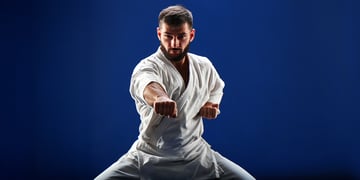
The popularity of boxing and combat sports is expanding rapidly, and it’s not just those with black belt aspirations who are joining the action. With increased access to novel fitness sessions incorporating martial arts and self-defense, more people are discovering the benefits of training like a fighter. But what exactly are martial movement, body combat, and self-defense workouts?
In this guide, we’ll explore these different training styles and help you find the right approach for your current fitness level and future goals.
-
Martial movement is a type of exercise that blends classical martial arts with modern fitness techniques. The aim is to improve flexibility, mobility, discipline, and overall body control through structured training programs.
-
Body combat and self-defense workouts offer high-intensity exercise with benefits for your cardiovascular system, strength, and coordination.
-
Each different training approach offers a different perspective. Martial movement emphasizes foundational skills, combat training aims to build athletic performance, and self-defense workouts focus on practical protective techniques.
What is martial movement, and why does it matter?
Martial movement style workouts combine the fundamental movements found in traditional martial arts disciplines with more modern fitness exercises. At its core, this type of workout places emphasis on agility, coordination, and spatial awareness — all of which are essential for both daily functioning and athletic performance.
In general, these training programs include:
- Warm-ups and cool-downs
- Flexibility routines
- Movement and stability exercises
- Martial arts drills and forms
- Practical self-defense techniques
What makes martial-arts-inspired fitness so valuable is the way it focuses on functional training to support our bodies to move more efficiently in any situation. The movement patterns often mirror our real-life activities, like bending, reaching, rotating, and shifting our weight dynamically.
Making sure our bodies can handle dynamic movement is essential if we want to remain physically agile in our later years.
The physical and mental benefits of martial movement training
It’s not only our bodies that benefit from martial-arts-style fitness training, but the mental gains can also be pretty impressive. Traditional martial arts are built on the foundations of discipline and focus, and learning the complex movement patterns requires you to be fully present and engaged. This level of absorption in the movement offers a mindfulness component to the workout, potentially reducing stress and improving mental clarity.
The self-defense aspect of martial movement workouts may also help build your confidence, too. You might notice feeling a stronger sense of empowerment and resilience that extends into other areas of your life.
Body combat vs. self-defense workouts: understanding the difference
While they share many similarities, body combat and self-defense workouts have different primary purposes. Knowing what you need and what to expect from a class can help you make the best choice for your body and your goals.
Body combat: high-intensity martial arts fitness
Most comprehensive gyms now offer a range of classes that include body combat training. These classes tend to be intense, with an emphasis on martial arts techniques blended into a cardio-based workout. The movements originate from boxing, kickboxing, karate, and other disciplines and are fused into choreographed routines, usually set to some thumping music that gets you pumped up and ready to go. Because of the intensity and the speed of the classes, it can be a great way to switch off from a busy mind — there literally isn't the time to think, making it an excellent stress reliever.
The way a body combat style class is structured is similar to high-intensity interval training (HIIT). You’ll go through alternating bursts of powerful activity and brief recovery periods, making it an excellent workout for burning fat and improving cardiovascular fitness. It’s the combination of aerobic exercise and resistance from your own bodyweight that creates an efficient fat-burning environment.
During a typical session, you might burn anywhere between 300 to 600 calories. Of course, this will depend on your body composition and the effort you put in, but if you attend classes regularly, your fitness levels will rise, and your calorie burn will increase, too.
Self-defense workouts: practical skills for real situations
Where body combat puts its full focus on fitness and athletic performance, self-defense training lasers in on practical techniques you can use in a threatening situation while also giving you an excellent workout.
In a self-defense training class, you can expect to cover the following:
- Situational awareness drills
- Escape techniques
- Fundamentals of striking
- Practical defense scenarios
Practising these movements regularly might help you improve your reaction times, find better balance and stability, as well as build your confidence.
I take these classes regularly, and I find that they’ve given me the opportunity to develop a functional strength that transfers to real-life situations. I’ve also noticed how quick my reflexes are, how much more toned and conditioned my body has become, and there’s a lot more explosive energy behind my movements.
Choosing your training path: which approach is right for you?
Because of the rise in demand for combat sports training, many martial arts schools are integrating high-performance strength and conditioning into their classes. And, a lot of gyms will employ trained martial artists to come and run classes for their members. As well as the discipline of committing to learning martial arts forms, according to this 2025 study, you’ll get the benefit of better body composition and improved cardiovascular endurance.
The table below gives you a breakdown of how the three different approaches compare:
| Training type | Main focus | Key benefits | Best for |
| Martial movement | Body control, mobility, foundational movement precision | Flexibility, balance, functional fitness, injury prevention | Beginners, injury recovery, and those who want to improve daily movement |
| Body combat training | High-intensity fitness blended with martial arts techniques | Calorie burning, cardiovascular endurance, full-body conditioning, stress relief | People who like working out in groups, intense workouts, weight loss |
| Self-defense workouts | Practical protective techniques and practice for real-world scenarios | Personal safety skills, confidence, mental preparedness, functional strength | Anyone with personal safety concerns who wants to combine practical skills with fitness |
Choosing what feels right for you really comes down to your personal preferences and goals. Martial movement and self-defense workouts tend to be held in smaller classes or with a private instructor, whereas body combat is usually in a room full of other fitness enthusiasts.
If you know it’s something you are interested in but aren’t sure where to start, you could try attending a self-defense day-long workshop to see if you like it. Or, build your foundations with martial movement before progressing to an intense combat workout. The most important thing is that you listen to your body and don’t push yourself too hard, too fast.
Final thoughts on martial-arts-inspired workouts
I find that combat sports and martial arts-inspired workouts offer compelling alternatives to standard gym workouts. Although they can be really tough, they are much more stimulating for body and mind than lifting weights in the corner of a gym by yourself. It’s the combination of physical conditioning, developing new practical skills, and mental discipline that gives these classes the edge for me.
Plus, there’s also some research suggesting they might help with improving mental health. They offer a way to not only get fit, but also to become more capable and confident in so many different areas of life.
FAQ
What martial arts are similar to kickboxing?
The closest martial art to kickboxing is Muay Thai, which is sometimes referred to as Thai kickboxing. Strong blows with the fists, feet, knees, and elbows are emphasized in both. Savate (French kickboxing), taekwondo for its kicking methods, and karate (particularly full-contact varieties) are other comparable disciplines. Kickboxing and boxing both use basic punching techniques.
Is body combat HIIT or cardio?
Body combat workouts combine cardio and HIIT. The format of these classes is usually high-intensity interval training, with short periods of recovery between powerful bursts of martial arts moves. It is an effective workout that blends the fat-burning advantages of HIIT with cardio endurance training, as the continuously higher heart rate throughout the session also offers cardiovascular benefits.
Is body combat good for beginners?
Body combat workout classes can be very intense, so if you are a complete novice to working out, it would be best to have a conversation with the instructor before joining the class. This will make sure you know what to expect and can let the instructor know your fitness levels and needs for the class. You might also find a gym nearby that offers different levels so you can progress as your fitness improves.
3 resources
- Exercise and Sports Science Reviews. Using martial arts training as exercise therapy can benefit all ages.
- The Journal of Bodywork and Movement Therapies. The effect of martial arts training on mental health outcomes: a systematic review and meta-analysis.
- Journal of Radiation Research and Applied Sciences. The influence of martial arts training on the body composition and cardiovascular fitness of college students and the medical imaging assessment of arterial stiffness.






Your email will not be published. All fields are required.