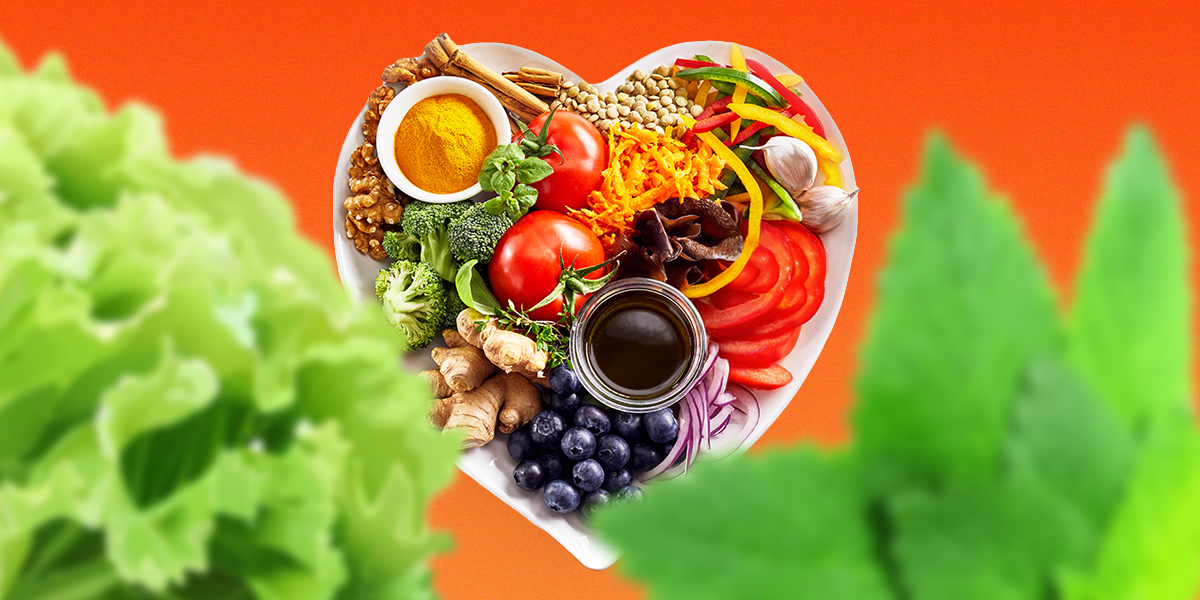
We all know the five-a-day rule for fruits and vegetables, but lately, health educators and enthusiasts have been discussing the 30 plants per week on podcasts, social media, and even the news.
The main benefit is that plant diversity helps support gut microbiome diversity, which, in turn, supports gut health.
Where does this new dietary recommendation come from? Does science back it? How can you increase plant diversity in your diet? Let’s dive into the details.
-
Eating 30 different plants each week has been shown to increase gut microbiome diversity.
-
Gut microbiome diversity has been linked to better health and is primarily shaped by diet and lifestyle.
-
The new goals are 30 plants a week, but adding any variety gradually may be more manageable for some.
Where does 30 plants a week come from?
The 30 plants a week concept for gut diversity and health stems from the American Gut Project, published in 2018, the world's largest investigation into the human microbiome. Scientists from the U.S., the UK, and Australia collaborated to collect detailed information about eating habits and stool samples from over 1,000 volunteers.
After receiving the sample and information about dietary habits, the scientists analyzed how the diversity of the diet influences the microbiome diversity. The analysis showed that volunteers who consumed at least 30 plant foods a week had a more diverse microbiome than those who ate less than 10.
Interestingly, better gut diversity was not associated with vegetarian or vegan diets but rather with the variety of plants consumed over the weeks, even if one ate an omnivorous diet.
I asked Shawn Talbott, who has a PhD in nutrition, whether 30 is really the magic number.
“The ‘30’ target comes from research by the American Gut Project, which has shown that gut microbiome diversity increases with increasing plants in the diet but ‘plateaus’ right around 30 plants (so 30 is ‘better’ than 20 or 25, but 35 isn’t that much better than 30).”
However, it may be better to start adding more plants gradually if you usually do not eat much, to avoid being too overwhelmed.
Diet diversity, gut microbiome, and gut health
Gut microbiome diversity and health play an important role in overall health. Imbalance (dysbiosis) has been linked to various diseases like irritable bowel syndrome, colorectal cancers, diabetes, obesity, cardiovascular disease, and even depression and anxiety.
The health and diversity of the microbiome are primarily determined by diet, but lifestyle and environment play a role, too. Genetics has little impact on the microbiome, as it is unique for each individual and shaped throughout life.
Talbott says everyone should focus on plant diversity in their diet.
There are very few things that microbiome researchers agree on — but ‘more diversity’ is one of them. We know that a more diverse microbiome is associated with better mental wellness, lower inflammation, stronger immune system, lower body weight, and virtually every aspect of good health, and the best way to increase microbiome diversity is by eating a highly diverse collection of plants.
The American Gut Project revealed that people eating over 30 different types of plants per week had beneficial bacteria such as Faecalibacterium prausnitzii and Oscillospira, which are known for producing anti-inflammatory short-chain fatty acids. These bacteria are also associated with fewer antibiotic resistance genes; however, more research is needed to determine whether there is a causal link. Lastly, having these bacteria in your gut microbiome was linked to a significant difference in fecal metabolites, showing more beneficial byproducts of microbial metabolism.
Talbott explains that plant diversity is essential because “Your gut microbiome has trillions of bacteria comprised of around five to 10,000 different species — and each of those species will thrive on its own type of 'food' (fiber is the main source of nourishment for gut bacteria). So, eating a wide variety of plants provides a wide variety of different fiber types, and thus feeds a wide selection of bacteria.
I do not think 30 is truly the magic number, but it seems high enough yet doable to promote diversity and be a good target each week. It is like the 10,000 steps a day goal. It is a healthy goal to use as a target, but one day you may get seven and another day you may get 12. So, it's the same with plants — if you are sick or away on a trip without much variety, that is okay, but focus on diversity when you can.”
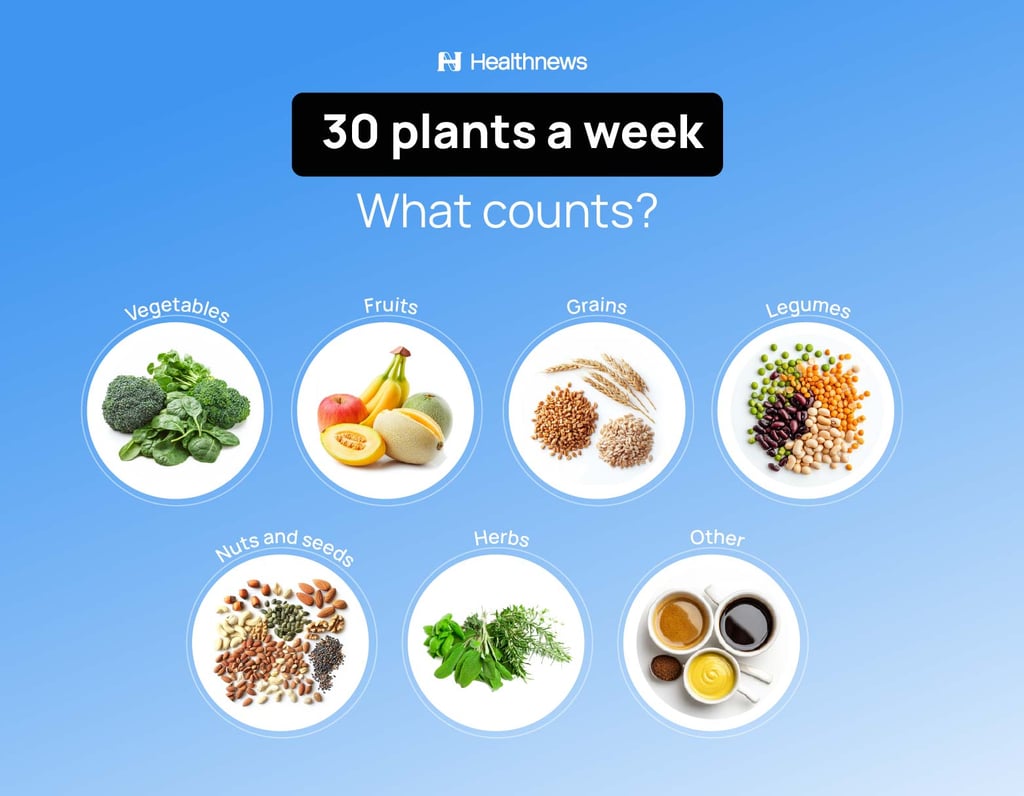
What counts toward the 30?
Basically, all plants count. Here are some examples of foods in each group.
Vegetables
- Cruciferous vegetables
- All greens
- Squashes
- Carrots
- Asparagus
- Cucumbers
- Eggplant
- Potatoes
- Onions
Fruits
- Apples
- Pears
- Berries
- Lemons
- Oranges
- Pineapple
- Melons
- Bananas
- Avocados
- Tomatoes
- Bell peppers
Grains
- Rice
- Bilgur wheat
- Oats
- Quinoa
- Rye
- Whole-wheat products
- Buckwheat
Legumes
- All beans
- Chickpeas
- Lentils
- Peanuts
- Edamame
- Peas
Nuts and seeds
- Almonds
- Hazelnuts
- Sesame seeds
- Sunflower seeds
- Pumpkin seeds
- Brazil nuts
- Cashews
- Walnuts
- Pistachios
Herbs
- Basil
- Mint
- Oregano
- Cilantro
- Sage
- Cumin
- Ginger
- Turmeric
- Black pepper
Other
- Teas (each counts as a different plant)
- Coffee
- Cacao
- Olive oil
- Balsamic vinegar
- Mustard
Why does color matter?
Most fruits and vegetables come in different colors. While eating a different shade of apples or carrots does not count as a different plant toward your 30, including variety is still beneficial.
Talbott explains, “The different plants also provide a wide variety of phytonutrients such as polyphenols, flavonoids, carotenoids, lignans, etc., that can support gut bacteria, strengthen the gut lining, and encourage the growth of ‘good’ bacteria.” It makes sense, the color has to come from somewhere, and it comes from different beneficial plant compounds.
How to eat more plant diversity?
I hope the example foods calmed you down a bit, as everything counts, but if you still feel overwhelmed, here are some actionable steps.
- Make a seed mix. Mix your favorite seeds and even crushed nuts in a big jar and use them to top off salads, bowls, yogurts, and oats.
- Rotate your produce. When you go grocery shopping, pick up different vegetables and fruits. One week, opt for spinach, the next for rocket. The same goes for pears and apples, and so on. This also adds variety regarding taste combinations.
- Spice it up. Add various spices to each meal and alternate the spices you use. Aim for Indian vibes in one meal and Italian in the next.
- Have them ready. Always have fruits and vegetables on hand that you can grab on the go, as a snack, or add to meals.
- Add hidden vegetables. Blend vegetables into sauces, soups, and smoothies.
- Side salads. Add a side salad to all main meals to enjoy lower-vegetable meals without changing the recipe.
- Improve your snack. Snack on fruits and vegetables, like carrots and hummus or apples and peanut butter.
- Eat more plant foods. Opt for tofu or beans as your protein source in some meals to add variety to your diet.
Various green powders and other gut supplements are available. They are a pretty controversial topic in the health and wellness field, so I asked Tabott what he thinks about using supplements to increase gut diversity. His immediate response was “no,” but then he added “But — as I sit here typing this, I am drinking a kombucha and earlier today, my workout smoothie had a scoop of high fiber ‘greens’ blend in it… so they have their place, but they do not ‘replace’ the importance of plant diversity as a central focus for everyone’s diet.”
I agree with Talbott and suggest you prioritize whole foods, spices, and actual diversity in your diet rather than a supplement. A supplement comes in handy sometimes. I incorporate gut-supporting blends of plant foods when traveling, as it is hard to get variety with more frequent eating out.
Meal ideas
Regarding meals, the world is your oyster, but here are some ideas to get you started.
Breakfast
- Mixed grains oatmeal, with a seed mix, plant milk, and sliced fruits and berries.
- Yogurt or kefir with nut and grain muesli, and berries
- Avocado on seeded rye or sourdough bread, with chilli flakes, salmon, dill, and vegetables on the side.
- Omelette with sautéed mushrooms, bell peppers, onions, hot sauce, and seeded bread toast with hummus.
Lunch
- Sweet potato and tofu bowl with fresh vegetables and peanut sauce.
- Homemade Thai curry with chicken or tofu, rice, and various vegetables.
- Mixed bean salad with avocado, spices, and tortilla chips.
Dinner
- Salad with mixed greens, apples, olive oil, and balsamic vinegar dressing, and protein of choice.
- Baked vegetables (varied) and salmon with seed crust.
- Fresh salad, grilled meat, pitta bread, and hummus.
- Lentil feta salad with carrots, coriander, zucchini, dates, spices, lime juice, and olive oil.
Snacks
- Dark chocolate and almonds.
- Raw fruit and nut bar.
- Yogurt and berries.
- Roasted chickpeas.
- Homemade popcorn.
- Fruit and vegetable smoothie.
For lunch and dinner, I usually follow a formula:
- Pick a carb (grains, bread, potatoes)
- Pick a protein (animal or plant-based)
- Pick a healthy fat (avocado, nut butter, olives, or similar)
- Pick three vegetables
- Lots of spices
I then alternate the type of grains, fats, vegetables, and spices I use when making these bowls, this way getting my 30 each week.
Concluding remarks
Getting 30 diverse plant foods a week has been shown to support gut microbiome and gut health, promoting overall well-being. Eating diverse plant foods to diversify your microbiome is nothing new, but now it has a more defined number.
Thirty may sound like a lot in the beginning, but it is easy when you start counting spices, teas, fruits you snack on, and the variety of salad leaves in the mix. Lightheartedly tracking the number of plants I eat each week has also inspired me to try new vegetables or spices to cook with or to pick up different fruits at the farmer’s market. This way, my gut is happy, and my taste buds are entertained as they are not getting the same old thing each week.
Start with small, gradual changes, like adding 2–3 new plant foods, a different spice, and a seed mix, and then work your way up. You can gamify it and get creative in the kitchen.
FAQ
If I eat the same food multiple times a week, does that count toward my 30?
No, each food only counts once per week, no matter how often you consume it.
Do plant-based supplements, green powders, or probiotics count?
As the text outlines, you should not rely on supplements to get diversity. If you are using them when traveling or are sick and cannot consume actual plants, they count for something, but whether you track it is up to you.
Is this approach suitable for everyone, including children, the elderly, or those with gut sensitivities?
Generally, yes, but people with allergies, intolerances, gut sensitivities, or other medical conditions may need personalized guidance. Also, if you are taking prescription medication, ask your doctor if there are any plant foods that may interfere with it, such as grapefruit and blood pressure medications. Young kids or babies also require a specific approach as they cannot eat everything and have more sensitive digestive systems.
3 resources
- American Society of Microbiology. American gut: an open platform for citizen science mcrobiome research.
- Nature. Diversity, stability and resilience of the human gut microbiota.
- Nutrients. Gut microbiome: profound implications for diet and disease.





Your email will not be published. All fields are required.