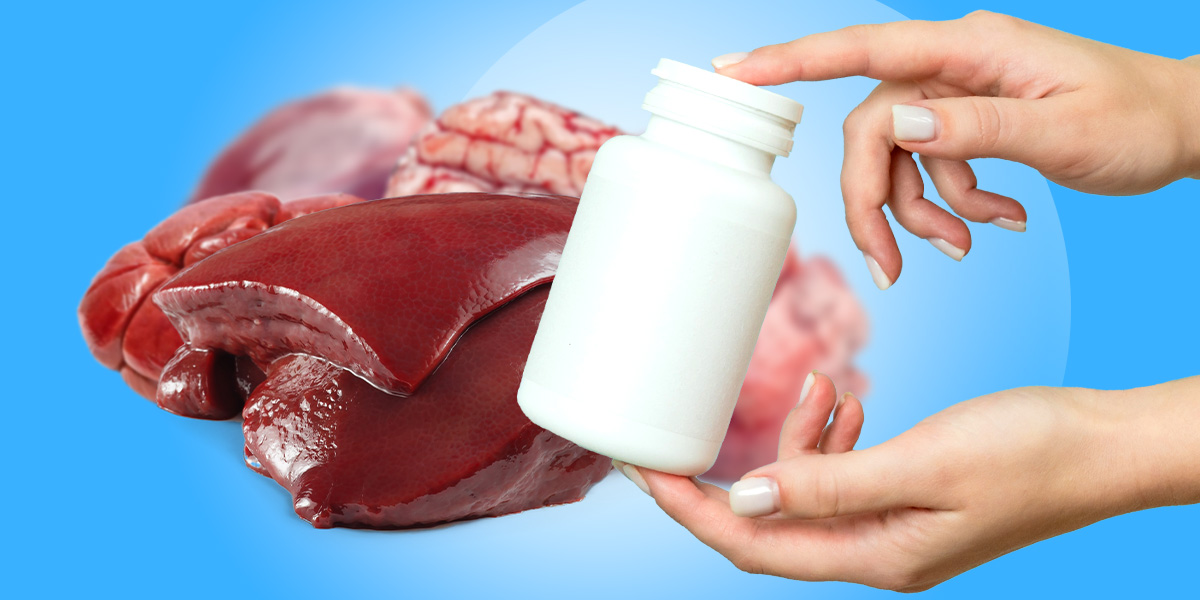
Nose-to-tail eating is trending again, and so are the organ meat supplements like Heart and Soil. Here's what you need to know about their potential benefits and risks.
Organ meat or offal, mostly forgotten after World War II in the United States, is coming back into popularity as an important component of the carnivore diet, which focuses on animal products and eliminates all plant-based foods.
With increasing interest in offal, there is also a growing supply of organ meat supplements, the global market for which is projected to grow from $817.2 million in 2024 to $2.07 billion by 2035.
Organ meat is known for being highly nutritious, but can the same be said about its supplements? Here's our Heart and Soil supplements review.
-
Heart and Soil supplements are made from freeze-dried organ meat and the brand is owned by Paul Saladino, MD, a proponent of the carnivore diet.
-
Organ meat is packed with vitamins, minerals, fatty acids, and choline. Experts say freeze-dried organ meat supplements are likely to preserve similar levels on nutrients.
-
Heart and Soil supplements, similar to many other organ meat supplements, are not tested in clinical trials for their safety and effectiveness.
-
Individuals with haemochromatosis, as well as pregnant women, should be cautious about using organ meat supplements.
Heart and Soil supplements explained
Heart and Soil is a brand of organ meat supplements marketed for its various health benefits, including increased energy, fat loss, improved mood, immune support, and sexual health.
According to the manufacturer, its 'unique freeze-drying process' ensures preservation of nutrients.
The supplements are primarily made of grass-fed bovine organs like the liver, heart, kidney, pancreas, and spleen, but they may also contain extracts of red and white blood cells and platelets.
The product comes in the form of gelatin capsules.
Why is organ meat good for you?
Despite being packed with nutrients, offal is often overlooked in the Western diet, where muscle meats are a more common option. Here are the potential benefits of organ meat, according to a 2024 review:
Organ meat is rich in vitamins
Organ meat is an excellent source of vitamin B12, which is necessary for the normal development and function of the central nervous system, healthy red blood cell formation, and DNA synthesis. It also contains folic acid, which helps tissue growth and cell function.
Offal is rich in vitamin A, which plays an important role in immune function. Other vitamins found in smaller amounts are vitamins D, E, and K.
An excellent source of minerals
Organ meat provides the essential minerals, including the following:
- Iron, which plays an important role in making red blood cells that carry oxygen around the body.
- Magnesium, a mineral that helps regulate blood pressure and blood sugar, also plays a major role in muscle contraction and relaxation.
- Potassium, which helps balance fluids in the body and maintain a steady heartbeat.
- Calcium, a building block for teeth and bones that also helps regulate blood pressure.
Offal is rich in fatty acids
Fatty acids play a major role in various body functions, and it is important we get them with food, because our bodies cannot produce them on their own.
Organ meat is especially rich in eicosapentaenoic acid (EPA) and docosahexaenoic acid (DHA), fatty acids associated with cardiovascular benefits, lowered cholesterol levels, and anti-inflammatory properties.
A great source of choline
Organ meat is a rich source of the essential nutrient choline, which cells need to preserve their structural integrity. Moreover, choline is required to produce acetylcholine, an important neurotransmitter for brain and memory functions.
Heart & Soil supplements review
While offal is undoubtedly a nutritious option that can provide the body with essential nutrients, do organ meat supplements offer the same benefits?
Heart and Soil, as well as many other organ meat supplements, are not tested in clinical trials; therefore, they lack scientific evidence to support their proposed benefits in the doses available.
Brian Clark, certified registered nurse anesthetist at United Medical Education, says organ meat supplements contain many nutrients found in cooked organs. However, they must be freeze-dried and not over-processed to maintain the nutrients.
Such capsules tend to contain significant quantities of vitamin A, B12, iron, copper, and coenzyme Q10. The nutrients are crucial to energy metabolism, red blood cell formation, and the immune system.
Brian Clark
Suzanne Hyslop, a nutritionist at Ocean Recovery, says the organ meat supplements can benefit individuals following restrictive diets like ketogenic or carnivore, and those recovering from illness and surgery.
"Those with iron deficiency anemia might find liver supplements particularly useful due to their natural iron and also B12 content," she tells WellnessPulse.
However, the appropriate treatment for a diagnosed vitamin or mineral deficiency is a regulated supplement or prescription under medical supervision, according to Maria Kardakova, PhD, a registered nutritionist.
There is strong evidence to support vitamin B12 supplementation in people with a deficiency, but current evidence suggests no significant benefit to people with normal B12 levels.
This is also true for iron. While people with anemia can greatly benefit from iron supplementation, the evidence is much less conclusive in people without its deficiency. Meanwhile, iron supplementation may cause side effects like abdominal pain and nausea.
Heart and Soil supplements' side effects
Due to the lack of clinical trials testing the Heart and Soil supplements' safety profile, there is little information about their potential side effects. However, there is something consumers should know about consuming organ meat and its supplements.
Organ meat is high in dietary cholesterol – a serving of cooked beef liver contains 396 mg of cholesterol, and a serving of cooked beef spleen has 347 mg.
The current nutrition guidelines recommend consuming fewer foods high in saturated fat rather than focusing on the exact amount of cholesterol. However, those trying to lower their blood cholesterol levels should consume no more than 200 mg of dietary cholesterol daily.
Clark says organ meat supplements may not suit everyone. For example, individuals with hemochromatosis, or inherited iron overload, should be cautious about using them.
Pregnant women, people taking blood thinners, or those with liver problems may want to avoid the supplements or check with their healthcare provider.
"However, these supplements are a mild form of feeding the body to those with poor appetite, low B12, or fatigue. It is necessary to select a brand that uses grass-fed animals and does not use fillers to ensure that you can get actual nutritional value out of them," Clark says.
Hyslop says it is important not to exceed the recommended doses, particularly with liver-based products, due to the risk of vitamin A toxicity.
A 100 g of cooked beef liver contains 9,440 mcg RAE of the vitamin, more than ten times higher than the recommended daily intake. Chronic vitamin A toxicity is associated with prolonged ingestion of doses exceeding 8,000 RAE per day.
A nutritionist or doctor should be consulted before starting any supplementation, especially for children, pregnant women, or those with preexisting health conditions.
Suzanne Hyslop
While organ meat supplements are often marketed as 'natural' or 'ancestral,' they lack transparency, according to Kardakova.
"Most don't list exact nutrient values, especially fat-soluble vitamins like A or trace minerals like copper, making it hard to calculate safe dosages. Combined with nutrients from food, multivitamins, or other products, this can lead to accidental overdose," she says.
Another concern with meat organ supplements is the higher risk of variant Creutzfeldt-Jakob disease, a human version of Mad Cow Disease, which is fatal. The disease is extremely rare, and the Food and Drug prohibits using cow brain, skull, eyes, and spinal cord – organs that pose the highest risk – in the supplements.
The Heart and Soil supplements don't appear to contain these high-risk organs, according to their product labels.
There is also concern over the impact of offal on liver health. A 2023 study in the Chinese population associated high organ meat consumption with a modestly increased risk of nonalcoholic fatty liver disease (NAFLD).
However, the findings are inconclusive. A small trial that included 136 adults with biopsy-confirmed NAFLD. The higher animal organ meat consumption is associated with a lower risk of nonalcoholic steatohepatitis in NAFLD patients.
Kardakova points out that currently, no health authority, including the World Health Organization and the FDA, recommends organ meat supplements for any specific population, and there are no clinical guidelines supporting their use.
There is no magic capsule for health. Nutrition works best when it’s part of a broader lifestyle rooted in diverse whole foods, movement, rest, and connection. For those with specific deficiencies, the best advice is to consult a doctor. For everyone else, focus on balance and long-term habits.
Maria Kardakova, RNutr
Who owns Heart and Soil supplements?
The company was founded by Paul Saladino, MD, a proponent of the carnivore diet and the author of The Carnivore Code.
However, in 2024, Saladino transitioned away from the animal food-only diet, citing health issues like sleep disturbances and heart palpitations, among others. His diet now includes fruits as carbohydrates.
The verdict
There are no scientific studies evaluating the safety and effectiveness of Heart and Soil supplements. While organ meat is rich in vitamins, minerals, and fatty acids, it is also high in dietary cholesterol. Experts say freeze-dried organ meat supplements contain similar levels of nutrients as cooked offal, but may not suit individuals with conditions like inherited iron overload.
18 resources
- Current Developments in Nutrition. Behavioral characteristics and self-reported health status among 2029 adults consuming a “Carnivore diet”.
- Nutrients. Edible offal as a valuable source of nutrients in the diet—a review.
- NIH Office of Dietary Supplements. Vitamin B12.
- NIH Office of Dietary Supplements Vitamin A.
- The American Journal of Clinical Nutrition. Omega-3 fatty acids in inflammation and autoimmune diseases.
- eClinical Medicine Effect of omega-3 fatty acids on cardiovascular outcomes: A systematic review and meta-analysis.
- Clinical Nutrition. Effects of dietary eicosapentaenoic acid and docosahexaenoic acid supplementation on metabolic syndrome: A systematic review and meta-analysis of data from 33 randomized controlled trials.
- NIH Office of Dietary Supplements. Choline.
- Diabetes & Metabolic Syndrome: Clinical Research & Reviews. The efficacy of vitamin B12 supplementation for treating vitamin B12 deficiency and peripheral neuropathy in metformin-treated type 2 diabetes mellitus patients: A systematic review.
- Healthcare. Neurological implications of vitamin B12 deficiency in diet: A systematic review and meta-analysis.
- The American Journal of Clinical Nutrition. Effect of iron intake on iron status: a systematic review and meta-analysis of randomized controlled trials.
- The European Society for Clinical Nutrition and Metabolism. Safe and effective delivery of supplemental iron to healthy adults: a two-phase, randomized, double-blind trial – the safe iron study.
- USDA. Beef, variety meats and by-products, liver, cooked, braised.
- MedlinePlus. How to lower cholesterol with diet.
- NIH Office of Dietary Supplements. Vitamin A and carotenoids.
- StatPearls. Vitamin A toxicity.
- British Journal of Nutrition. Organ meat consumption and risk of non-alcoholic fatty liver disease: the Tianjin Chronic Low-grade Systemic Inflammation and Health cohort study.
- HepatoBiliary Surgery and Nutrition. Higher consumption of animal organ meat is associated with a lower prevalence of nonalcoholic steatohepatitis.



Your email will not be published. All fields are required.