While hormone therapy is, no doubt, a lifesaver for many, there are those who also seek natural alternatives. Medicinal mushrooms are popping up more in menopause discussions in the alternative health world. But can these functional fungi really transform the midlife experience, or are they just more wellness hype?
-
Medicinal mushrooms are functional foods that contain different compounds that may support overall health, including during menopause.
-
Lion's mane has been studied for potential benefits on cognitive function and brain fog reduction commonly experienced during perimenopause.
-
Because they aren’t regulated by official governing bodies, medicinal mushrooms aren’t subjected to the same rigorous safety testing as prescription medications.
What are medicinal mushrooms?
Medicinal mushrooms are a type of functional foods that contain bioactive compounds thought to support various aspects of our health.
Many different kinds of medicinal mushrooms have been used therapeutically for centuries in traditional medicine and indigenous communities across the globe. But they aren’t the mushrooms you’ll find in modern grocery stores, and in general, I wouldn’t recommend tossing them into a stir-fry or a soup.
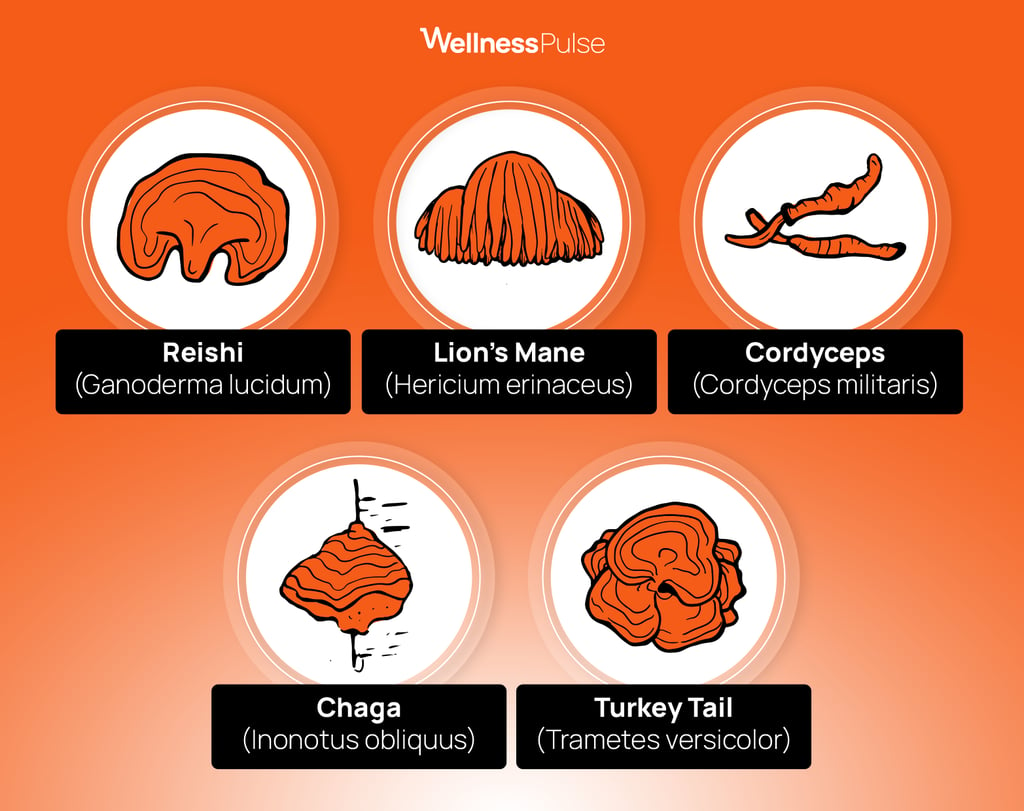
Their compounds are thought to interact with and affect the immune and nervous systems and hormonal pathways. Some of the most popular medical mushrooms include:
- Reishi (Ganoderma lucidum)
- Lion's mane (Hericium erinaceus)
- Cordyceps (Cordyceps militaris)
- Chaga (Inonotus obliquus)
- Turkey tail (Trametes versicolor)
Benefits of medicinal mushrooms for menopause
Rather than just believing everything we read on socials or being sucked into adverts that promise to take away the perils of perimenopause, let’s examine some of the science-backed benefits.
1. Sleep and night sweats
Having our days derailed by yet another sleepless night is beyond infuriating. Reishi, often proclaimed the ‘mushroom of immortality,’ shows some interesting promise in the sleep department.
Research from 2025 indicates that reishi's abundant triterpene compounds may promote relaxation and improve sleep quality by modulating neurotransmitters and exhibiting a sedative effect on our bodies.
2. Brain fog and focus
Almost everyone I know who is in perimenopause or has already gone through it can relate to completely forgetting why they’ve walked into a room. I’ve done it multiple times myself, and it’s incredibly frustrating. Affectionately termed ‘meno-fog,’ this forgetfulness affects up to 60% of people going through menopause.
Lion’s mane has gained a significant amount of attention for its potential to help with brain fog and cognition. According to a 2024 review of the current research, one of the main bioactive compounds found in lion’s mane, erinacines, exhibits some pretty promising health benefits for strengthening cognition and supporting brain cell health.
3. Sex, stress, and stamina
Menopause symptoms also include loss of libido, stress, and feeling fatigued. Cordyceps may hold some potential for helping beat inexplicable tiredness and reduced strength. A 2022 study found that mice treated with cordyceps performed better in weight-loaded swimming, indicating that they may be an effective alternative for treating fatigue.
Another 2025 study suggested that cordyceps might be a promising non-hormonal candidate for helping deal with both stress and sleeplessness. However, as both these studies were carried out on animals and not actual menopausal people, it’s hard to discern whether cordyceps will truly work on humans or not.
It’s safe to say that more research is needed. I believe that something as ubiquitous as menopause, which affects around half the population, should be given a lot more attention and scientific research funding.
How to take medicinal mushrooms
The table below gives you an easy-to-follow pros and cons list of the forms of medicinal mushrooms you can find:
| Form | Pros | Cons |
| Tincture | More concentrated bioactive compounds and more precise dosing with the dropper | May have a strong, earthy taste and is often alcohol-based, which some prefer to avoid |
| Powder | Easily mixed into drinks or smoothies | Harder to judge dosage, and may have a noticeable taste when added to beverages |
| Capsules | Convenient, tasteless, and easy to fit into a daily routine | May be less concentrated and take longer to absorb than tinctures |
Are there any risks with taking medicinal mushrooms for menopause?
In general, functional mushrooms are well-tolerated, but it’s possible you might experience mild digestive upset when you first try them.
However, some medicinal mushrooms can interact with certain medications. If you are on prescription medications, especially blood thinners or immunosuppressants, it's important that you consult your healthcare provider before you start taking any kind of alternative remedies.
Final thoughts
For me, medicinal mushrooms for menopause definitely offer an intriguing natural approach to managing some of the unpleasant symptoms. It seems that the research is going in the right direction, but there’s still not enough of it.
It’s also worth noting that complementary therapies like medicinal mushrooms aren’t regulated in the same way that medications are. They aren’t as rigorously tested, and manufacturers can often make some exaggerated claims about their capabilities.
If menopause symptoms are significantly affecting your daily life, talk with your doctor about the available treatment options. A qualified healthcare professional will be able to help you decide whether medicinal mushrooms could be a help or a hindrance to your ongoing wellness plan.
FAQ
Do mushroom supplements interact with any medications?
Medicinal mushrooms may interact with blood thinners, diabetes medications, and immunosuppressants. Make sure to consult your healthcare provider before adding these supplements to your routine.
Who should not take functional mushrooms?
Anyone pregnant or nursing should avoid medicinal mushroom supplements. If you have a mushroom allergy or an autoimmune condition, you should avoid functional mushrooms unless approved by your doctor.
What's better, lion's mane or reishi?
It’s impossible to say which one is better because they have different capabilities. Deciding which one to take really depends on your own personal needs. Lion's mane may be better for cognitive support and brain fog, while reishi is more studied for sleep and stress management.
9 resources
- Food and Medicine Homology. A comprehensive review of the sedative-hypnotic mechanisms of edible fungi.
- Science Direct. Triterpene.
- StatPearls. Physiology, GABA.
- World Journal of Psychiatry. Menopause and cognitive impairment: a narrative review of current knowledge
- American Journal of Natural Medicine, Facts. Exploring the cognitive and other unique health benefits of lion’s mane mushroom: a systematic review.
- Frontiers in Pharmacology. Unveiling the role of erinacines in the neuroprotective effects of Hericium erinaceus: a systematic review in preclinical models.
- Medicinal Mushrooms. Medicinal mushrooms and their effects on memory and cognitive function.
- Biochemical and Biophysical Research Communications. Cordycepin exhibits anti-fatigue effect via activating TIGAR/SIRT1/PGC-1α signaling pathway.
- Biomedicine and Pharmacotherapy. Evaluation of antidepressant and sleep-promoting effects of cordycepin in a menopause-like stress model.






Your email will not be published. All fields are required.