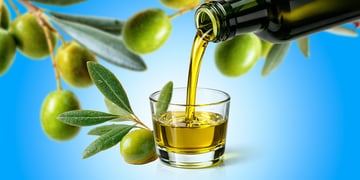
Olive oil has been known for hundreds of years as Mediterranean liquid gold. There is a reason for that. In the past, it was used not only for cooking but also as fuel for oil lamps, a medicinal ointment, and even a soap substitute.
Nowadays, influencers have turned it into a trend. Instead of pouring it over salad, they mix it with lemon juice and chug it before bed. They say this combo makes your skin clearer and glowier and improves digestion. In this article, we will examine whether these claims are true and if you should try it.
-
EVOO is a source of monounsaturated fats, such as oleic acid, and is packed with polyphenols, including hydroxytyrosol and oleocanthal.
-
EVOO consumption is linked to lower ‘bad’ and higher ‘good’ cholesterol, reduced blood pressure, and better glucose metabolism and insulin sensitivity.
-
People who consume the most olive oil, especially replacing butter, margarine, or mayonnaise, have a 19% lower risk of death from any cause over 28 years.
-
Most store-bought oils deliver about 1–3 mg per tablespoon of hydroxytyrosol, while high-phenolic oils deliver about 5–10 mg per tablespoon.
The hype behind olive oil
Extra Virgin Olive Oil (EVOO) has earned its reputation as a ‘super fat.’ There is a reason why. It is a concentrated source of monounsaturated fats, such as oleic acid, and is packed with polyphenols, including hydroxytyrosol and oleocanthal. If you gather all influencer claims about what these do to your body, the list would look like this:
- Supports digestion and normal liver function
- Helps with occasional constipation
- Improves joint comfort
- Anti-inflammatory activity
- Supports healthy cholesterol levels
- Supports heart health
- Promotes a brighter-looking complexion
Is there truth behind that?
According to research and specialists, some of these claims are true. Let’s see which ones. Dr. William Li, Physician, Scientist, and Author of “Eat to Beat Your Diet,” says that polyphenols in EVOO are anti-inflammatory and support a healthy metabolism.
However, Nutritional Consultant Barbara Smith notes that much research on olive oil’s benefits, especially for heart health and inflammation, comes from the Mediterranean diet. That is why a 2023 review sought to determine whether EVOO is the key factor behind the Mediterranean diet’s health benefits or just part of a broader pattern.
Across 34 human studies, strong evidence showed it plays a major role in improving cardiometabolic health. That is because EVOO consumption is consistently linked to lower ‘bad’ and higher ‘good’ cholesterol, reduced blood pressure, and better glucose metabolism and insulin sensitivity.
There is a catch. Most studies were conducted in European countries where EVOO is part of the Mediterranean diet. Researchers note that future research should test EVOO across different diets to see if it makes a difference.
However, Harvard tried to do that. They studied whether consuming more olive oil benefits human health. Researchers analyzed two large studies with over 92,000 healthy U.S. men and women who reported their health and diet every two years.
They found that people who consumed the most olive oil, especially replacing butter, margarine, or mayonnaise, had a 19% lower risk of death from any cause over 28 years. Higher olive oil intake was also linked to lower risks of death from cardiovascular disease, cancer, neurodegenerative disease, or lung disease.
Does that mean olive oil shot is a ‘quick fix’?
“There is plenty of evidence that EVOO has health benefits, but no studies have shown that a shot is superior. A shot is most useful when an individual doesn't cook their own meals and may not be getting EVOO in their food but still wants to benefit from EVOO,” says Dr. Li on whether you should include olive oil shots in your daily routine.
That said, rather than focusing on individual foods, the strongest evidence comes from long‑term dietary patterns, such as Mediterranean‑style diets, that combine healthy fats with plant foods and lean proteins. If you only consume red meat, which is high in saturated fats, along with highly processed foods, one shot of EVOO daily won't make any difference to your health.
Which olive oil is the best?
Oils such as sunflower, canola, or corn undergo chemical treatments to extend shelf life. This can happen to some olive oils, too, which reduces their benefits. “The biggest mistake is assuming all olive oil is the same. Without enough polyphenols, you are mostly just consuming fat,” says Sabrina Avila, Founder of Greek EVOO Company Olivea.
So how do you know which olive oil to choose? Well, the healthiest oil is considered EVOO. You press the olives and collect the oil without processing, preserving all the benefits of olive oil. This method hasn’t changed for centuries.
The key is hydroxytyrosol. The recommended daily amount is 5 mg. According to Avila, most store-bought oils deliver about 1–3 mg per tablespoon, while high-phenolic oils deliver about 5–10 mg per tablespoon. “So one tablespoon of ultra-high phenolic EVOO can do what several tablespoons of regular oil cannot,” she sums up.
Because of that, she advises looking for EVOO with 1000+ mg/kg (453.6+ mg/lb) of polyphenols and made from early-harvested olives. Dr. Li adds that he suggests EVOO made from monovarietal olives, such as Koroneiki, Picual, Moraiolo, or Coratina. “These olives have the highest levels of polyphenols,” he notes, and also advises looking for the harvest date on the bottle to help ensure the EVOO is not counterfeit.
The benefits of EVOO compared to other common olive oils have also been proven by research. A recent study found that older adults (55–75 years old) who consumed EVOO had a more diverse gut microbiota than those who preferred refined olive oil.
People who should avoid olive oil shots
Certain groups should avoid this trend or approach it with caution. “For most people, an olive shot is safe unless they have digestive conditions involving their gallbladder, pancreas, or intestinal absorption,” says Dr. Li.
For example, people with gallbladder issues may feel discomfort or pain, as it can stimulate bile production. Others with irritable bowel syndrome may experience cramping and bloating. Additionally, people who take blood-thinning medications should consult a healthcare provider before starting this trend, as high olive oil consumption may increase bleeding risk.
Final word
Research shows olive oil is more than a kitchen staple because it may improve heart health, lower cholesterol, and provide antioxidant protection. However, most findings come from studies where olive oil is consumed as part of a Mediterranean diet, which includes vegetables, whole grains, and fish.
If you’re still considering olive oil shots, choose ultra-high-phenolic EVOO, as phenolic compounds drive most of its protective effects. Just keep in mind that while it may support your health, the real effect comes from a balanced diet rather than a standalone solution.
7 resources
- Microbiome. Total and different types of olive oil consumption, gut microbiota, and cognitive function changes in older adults.
- Nutrients. Is extra virgin olive oil the critical ingredient driving the health benefits of a Mediterranean Diet? A narrative review.
- Journal of the American College of Cardiology. Consumption of olive oil and risk of total and cause-specific mortality among U.S. adults.
- Cureus. An evidence-based look at the effects of diet on health.
- Frontiers in Nutrition. Hydroxytyrosol and potential uses in cardiovascular diseases, cancer, and AIDS.
- U.S. Food and Drug Administration. Monounsaturated and Polyunsaturated Fats.
- The American Journal of Clinical Nutrition. Polyphenols: food sources and bioavailability.




Your email will not be published. All fields are required.