
This is a paid feature produced in collaboration with Tomas Liubertas, PhD. WellnessPulse was given access to the researcher's hypothesis and product background.
Longevity has been breaking popularity records for years — from tech billionaires biohacking based on their bloodwork to the rest of us stacking supplements. Most of the conversation is about adding more years to your life. Some of it goes a step further and seeks to improve its quality, but Tomas Liubertas, PhD, wants us to explore a stranger question instead.
What if the problem isn't how long we live, but how we experience time in the first place? Perhaps the longevity movement is missing an important piece of the puzzle: time perception and aging. We sat down to understand Liubertas' hypothesis and how his team turned it into a line of supplements.
We're approaching this as a conversation, not a product review. Whether the science holds up is still an open question, which Tomas Liubertas, PhD, himself asks in his academic research.
Setting the scene: the state of longevity today
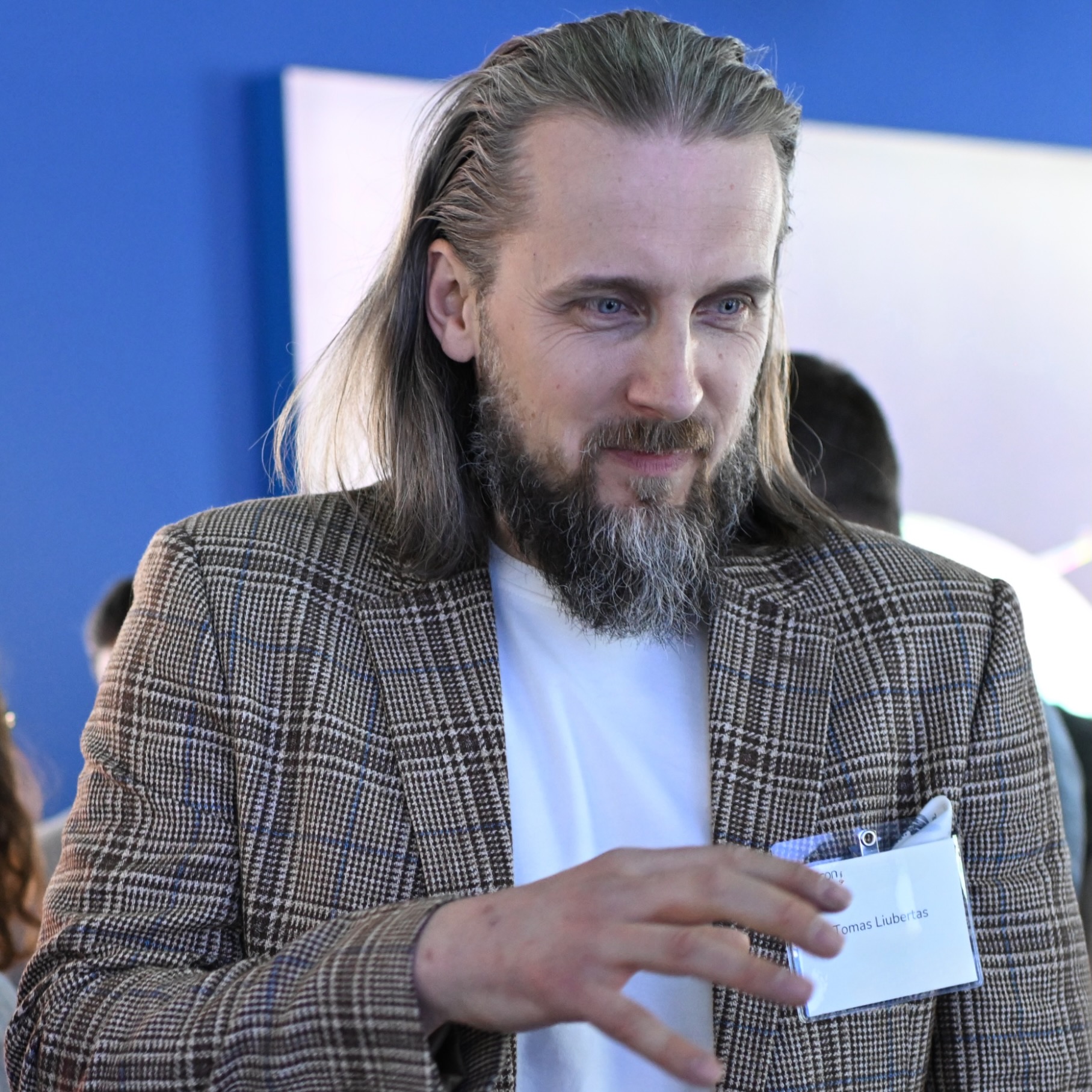
“The human body is not that simple. If everything were so straightforward, we would have figured it out and found solutions by now. Longevity is sometimes viewed too superficially — it makes me smile. We try to commercialize everything and present it through the logic of a single pill, as if there were one solution that solves everything. But that is not the case.”
He has a pointed observation about who tends to dominate the discussion. “The loudest voices talking about longevity are often people in their twenties or thirties who are at their hormonal peak. At thirty, it often feels like you are immortal — the body recovers instantly. But once people reach fifty, for some reason, they all become much quieter. Perhaps they realize that things are not so simple.”
A third dimension of longevity
Instead of chasing more years, Liubertas proposes rethinking the unit of measurement. His hypothesis was recently published in the journal Frontiers in Aging Neuroscience, and it argues that longevity has been evaluated on only two axes: how many years we live and how healthily we live them.
“No one questions time itself,” he says. He calls the traditional model, counting years by “how many times the sun rises and sets,” overly simplistic and proposes a third dimension — the subjective perception of time.
This intuition is likely familiar. We have all experienced periods in our lives that seem to pass much more quickly than others.
Which leads to his provocative reframing: “Do you want to experience 300 years? What if those 300 years could fit inside your mind?” The point, he's careful to stress, isn't philosophical wordplay — he ties it to specific biological mechanisms he believes shape how “densely” we experience a life.
Why does time seem to fly faster as we age
We sometimes forget that we are biological beings, and that how we perceive time is linked to our bodies, not just our minds.
In his paper, Liubertas describes time as a sequence of events the brain slices into episodes. The more numerous and vivid those episodes, the longer a stretch of life feels in hindsight. When episodes are few or blur together, time feels compressed.
His central claim is that this episode-making depends on energy — and that the brain is enormously energy-hungry, needing fuel to process information in real time and lay down durable memories.
As the systems that supply that energy decline with age, he argues, the brain can no longer run in “high-resolution mode,” producing fewer clear moments and a lower “density of experience.”
He reaches for an analogy: “We are trying to watch a very high-resolution movie. If your internet speed is 1 Mbps and you are trying to watch an 8K movie, it simply won't load. It loads only in fragments, partially reconstructs the image, and then freezes while waiting for enough data flow to continue.”
Nitric oxide, blood vessels, and mitochondria
According to Liubertas, three interconnected factors drive the energy decline: falling nitric oxide levels, stiffening of blood vessels, and aging mitochondria.
Nitric oxide, he explains, helps blood vessels dilate and supports communication between neurons. As it may wane with age and vessels stiffen, blood flow in the brain's fine circulation may become less efficient, and the delivery of oxygen and nutrients to neurons may drop. This is what leads to, in his framing, a lower “resolution” of experience.
“When you look at what is happening at the organ level in the aging process, you begin to identify certain trends,” he shares. “We know that blood vessels are incredibly important. When nitric oxide production begins to decline, the body stops signaling — it stops communicating with itself. And mitochondria are simply the battery, the mechanism that produces energy.”
It's worth highlighting that this is a hypothesis. The mechanisms he names are well-studied individually, but the leap he's proposing — linking them to subjective time perception as a measure of longevity — is new and, in his own paper, framed as a set of testable, still-unproven predictions.
From a hypothesis to a formula
While the researchers are trying to answer the question of the perception of time and aging, Liubertas decided to seek solutions alongside his theoretical ideas. He began investigating naturally derived compounds that might support energy production, and this research led to the creation of NoxShot.
It picked up attention after members of the Ukrainian national ice hockey team used it during their 2024 campaign, in which the team won gold in Division I Group B of the IIHF World Championship. Players reported perceived benefits to stamina and recovery.
The team later introduced two more formulations: RA, developed for men, and AURA, for women. Both are marketed as 30-day supplements for people over 35, built around ingredients such as beetroot concentrate, hydrolyzed collagen, rhodiola, vitamin C, and zinc.
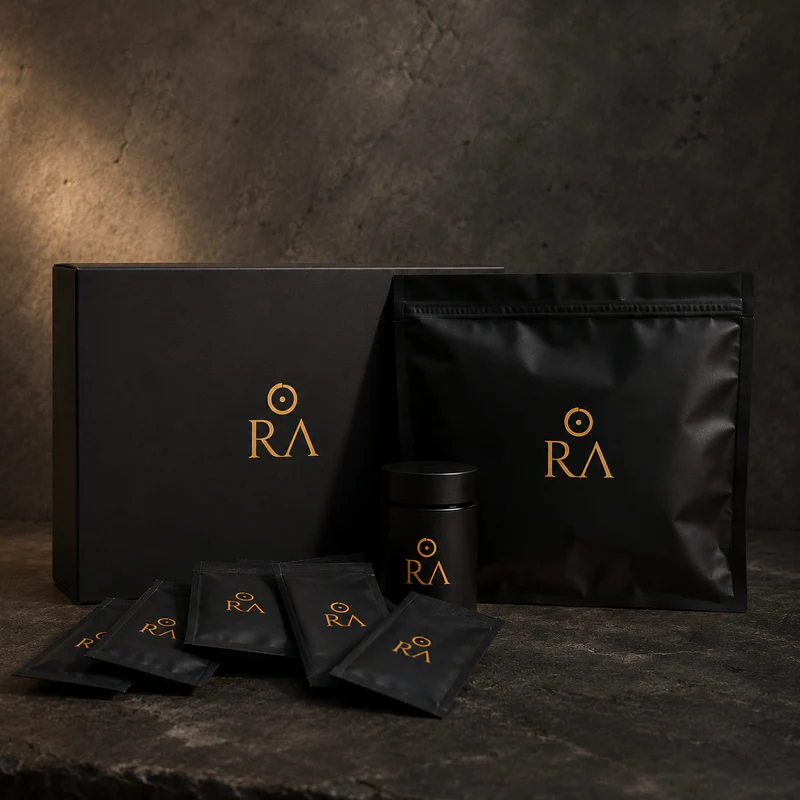
“With men, we had a relatively clear idea of what we were looking for,” says Dr. Liubertas. “What surprised us was the feedback we began receiving from women approaching menopause. Their experiences encouraged us to investigate this area much more deeply.”

The main distinction lies in how the company positions each product rather than in the ingredients themselves. Instead of changing the formula, the brand emphasizes different potential benefits, such as testosterone support and muscle function for RA, and collagen production, skin health, and hormonal balance for AURA.
Liubertas is careful to point out that RA and AURA are not instant or magical solutions. Their effects, he says, are intended to develop gradually over time.
That caution is unusual in a category better known for bold before-and-after promises, and it's why we've written this as a story about a question rather than a product review.
What comes next
“Our next step is to examine these observations scientifically and explore how time influences the way people perceive changes in their bodies,” Liubertas says. “We still have important questions to answer, but the responses we have received so far give us strong reasons to continue.”
And perhaps that is what makes the story worth following: these products began with an unusual scientific question, and that question has not yet been fully answered.
1 resource
- Frontiers in Aging Neuroscience. Beyond lifespan and healthspan: a biological framework for experienced longevity.
Your email will not be published. All fields are required.