
Most women know what it is like to have high energy to smash your workouts, start new projects, buzz with ideas, and be in an overall great mood for two or three weeks of the month, and then feel like you can barely do half the week before the period.
What if there were a way to solve or improve this? Cycle syncing might do just that, and thousands of women swear that it has changed their lives and left them feeling better than ever.
-
Cycle-syncing your workouts means doing different types of workouts at different intensities during the distinct phases of your cycle.
-
Despite many women swearing it has helped them feel better than ever, there is a lack of studies and evidence to back this up.
-
Cycle syncing may be a good start to get more in tune with your body, but it should be taken more as inspiration than exact science.
What is cycle syncing?
Cycle syncing is aligning your lifestyle with the different phases of your cycle. It primarily focuses on adjusting your diet, exercise routine, work projects, and social commitments to the fluctuating hormone levels that affect your energy levels, mental and physical capabilities, mood, and sleep.
The main concept is that by aligning your lifestyle with your menstrual cycle, you can work in harmony with your body’s natural changes. This approach allows you to give your body the rest and nourishment it needs while taking advantage of periods of high energy and productivity. Instead of struggling against your hormones, you can choose to work hard during these peak times.
Nutritionist Alisa Vitti introduced the concept in her book WomanCode. She developed the Cycle Syncing Method® with specific recommendations for nutrition, fitness, and lifestyle habits for each menstrual cycle phase. This idea became the biggest topic in women’s health in 2023, took social media by storm, and was the most popular TikTok hashtag in 2023 in the U.S., Canada, the UK, and Australia. Nike even released a cycle-syncing training program.
However, this method has also been critiqued for lacking scientific evidence and perpetuating gender stereotypes that women are less able-bodied during certain phases of their cycle.
What are the phases of the menstrual cycle?
Although most people know that different hormonal phases exist, many do not understand what is happening. In short, the female reproductive system has four distinct stages that prepare the body for ovulation and potential pregnancy.
According to the International Federation of Gynecology and Obstetrics (FIGO), a healthy menstrual cycle should be regular and consistent in frequency and volume. The normal frequency range is a cycle every 24 to 38 days. Infrequent or frequent menstruation may indicate an issue that should be addressed before considering cycle syncing.
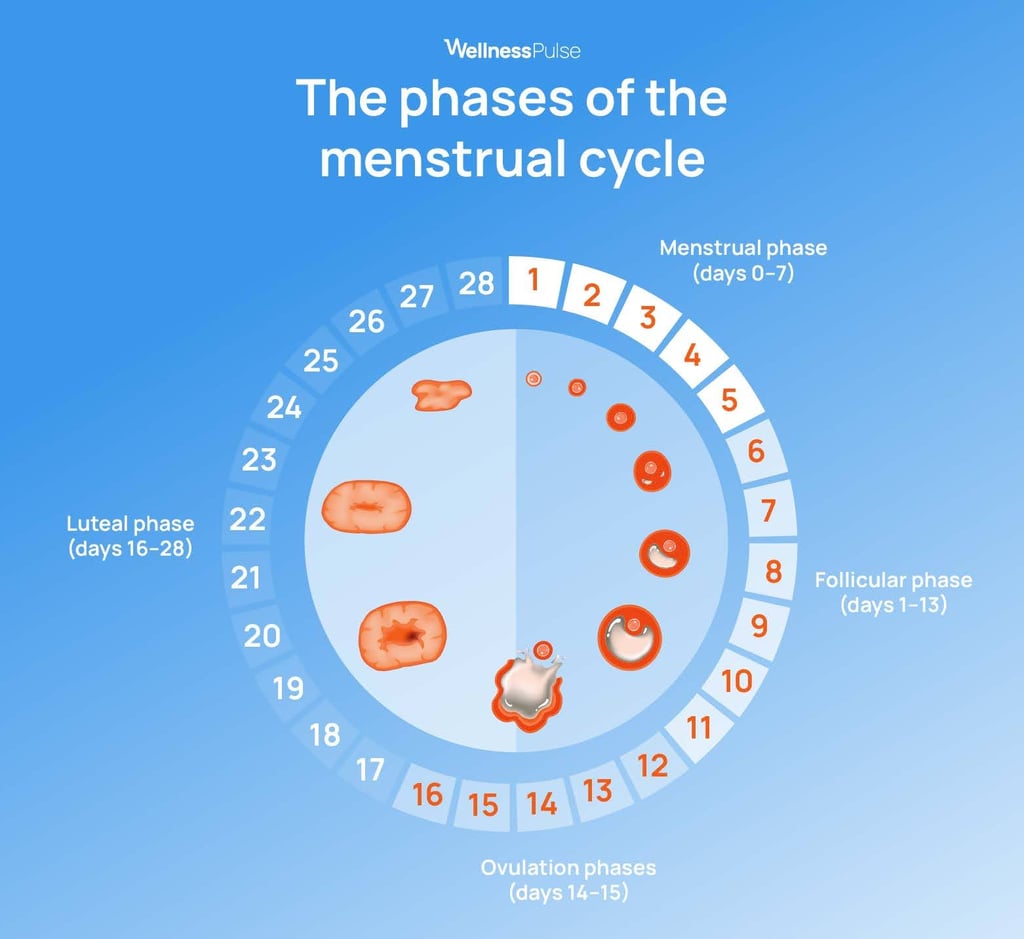
Menstrual phase (days 0–7)
The first day of bleeding marks the first day of the menstrual cycle and the menstrual phase. Estrogen and progesterone levels are at their lowest, and the drop in these hormones is what triggers the shedding of the uterine lining.
During this phase, cramps, headaches, and lower energy are quite common. Some women may also experience sleep disruptions, increased cravings, and low mood. However, things tend to improve after the first few days of bleeding.
Follicular phase (days 1–13)
The follicular phase starts on day one of your period and lasts until ovulation. The brain releases gonadotropin-releasing hormone (GnRH), which stimulates the release of follicle-stimulating hormone (FSH). FSH kickstarts the development of ovarian follicles, each housing an immature egg. Furthermore, estrogen levels increase as the follicles develop and cause the endometrium to thicken again.
Energy levels, focus, and mood tend to improve throughout this stage.
Ovulation phases (days 14–15)
Roughly mid-cycle, a rise in luteinizing hormone (LH) causes the ovaries to release the egg. Estrogen levels peak during ovulation and drop immediately after.
Ovulation is the prime time for fertility. Usually, these 24–48 hours are peak energy, mood, social battery, and productivity, too. Some even report feeling more beautiful and attractive.
Luteal phase (days 16–28)
The now-empty follicle becomes a structure called the corpus luteum and releases progesterone along with some estrogen, but at much lower levels than in previous phases.
Progesterone prepares the uterine lining for embryo implantation and pregnancy if it happens. If there is no pregnancy, the corpus luteum regresses, resulting in a drop in progesterone, estrogen, and, ultimately, menstruation.
During the early luteal phase, energy tends to decline, as progesterone can cause drowsiness. There is also some weak evidence that some women experience a reduction in their sleep quality. Some women report feeling more grounded, withdrawn, yet creative. The late luteal phase is known to most as PMS. Energy is low, social battery is non-existent, it is hard to focus, mood is not great either, and you often have cravings.
How to start cycle syncing?
Before you implement cycle syncing, you need to understand your cycle. Start by tracking it with an app for 2–3 months, noting physical symptoms, energy levels, mood, sleep quality, and any other symptoms you may experience. Once you have a couple of months’ data, identify your average cycle length and start looking for patterns that may indicate distinct phases of your cycle.
After you understand your cycle and its phases, start by implementing small habits one at a time. I suggest starting with diet or exercise, noting if it improves symptoms before implementing more.
Building an exercise plan
One of the core principles of cycle syncing is matching your workout to the phase of your cycle based on energy levels. Here is what cycle syncing guides suggest:
| Phase of the cycle | Focus | Recommended movement | Avoid |
| Menstrual | Rest, recovery, gentle movement | Walking, gentle yoga, stretching, foam rolling, light Pilates | High intensity workouts, running, heavy lifting |
| Follicular | Building strength, trying new activities or sports, staying active, utilizing high energy | Strength training, HIIT, cardio, Pilates, swimming | Energy tends to increase during this phase, so nothing is off limits |
| Ovulation | Peak performance and endurance | Lifting personal bests, sprints, competitive sports, challenging workouts | This is the time of peak energy and performance, so utilize it |
| Luteal | Transition to moderate or low intensity activities and more restorative movement | Early luteal: lower intensity strength training, steady state cardioLate luteal: yoga, Pilates, walking, swimming | Energy tends to decrease when approaching menstruation, so listen to it and reduce intensity, focusing more on recovery |
A meta-analysis of 51 studies examining exercise performance during different menstrual cycle phases found that the early follicular phase is associated with reduced exercise performance. Still, the evidence is too weak to state that menstrual phases significantly impact exercise performance.
Another meta-analysis concluded that there is some evidence that maximal isometric strength (holding a position without movement) peaks during the late follicular phase, showing medium-sized improvements compared to other phases of the cycle. Isokinetic strength (movement with controlled speed) improves slightly during ovulation compared to other phases. Lastly, dynamic strength improves slightly during the late follicular phase compared to other phases. Strength is at its lowest during the early follicular phase.
However, the overall difference is slight, and a reduction in strength or peak performance does not mean you should skip weightlifting altogether if you enjoy it.
Researching the benefits of cycle syncing is troublesome because most studies assume that women have regular, 28-day cycles. According to cycle syncing, you can only do heavy lifting or endurance sports for half your cycle and focus on yoga, Pilates, or other light activities for the other half.
Cycle syncing may be great for those who enjoy different types of workouts and variety, but it can be frustrating for people who are into weight lifting, bodybuilding, or endurance-based sports. Frankly, it’s unnecessary and unrealistic to overhaul your whole workout routine every week. Take an extra rest day if needed, reduce intensity or load slightly, and focus on form and recovery. You can do the exercise you love or even compete in all phases of your cycle, just be aware that during the first half of the cycle, you may perform slightly better.
Benefits of cycle syncing
Cycle syncing is still seen more as a holistic practice, and scientific research is lacking, but there are some benefits that have so many hooked and talking.
- Improved awareness of your hormonal cycle. Tracking your cycle, writing down the symptoms, and adjusting workouts accordingly helps you tune into your body and learn to listen to its signals.
- Better energy management. Being aware of your natural energy fluctuations can help you plan activities to utilize peak energy when it’s present and increase rest when needed.
- Slightly better exercise performance. There is some weak evidence that strength is better in later follicular and ovulation phases, albeit inconsistent and weak. If maximal strength and performance are essential to you, you may want to track them with your cycle and look for individual patterns.
- A little bit of everything. Suppose you are still looking for an exercise that you enjoy. In that case, cycle syncing protocols encourage trying different exercise types throughout the month, so you may find what you enjoy or find it easier to stick to and stay motivated.
Cons of cycle syncing
Before you hop on this trend, it is essential to consider the limitations.
- There is limited scientific evidence. While there is research on how hormones affect bodily functions, there is a lack of studies looking specifically at cycle syncing and its impact on symptoms or life quality.
- Individual variation. Menstrual cycles and symptoms vary significantly between individuals and even month to month, making standardized recommendations challenging. Also, people with PCOS or on hormonal birth control may find traditional cycle syncing less relevant.
- Time-consuming. Replanning your workout routine every week can be frustrating and time-consuming.
- Lack of consistency. Continuously switching up your exercise routine makes it hard to progress at anything and achieve desired fitness, aesthetic, or health goals.
Bottom line
Cycle syncing your workouts promotes awareness of the different hormonal states your body goes through. Rest more when your body asks for it, and push harder when you have more energy. The science on cycle syncing your workouts is still murky and should not be taken as fact.
Many women preach by switching from weight lifting to Pilates in the second half of the cycle, but let’s not forget that both workout forms are also trending. You can maintain a consistent workout routine throughout the cycle, but consider adding an extra rest day during lower energy weeks. You may also reduce the load and weight, along with adding more stretches.
Furthermore, cycle syncing is unrealistic for anyone who does competitive sports; you cannot skip practice or competition because of your cycle. Instead, focus on learning what extra support your body needs, like more food, sleep, shorter training sessions, or anything else during your late luteal and menstrual phase.
Overall, cycle syncing sounds legitimate, but it is not yet. At its core, cycle syncing is just an encouragement to listen to your body, but it gives some ground rules based on observational symptoms to start.
FAQ
Can I practise cycle syncing if I have irregular periods?
It is possible, but requires a slightly different approach. Instead of relying on the calendar, pay close attention to physical and emotional cues that signal changes. Still, track your cycle and look for patterns. Maybe you get very emotional and bloated three days before your period, or maybe you are in a great mood around your mid-cycle. Understanding the patterns will help you be more in tune with your body and predict your cycle. However, you should consult your healthcare provider to identify any underlying issues.
How do healthcare providers view cycle syncing?
The medical community's views on cycle syncing are mixed. Many emphasise the need for more research, but some support identifying what your body needs through trial and error.
What is the difference between cycle syncing and seed cycling?
Both practices focus on aligning your lifestyle with your cycle. Cycle syncing encompasses multiple aspects, while seed cycling involves rotating different seeds through the different cycle phases to support hormonal balance.
5 resources
- Qualitative Health Research. Cycle syncing and TikTok’s digital landscape: a reasoned action elicitation through a critical feminist lens.
- StatPearls. Physiology, menstrual cycle.
- Sleep. Circadian variation of sleep during the follicular and luteal phases of the menstrual cycle.
- Sports Medicine. The effects of menstrual cycle phase on exercise performance in eumenorrheic women: a systematic review and meta-analysis.
- Sports. The influence of menstrual cycle phases on maximal strength performance in healthy female adults: a systematic review with meta-analysis.
Your email will not be published. All fields are required.