For anyone remotely into health and fitness, your socials will probably have been flooded with the wall Pilates trend. This entire year, I’ve been bombarded with adverts for this twist on Pilates that promises similar benefits to expensive reformer classes, minus the hefty price tag.
But does it actually deliver on these promises? Let’s explore the science behind the trend, and hear from Pilates expert and instructor Niamh Brangwyn (yes, she happens to be my sister), on whether she thinks there’s any merit to wall Pilates.
-
Wall Pilates uses your wall as resistance equipment, making traditional Pilates exercises more accessible and challenging at home.
-
There is no need for expensive equipment with wall Pilates — all you need is a mat and a wall.
-
As with any exercise, improvements take time and consistency. You’ll need to practice for 8–12 weeks before you may begin to notice real shifts in your body.
What is wall Pilates?
Wall Pilates wants you to treat the blank walls in your home like a new workout buddy. It takes the core principles of traditional Pilates, such as controlled movements, proper breathing, and core engagement, and adds the wall as a support system and resistance tool. Instead of using a reformer machine's springs and pulleys, you're pressing against a solid vertical surface to create tension and challenge your muscles.
Download the Simple app today and start your wellness journey.

Is it a lasting trend or passing fad?
I’m lucky enough to come from a family of health nerds and fitness fans, and it just so happens that my younger sister, Niamh Brangwyn, is a Pilates instructor with her own online studio. According to her, wall Pilates isn’t anything new.
“Fitness professionals and Pilates instructors have been incorporating wall-based modifications into their classes for years. What’s new is the viral social media attention and the apps popping up with dedicated wall Pilates programs.”
Niamh Brangwyn, Pilates Instructor
It’s possible that the trend is going to stand the test of time. Traditional Pilates had a huge resurgence, and its popularity is only continuing to grow. So, it makes sense that spin-offs of the practice will also follow in a similar trajectory.
Do Pilates wall workouts really work?
While there aren’t any stats on how effective wall Pilates is, a 2024 study found that remote online Pilates training was just as effective as in-studio classes for improving physical fitness, with participants showing high adherence rates of around 80%. This research is great if you want to see evidence that you don’t need to sweat it out at an intimidating gym to start seeing results.
Another 2024 study looked at online home-based Pilates combined with a Mediterranean diet. After just 12 weeks, participants showed decreases in fat mass percentage and increases in muscle mass.
Despite the fact that studies on wall Pilates specifically aren’t available, the research into traditional Pilates may paint an accurate picture of how effective the practice is.
"What makes any form of Pilates effective is the emphasis on proper form, controlled movement, and core engagement," explains Brangwyn. "When you add the wall, you're creating an additional point of resistance and feedback."
Wall Pilates workout for beginners
What I like most about wall Pilates is that it doesn't require fancy equipment or previous experience, which makes it great if you feel even remotely intimidated by trying new types of exercise. Your living room can become your studio, so you can keep it comfortable in your own home without worrying about being watched, feeling shy, or messing it up.
You need about 6–8 ft of clear wall space and enough floor space to lie down with your feet against the wall. A yoga mat is a good idea if you like something softer underneath you, but it’s an option, not a necessity.
A typical session runs for around 20 minutes and includes:
- Breathing and gentle stretches
- Wall-based exercises
- Cool-down stretches
Here are three basic movements you can try at home today:
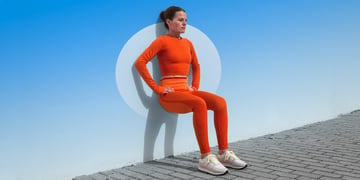
1. Wall sits

How to do it:
- Start with your back against the wall and your feet shoulder-width apart.
- Slide your back down the wall until you are in a seated position with your thighs parallel to the floor.
- Hold for a few seconds, then push through your heels to return to the starting position. Repeat 5–15 times.
2. Wall push-up
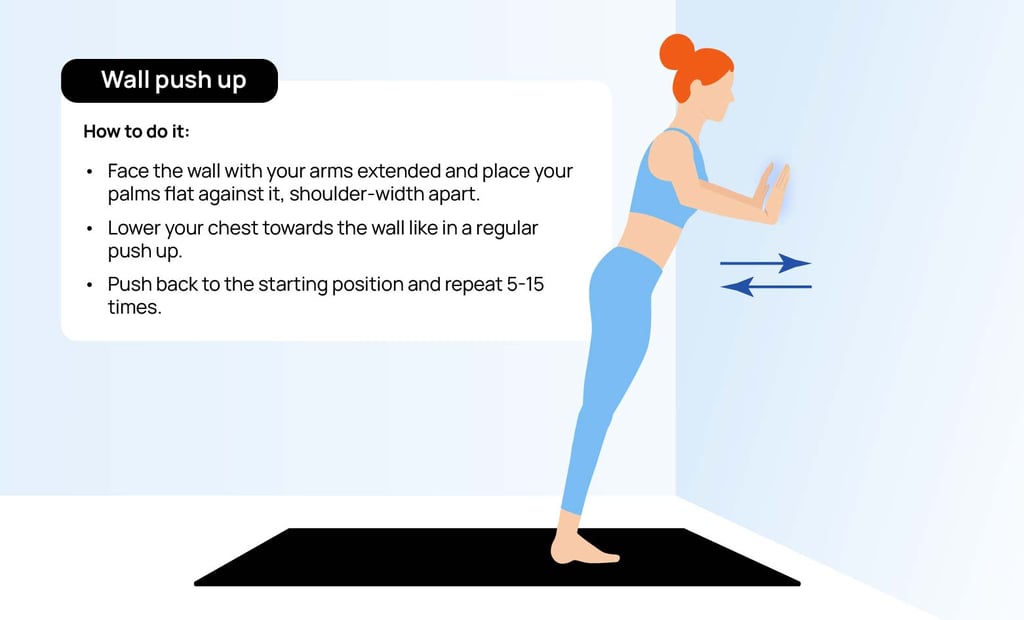
How to do it:
- Face the wall with your arms extended and place your palms flat against it, shoulder-width apart.
- Lower your chest toward the wall like in a regular push-up.
- Push back to the starting position and repeat 5–15 times.
3. Bridges with feet elevated on the wall
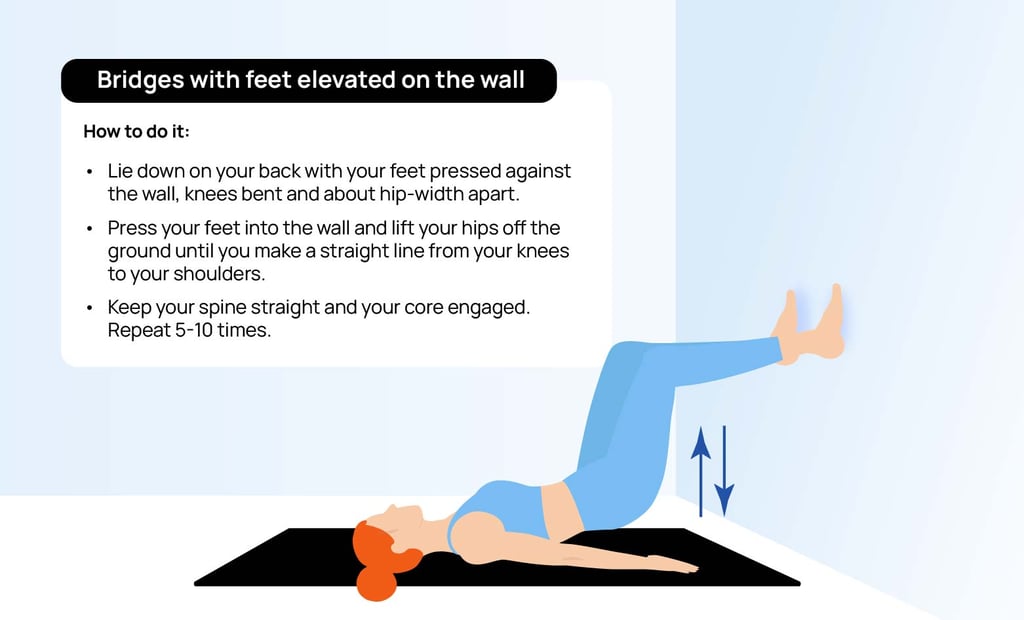
How to do it:
- Lie down on your back with your feet pressed against the wall, knees bent and about hip-width apart.
- Press your feet into the wall and lift your hips off the ground until you make a straight line from your knees to your shoulders.
- Keep your spine straight and your core engaged. Repeat 5–10 times.
Go slow and steady to begin with, and remember that consistency always trumps intensity when you're starting out. Aim to practice 2–3 times per week, focusing on proper form and alignment.
"I always tell beginners that it's better to do five perfect repetitions than 20 that are out of alignment,” says Brangwyn. “Bad movement habits actually cause issues later down the line."
Final thoughts on wall Pilates
If you are new to Pilates, don’t have a studio near you, or find expensive online programs restrictive, it’s a convenient way to practice. And, for anyone who has mobility issues or needs some extra support, the wall can provide a steady and solid base to work from.
However, I’m really not convinced by the adverts that promise shredded abs with a 28-day wall Pilates workout challenge. I think anything that offers a ‘quick fix’ or seems like a ‘magic bullet’ is always too good to be true, and often leaves us bitterly disappointed when we don’t see the results we want.
FAQ
How long does it take to see results from wall Pilates?
Wall Pilates isn’t going to change your body overnight, but you might start to notice improvements in strength within 4–8 weeks of consistent practice. After around the 8–12-week mark, you may see changes in the overall composition of your body.
Will 20 minutes of Pilates make a difference?
Yes, twenty minutes of focused wall Pilates is enough to work multiple muscle groups and engage in meaningful strength training. Especially if you have minimal rest periods and focus on good form with proper alignment. It’s worth saying that you definitely need to be doing those 20 minutes regularly if you want to see noticeable changes to your strength and flexibility.
Is wall Pilates only available in an app?
Not at all, you can find free videos on YouTube, social media, and fitness blogs. While apps and dedicated programs do offer you structure, once you’ve learned the basics, you can easily create your own routines without spending any money or downloading any apps.
3 resources
- Healthcare. Remote pilates training is effective in improving physical fitness in healthy women: a randomized controlled study.
- Frontiers in Physiology. Pilates for overweight or obesity: a meta-analysis.
- Nutrients. The effects of online home-based pilates combined with diet on body composition in women affected by obesity: a preliminary study.





Your email will not be published. All fields are required.