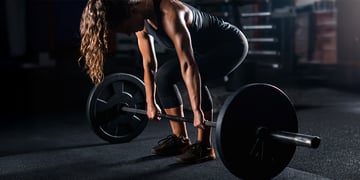
Historically, many women have shied from lifting heavy weights for fear of bulking up — which, in reality, is difficult because women typically have much lower testosterone levels and a different body composition than men.
Now, as ideals of femininity evolve and menopause enters the mainstream conversation, that perception has begun to shift, and more and more women are swapping their tiny dumbbells for heavier weights.
Interestingly, heavy lifting should be on the priority list from the 30s onward, as research suggests that strength training may counter many of the most detrimental effects of perimenopause and ease the transition into post-menopause. Understanding what changes during this phase — and how training can respond — is key to preserving independence and vitality in the decades that follow.
-
Perimenopause is a critical window for exercise intervention, as hormonal changes accelerate losses in muscle mass and bone density.
-
Heavy lifting preserves strength, bone density, and healthy body composition when performed safely and consistently during perimenopause.
-
Power training complements strength training, protecting muscle and bone while supporting mood and cognitive function, and countering some of the cognitive symptoms of perimenopause.
What happens during perimenopause?
Perimenopause, the transitional period leading up to menopause — the end of a woman’s menstrual cycle — usually begins in a woman’s 40s but can start as early as the mid-30s. Menopause itself typically occurs in the early 50s, with an average age of 52 in the United States. During perimenopause, the body undergoes three major changes:
1. Hormonal volatility
Levels of the sex hormones estrogen and progesterone fluctuate, and then, closer to menopause, rapidly decline. This erratic rise and fall can wreak havoc on the body, often causing uncomfortable symptoms such as mood swings, insomnia, brain fog, and hot flashes.
2. Muscle and bone loss
“With age and menopause, strength and power are the first things to go,” stresses Stacy Sims, PhD. An Exercise Physiologist and Nutrition Scientist specializing in female physiology, Sims is widely recognized for her work on training and nutrition strategies for women during perimenopause and menopause.
Among their many functions, estrogen and progesterone both support muscle health and bone density. Their decline during perimenopause accelerates bone breakdown and muscle loss, contributing to weakness and increasing the risk of osteoporosis — a condition characterized by low bone density and bone fragility. Osteoporosis substantially raises fracture risk, especially in women.
3. Body composition changes
Body composition changes during perimenopause usually include increased total body fat, decreased lean body mass, and a fat redistribution, with women tending to store more in the abdomen relative to the hips and thighs.
Strength and power training help counteract the effects of menopause
Research suggests that perimenopause is a critical time to implement a training regimen that helps slow muscle mass and bone density decline — major contributors to physical disability and frailty at older ages.
To help compensate for hormonal losses, the body may need external stress to trigger the same adaptive responses that hormones previously supported. This means challenging the body in ways that build both strength and power.
Building strength safely
To become stronger, Sims emphasizes that women should be lifting heavy weights in low repetitions instead of light weights in high repetitions. She considers a weight to be optimally ‘heavy’ if you can lift it only 3–6 times with proper form. Repeating the lift for 2–4 sets is ideal.
The advice to lift heavy runs contrary to what many women have been socialized to do in the gym — cardio-focused training and fitness classes with light free weights.
While steady-state (‘zone 2’) cardio workouts, such as jogging, support cardiovascular health, zone 2 training alone does not provide a sufficient stimulus to protect muscle, bone, and metabolism over the long term, says Sims. This is because women’s bodies are, by default, naturally adapted for endurance.
Current research suggests that strength training may be one of the most effective interventions for menopausal women to help maintain strength and bone density and address hormonal and metabolic changes. How women strength train also matters.
Weight-training machines, which were historically designed with men’s bodies in mind, can be useful for beginners by reducing injury risk. However, they are generally less effective than free weights for building functional, whole-body strength. Dumbbells, barbells, and kettlebells engage multiple muscles in a single movement, such as squats and deadlifts, rather than isolating individual muscles, as machines typically do.
Power training complements strength training
Training for power — the ability to move your bodyweight or external weight quickly — is also important for maintaining muscle and bone health, as well as improving neuromuscular coordination.
Power training involves short bursts of near-maximal effort. Think high-intensity interval training (HIIT) or sprint interval training (SIT) involving faster-tempo weightlifting and sprints, jumps, and other explosive bodyweight movements. Sims recommends implementing at least one or two HIIT or SIT sessions per week during perimenopause rather than focusing exclusively on zone 2 workouts.
Cognitive and mood benefits
Aside from their muscle- and bone-building benefits, strength and power training may support neuroplasticity — the brain’s ability to grow and adapt in response to new experiences. This may help with the ‘brain fog’ and memory issues that often accompany menopause. Research shows that HIIT in particular may provide cognitive benefits, including short-term boosts in mood, focus, and memory.
Final thoughts
Perimenopause may be inevitable, but it doesn’t have to mean slowing down or losing vitality. Proper nutrition and sleep, combined with consistent movement in whatever form of exercise you enjoy, remain the foundation. More intense exercise can be added gradually, at your own pace. Prioritizing strength and power may not only ease the transition into post-menopause — it might help build resilience, confidence, and healthspan, reframing midlife as a period of empowerment rather than decline.
7 resources
- National Institute on Aging. What is Menopause?
- JAMA. Osteoporosis: a review.
- Experimental Physiology. Effect of high intensity interval training on body composition in women before and after menopause: a meta-analysis.
- Women. The impact of resistance training on body composition, muscle strength, and functional fitness in older women (45–80 years): a systematic review (2010–2020).
- Journal of Clinical Medicine. The efficacy of strength exercises for reducing the symptoms of menopause: a systematic review.
- The Journal of Sports Medicine and Physical Fitness. Machines and free weight exercises: a systematic review and meta-analysis comparing changes in muscle size, strength, and power.
- Scientific Reports. Peripheral BDNF and psycho-behavioral aspects are positively modulated by high-intensity intermittent exercise and fitness in healthy women.






Your email will not be published. All fields are required.