On November 20th of last year, a new episode of The Kardashians revealed that Kim Kardashian had undergone the Prenuvo full-body MRI. It detected an aneurysm in her brain.
This announcement drew public attention, as many viewers became interested in preventing potential health risks. Numerous online articles emerged, claiming that similar body scans had saved lives.
Although Prenuvo MRI is promoted as a tool for early detection of abnormalities, many health professionals remain skeptical of this trend. Now that initial reactions have calmed, we can critically examine the facts surrounding these costly whole-body MRI scans.
-
Prenuvo's whole-body MRI scan states that it may detect cancer, brain-related, metabolic conditions, vascular risks, and neurological disorders.
-
Usually, abnormalities detected by a whole-body scan don’t lead to a diagnosis.
-
It is better to stick with evidence-based screening tests such as mammography, colonoscopy, Pap testing, and certain blood tests.
How does a whole-body MRI scan work?
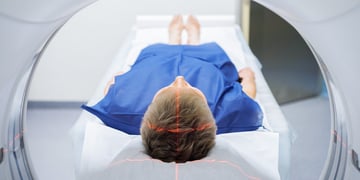
MRI stands for magnetic resonance imaging, a diagnostic technique that uses a magnetic field to produce images of the inside of the body. It is particularly well-suited for high-resolution pictures of soft tissues such as the brain, liver, kidneys, heart, and even blood vessels. As technology has improved, radiologists can now create full-body MRI scans in just one hour.
Prenuvo is one example that has recently gained popularity. According to the company’s website, its technology enables radiologists to provide comprehensive health insights. After a scan, results are interpreted by specialists and may take several weeks to appear in the user’s app. A Prenuvo nurse practitioner then reviews the findings and highlights any issues that may warrant discussion with a physician.
The website lists hundreds of conditions that the scan may detect. However, the primary concerns for most individuals include the following:
- Cancer detection
- Brain-related conditions
- Vascular risks
- Metabolic conditions
- Neurological disorders
Risk of overdiagnosis
Whole-body imaging is very sensitive. Amar Rewari, MD, an Adjunct Assistant Professor of Radiation Oncology at Johns Hopkins University School of Medicine, warns that it can detect abnormalities that might never become dangerous. “Once identified, they often trigger more imaging, biopsies, or specialist visits. In medicine, more information is not always better if it does not change management in a meaningful way,” he adds.
Research supports this warning. A review of studies examined whole-body MRI scans for cancer screening in the general population without symptoms. Across all 12 studies, 6,214 participants were included, of whom 95% had at least one abnormal finding. Only 9% of findings were cancer-related and required further investigation. Ultimately, only 1% of participants were found to have malignant cancer after biopsy.
Abnormalities can be detected in other conditions as well. For example, a whole-body MRI scan may detect red flags in your back, even if you don’t feel pain. A Physical Therapist, Jimmy Pang, explains how it can happen:
“For example, 30% of people in their 20s and 30s have disc herniations, yet most of them are asymptomatic. A disc herniation found on MRI has clinical value only when paired with findings on physical examination, such as a positive nerve tension test.”
A key challenge is that detection does not necessarily translate to improved health outcomes. As Rewari summarizes, “Screening tests are most valuable when we know they reduce mortality or serious disease, and we simply do not yet have that level of evidence for full-body MRI in the general population.” He adds that it is better to stick with proven preventive strategies, such as maintaining a healthy weight, exercising regularly, avoiding tobacco, limiting alcohol consumption, and managing blood pressure.
Does it increase anxiety?
Companies promoting whole-body MRI scans often reference the SIGNIFY study as evidence that the test does not increase anxiety.
This study assessed the psychological impact of whole-body MRI screening in individuals with TP53 mutations, which are associated with Li-Fraumeni syndrome. People who have this syndrome are more likely to develop breast, adrenal gland, bone, or soft-tissue cancers or brain tumors.
The study included 44 participants with a TP53 mutation and 44 controls. All of them underwent whole-body MRI scans and completed surveys measuring anxiety, cancer-related worry, and depression.
Results indicated that, although the TP53 group had greater baseline concerns about cancer, their anxiety levels did not increase after the scans. In fact, many reported reduced anxiety after receiving results.
However, this study focused exclusively on individuals already aware of their genetic risk, and outcomes may differ for asymptomatic people. As Rewari explains, “It may provide reassurance if the scan is normal. For others, incidental findings may increase anxiety. Especially when results are unclear or require further evaluation. I have seen patients feel stress over findings that ultimately prove benign.”
Better use of money
Whole-body MRI scans are typically not covered by insurance because they are not considered medically necessary. As a result, $2,500 might be a lot to spend on a single medical procedure.
Instead, Rewari recommends established screening tests such as mammography, colonoscopy, Pap testing, and certain blood tests, which have been validated in large populations and shown to reduce mortality.
“For example, a colonoscopy not only detects cancer but can also remove precancerous polyps. Mammography has decades of outcome data behind it,” he explains. “For individuals with strong family histories or specific genetic risks, targeted imaging under physician guidance may make sense. However, a full-body scan for everyone is difficult to justify from a cost-effectiveness standpoint.”
Final word: should you try it?
The decision ultimately depends on individual expectations. For those curious about what a full-body MRI scan might reveal, it is important to remember that most abnormalities identified during screening are typically benign.
However, individuals with specific health concerns or symptoms should prioritize tests that are supported by strong evidence.
According to Rewari, the most effective preventive strategies are to follow established screening guidelines, maintain a healthy weight, exercise regularly, avoid tobacco, limit alcohol consumption, manage blood pressure and cholesterol, and remain current with age-appropriate cancer screenings. “Preventive medicine works best when it is personalized and evidence-driven,” he concludes.
3 resources
- Cancer Imaging. Whole-body magnetic resonance imaging (WB-MRI) for cancer screening in asymptomatic subjects of the general population: review and recommendations.
- Cancer Genetics. Psychosocial effects of whole-body MRI screening in adult high-risk pathogenic TP53 mutation carriers: a case-controlled study (SIGNIFY).
- Cold Spring Harbor Perspectives in Biology TP53 mutations in human cancers: origins, consequences, and clinical use.






Your email will not be published. All fields are required.