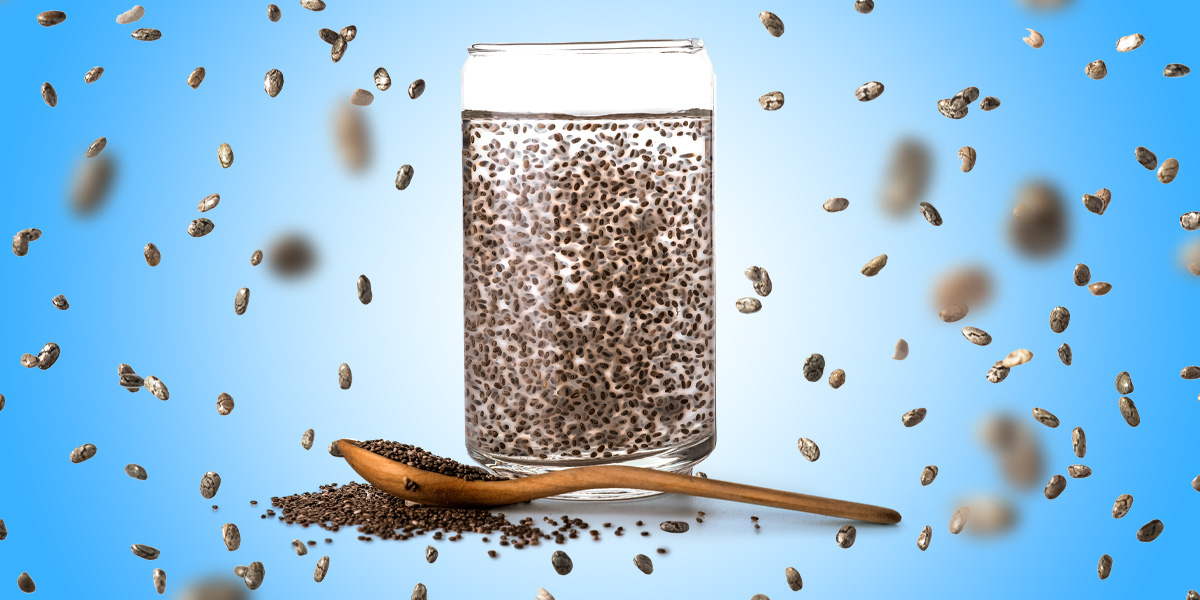
Recently, various wellness influencers, bloggers, and generally health-conscious communities on various social media platforms have been buzzing about chia seed water. Chia seeds soaked in water promise to support appetite, hydration, contribute to proper digestion, and even accelerate weight loss. It’s truly easy to see why many people are reaching for this gelatinous drink.
But does this trendy drink live up to these health claims, or is it just another wellness fad that we have to witness on social media?
As a nutritionist, I always feel compelled to talk about such trends and analyze them from a bit more critical and science-informed perspective. If you want to uncover whether it’s worth adding chia seed water into your healthy routine, read on.
-
Chia seeds offer fiber and other nutrients that may contribute to daily intake, but their health impact is often overstated.
-
Hydration and satiety claims have some merit, but chia water is not superior to other foods or drinks.
-
When used realistically, chia seeds can support healthy habits, but it is not a miracle fix for health issues.
What is chia seed water?
Chia seeds are small black or white seeds from the Salvia hispanica plant. They are appreciated in nutrition for their fiber content and various micronutrients. When soaked in water, chia seeds absorb some of the liquid and develop a gel-like coating, creating what’s popularly known as chia seed water.

While from a nutritional standpoint, chia seeds and chia seed water may contribute to the daily intake of various nutrients alongside a healthy and balanced diet, let’s explore whether these nutrients could meaningfully impact the potential benefits.
Popular beliefs of benefits vs. scientific evidence
While there are no specific studies assessing the commonly seen potential benefits of drinking chia seed water specifically, we can analyze how the claimed potential health benefits stand up to scientific scrutiny based on chia seed and water properties alone.
Claim no. 1 — supports hydration
One of the most common health claims I stumble upon quite often is that chia seed water’s gel-like structure, formed by chia seeds, is said to enhance hydration by helping the body absorb and retain water longer.
Chia seeds do absorb water due to their soluble fiber content. This gives the drink a viscous texture, which can slow down digestion to some extent. However, proper hydration depends on total daily fluid intake and electrolyte balance, not the thickness of a drink.
There are no studies currently showing that chia seed water hydrates the body more effectively than plain water or electrolyte beverages.
While some hydration may come from the water itself, depending on the consistency of the chia drink you will prepare, this is not something that may be considered a unique hydration advantage.
Currently, proper hydration recommendations include:
- Drinking fluids regularly throughout the day.
- Swapping sugary drinks for diet, sugar-free, or no-added-sugar drinks.
- Drinking caffeine in moderation. Some people are more sensitive to caffeine than others, which may lead to slight dehydration in some cases.
- Drinking extra fluids if you’ve been sweating from physical activity or if you’re feeling unwell.
- 3 L of fluids per day for men and 2.2 L for women is more than adequate (the amount of fluid daily needs may depend on various individual and environmental factors).
Claim no. 2 — supports weight loss and satiety
Another common saying I read and hear mostly on social media is that chia seeds and their gelatinous texture, when mixed with water, may either expand in the stomach or simply ‘fill’ the stomach, promoting fullness and contributing to reduced hunger sensation, this way leading to a lower calorie intake and potential weight loss.
Chia seeds are indeed high in fiber, with a serving providing us with almost 10 grams of fiber (including the soluble fiber). Soluble fiber may contribute to slowing digestion and promoting satiety.
Some small studies show that consuming fiber-rich foods like chia may help control the appetite during subsequent meals and provide a short-term satiety sensation.
On the other hand, clinical trials examining chia seeds on weight loss are mixed, with larger systematic reviews suggesting no meaningful impact on weight.
For example, one systematic review assessing the potential impact on many health-related parameters, including waist circumference, BMI, and total body weight, concluded that no significant impact was shown on BMI and weight in adults.
Another meta-analysis suggested that even at intakes from 25–50 g/day of chia seeds for 10–24 weeks, no meaningful changes in body weight and weight-related parameters were noted in overweight adults.
However, it is important to note that it seems chia seeds may contribute to small reductions in waist circumference in these studies. However, most people only use 1–2 teaspoons (5–10 grams) of chia seeds in water, far less than the amounts tested in the studies.
Theoretically, chia seeds may support satiety as part of a fiber-rich diet, but their impact on overall weight loss is minimal, meaning they should not be considered a standalone weight loss solution.
Claim no. 3 — supports overall digestion and gut health
One of the most common claims surrounding chia seeds is their proposed ability to support gut health, ‘cleansing it,’ promoting bowel regularity, and aiding digestion.
Chia seeds' dietary fiber content, including soluble fiber, may support proper bowel movements by softening the stools and potentially even serving as a prebiotic for beneficial gut bacteria.
Some studies are supporting the overall fiber and soluble fiber impact on gut health. For example, one study suggests that including more fiber in the dietary routine may contribute to increased stool frequency, less straining, improved stool consistency, and reduced discomfort.
Another study assigned chia seeds alongside other ingredients. A potential impact on people with constipation-predominant irritable bowel syndrome (IBS-C) was noted in symptom and stool consistency improvement when chia seeds were used together with other management methods.
However, that said, it's not a unique property in this respect. Other sources of soluble fiber like flaxseeds, psyllium husk, oats, fruits, and vegetables may offer similar potential benefits, which are usually shown in the scientific literature.
On the other hand, it’s important to understand that in terms of claimed chia seeds ‘cleansing’ properties in the gut, it’s not a scientifically valid proposed benefit to claim. The body’s detoxification systems function independently and do not require special beverages like chia seed water to work.
Is chia seed water worth the hype?
One thing I can say for sure to answer this is that it depends on your expectations. If you’re hoping chia water will make your belly fat ‘melt,’ ‘cleanse’ the gut, or radically transform the overall health, it’s not worth the hype.
However, if you’re looking for ways to support your daily fiber intake and contribute to other nutrient intake alongside your healthy diet, then chia seeds may be something worth considering adding to your daily routine.
Dr. Eric Berg, in his YouTube video about chia seeds, says: “Chia seeds have some vitamin E, vitamin C, some of the B vitamins, and also alpha-linoleic acids (ALA), a precursor to omega-3, and soluble fiber, which may contribute to overall health to some extent.”
Chia seed water considerations
When it comes to certain aspects of drinking chia seed water or simply adding more chia seeds to your daily diet, it is worth considering:
- Start small. Begin with one teaspoon or even less of chia seeds in a glass of water. You can always gradually increase the amount of chia seeds. However, if you’re not used to higher fiber intake, a sudden increase in this nutrient may contribute to excessive bloating or gastrointestinal discomfort.
- Let it soak fully. Always check if the chia seeds are fully soaked to provide a gelatinous texture. Dry seeds may contribute to an increased risk of choking or blockage in the throat.
- Don’t use it in isolation. While chia seeds and their water may contribute to fiber daily intake, they’re not a sufficient source of fiber on their own. Adults should aim for at least 10 g of fiber per 1,000 kcal per day.
- Stay critical of health claims. Be cautious of exaggerated health claims made by influencers or wellness marketers. Chia water is not a ‘detoxifier,’ not a ‘fat-burner,’ and not a substitute for a balanced diet.
Bottom line
Chia seed water is not a miracle elixir. However, it’s not just a trend either. Its rise in popularity is driven by plausible physiological mechanics, but most benefits are often overstated or taken out of context.
Used realistically, chia water can be a simple and low-calorie beverage that contributes to adding more fiber to your day, among other nutrients. On the other hand, like any other wellness trend, it should be viewed through a lens of critical thinking.
In the end, no single food or drink can revolutionize health. Sustainable wellness comes from a balanced lifestyle that includes nutritious food, regular movement, quality sleep, and informed dietary choices, not solely adding a spoonful of seeds to your water.
FAQ
Can chia seed water replace a fiber supplement?
While chia seeds provide some dietary fiber, they may not deliver the same dose as dedicated fiber supplements. Chia seeds should be a part of a broader high-fiber diet, not a replacement for supplementation or other healthy fiber-rich foods.
How long should chia seeds soak before drinking?
Generally, chia seeds should be soaked in water for at least 10–15 minutes to absorb water and form a gel-like texture fully.
Is it better to eat dry chia seeds or drink chia water?
Both have nutritional value, but drinking soaked chia seeds may be easier on digestion. However, in most cases, it’s about your personal preference. If you do not enjoy the gelatinous texture, you can include chia seeds in your daily meals, especially breakfast bowls, puddings, or smoothies.
10 resources
- StatPearls. High fiber diet.
- Gastrointestinal Disorders. Efficacy and safety of chia seed powder, pea protein, and xyloglucan in patients with constipation-predominant irritable bowel syndrome: a multicenter, double-blind, randomized, placebo-controlled trial.
- The American Journal of Clinical Nutrition. The effect of fiber supplementation on chronic constipation in adults: an updated systematic review and meta-analysis of randomized controlled trials.
- Nutrition & Metabolism. Effects of chia seeds (Salvia hispanica L.) supplementation on cardiometabolic health in overweight subjects: a systematic review and meta-analysis of RCT’s.
- Clinical Therapeutics. The effects of chia seed (Salvia hispanica L.) consumption on blood pressure and body composition in adults: a systematic review and meta-analysis of randomized controlled trials.
- Nutrition Research and Practice. Chia seed (Salvia Hispanica L.) added yogurt reduces short-term food intake and increases satiety: randomised controlled trial.
- Starch: Biosynthesis, Nutrition, Biomedical. Dietary fiber, gastric emptying, and carbohydrate digestion: a mini-review.
- Nederlands Tijdschrift voor Geneeskunde (Duch Journal of Medicine). How much water do we really need to drink?
- NHS. Water, drinks, and hydration.
- USDA. FoodData central: chia seeds.





Your email will not be published. All fields are required.