Fermented skincare has been gaining some serious attention in recent months, and you may have noticed fermented collagen taking center stage in your algorithm. But what happens when we scrub away all that fancy marketing?
Let’s take a look and find out if there’s any science to suggest whether fermented collagen is something you should be adding to your beauty regimen.
-
Fermented collagen has a smaller molecular size, which means your body may be able to absorb and use it more readily than regular collagen.
-
You can take fermented collagen as powders and capsules, or apply it topically using serums and creams.
-
Always choose a brand with a good reputation, great consumer reviews, and third-party testing.
-
If you decide to try it, remember to combine fermented collagen with a healthy diet, proper hydration, and good skincare habits, as no supplement can work miracles alone.
What is fermented collagen?
Although it might sound like something complicated, fermented collagen is simply collagen that’s been through a fermentation process. During this process, beneficial bacteria and yeasts break down the collagen molecules into smaller particles called peptides.
Allegedly, since the fermented molecules are smaller, the body may absorb them more easily than regular collagen. This may lead to the skin, joints, and other tissues using it more efficiently.
However, these claims are often touted by marketing departments in the cosmetic industry with no valid proof. To date, there aren’t any robust scientific studies that examine how well fermented collagen supplements are absorbed.
How to take fermented collagen
If you are wondering whether you can drink fermented collagen, or if it’s something you massage into your face, the answer is that you can do both. Fermented collagen comes in different forms, so you can find the type that works best for you.
Personally, I like collagen powder that I can mix into my morning mocha or a smoothie. Though I understand that some people may prefer capsules, since they’re a convenient way to take supplements.
Fermented collagen also appears in topical skincare products like creams, serums, and face masks. Although there is plenty of research to suggest that oral collagen supplementation may improve skin health and elasticity, there’s not a great deal of science supporting fermented collagen.
Interestingly, one 2024 study suggested that fermented fish collagen helped prevent ultraviolet (UV) light-induced collagen degradation in the skin. However, this study was done in vitro, which means it was performed in a lab under very controlled conditions. So, we can’t really say if taking a fermented fish collagen supplement or rubbing a topical serum directly on your face is going to work in the same way.
Breaking down fermented skincare
Fermented skincare uses an ancient technique borrowed from food preservation that humans have been utilizing for centuries. During fermentation, beneficial bacteria break down ingredients into smaller molecules that are added to beauty products with the aim of penetrating your skin more deeply.
Recent research suggests that skincare fermentation processes may also create other beneficial bacteria and compounds, which may protect and nourish your skin more than the original, unfermented ingredients.
Should we all be doing fermented facials?
When it comes to taking care of your skin, it’s a highly personalised and unique process. Going with what’s trending isn’t always going to work the wonders you think it might. I feel that it’s much more about finding what works for you and your lifestyle, as well as your skin type.
Having said that, if you’ve been using regular collagen creams and supplements for a while and aren’t seeing results, then fermented versions might be the upgrade your skin needs.
I have a food-first approach, and I think that skincare should always start with nutrition. The skin is our biggest organ, and it needs the right nutrients to keep healthy, supple, and glowing. Getting a wide range of healthy, whole foods and staying well-hydrated will do wonders for it.
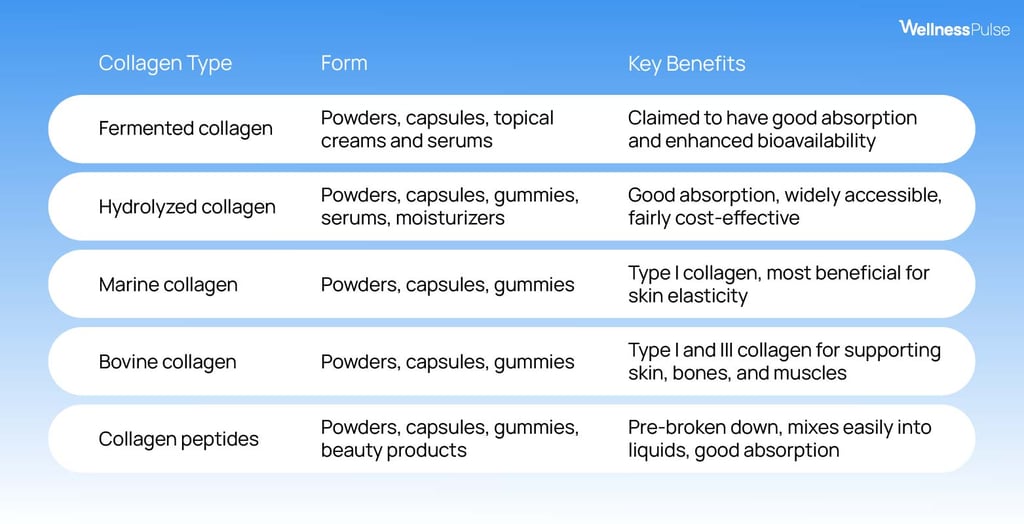
What is the most effective form of collagen to take?
Different forms of collagen serve different purposes, and the type you take will often depend on your needs and your lifestyle. The table below might provide you with a helpful comparison:
Final thoughts on fermented collagen
I do take collagen peptides and marine collagen powder every day myself, and I definitely notice the benefits of these supplements on my skin, hair, bones, and muscles. But, as there isn’t a huge amount of scientific support to prove that fermented collagen is better than any other kind, I’m hesitant to offer up a definitive answer on whether it’s worth it or not.
Diet and lifestyle play a huge role in the look, feel, and health of our skin and how our bodies function as a whole. We need to make sure we’re getting enough water, eating a nutrient-dense diet, managing stress, and protecting our skin from sun damage.
Lastly, not all collagen supplements are created equal. Always look for a product that comes from a reputable company, is transparent about sourcing, and is open to third-party testing. It might mean paying a bit more, but purity is always preferred to unnecessary fillers.
FAQ
Can collagen cause weight gain?
No, collagen itself doesn't cause weight gain. It's a protein with minimal calories. However, some collagen products contain added sugars or flavorings that could contribute to weight gain if consumed excessively.
Who shouldn't use fermented skincare?
People with allergies to specific fermentation sources (like yeast or certain bacteria) should be cautious. If you're pregnant, nursing, or have compromised immunity, consult your doctor before trying fermented products.
What is fermented red ginseng skincare?
Fermented red ginseng skincare uses Korean red ginseng that's been fermented to enhance its antioxidant properties. It's known for its potential anti-aging benefits, skin elasticity improvement, and complexion brightening properties.
3 resources
- Nutrients. Effects of oral collagen for skin anti-aging: a systematic review and meta-analysis.
- Fermentation. Fermented cosmetics and metabolites of skin microbiota—a new approach to skin health.
- Current Issues in Molecular Biology. Fermented fish collagen diminished photoaging-related collagen decrease by attenuating age–rage binding activity.




Your email will not be published. All fields are required.