While it seems that most of us know the primary basics of food safety and hygiene when prepping and cooking food at home, every year, foodborne illnesses still affect millions of people globally.
Most of the time, such diseases are a temporary inconvenience. Still, there are plenty of cases where food contamination can lead to serious health complications, especially when it comes to vulnerable people.
However, the good news is that most cases of foodborne diseases are preventable. Since most of us are getting busier and meal prepping is gaining more attention, I decided to present you with a practical, science-based guide on how to handle food safely and reduce the risk of food contamination.
-
The first line of defence against food spoilage and contamination includes properly washing hands, utensils, and produce before prepping and cooking your meals.
-
Using separate utensils, cutting boards, and storing the food properly can minimize the risk of the food going ‘bad.’
-
Following safe cooking and storage temperatures may help you prevent foodborne illness.
Why does food become contaminated in the first place?
All of our food goes through several steps before it reaches our kitchens. Naturally, contamination can occur at any point during this production chain. Various germs or harmful substances in the environment can contaminate meat, poultry, vegetables, fruits, and any other foods in the production chain from farm to grocery store, and even after we bring them home.
There are different types of contamination of food that may occur, including:
- Biological contaminants like ‘harmful bacteria’ (Salmonella, E. coli, Listeria), viruses, parasites, or fungi (molds and yeasts).
- Chemical contaminants include substances like pesticide residues, cleaning agents, or heavy metals.
- Physical contaminants like microplastic bits, stones, metal fragments, and other foreign objects can accidentally get into food during handling.
Even though all food handlers must follow strict food safety and hygiene practices, there is still a chance that these contaminants may cause health issues when consumed.
From a consumer perspective, while we cannot ensure food safety throughout the production chain, what we can do is to make sure that we follow the recommendations when handling food ourselves. This way, we minimize the risk of getting ill.
Now, let’s dig deeper into food safety tips and recommendations.
First defence against potential food contamination
Food safety and hygiene start with the most basic aspects like washing hands, cleaning your kitchen surfaces and utensils you often use to prepare the food, as well as cleaning the produce itself.
Wash hands often and properly
The Centers for Disease Control and Prevention (CDC) emphasizes that handwashing is the primary and potentially most effective way to prevent the spread of various harmful bacteria.
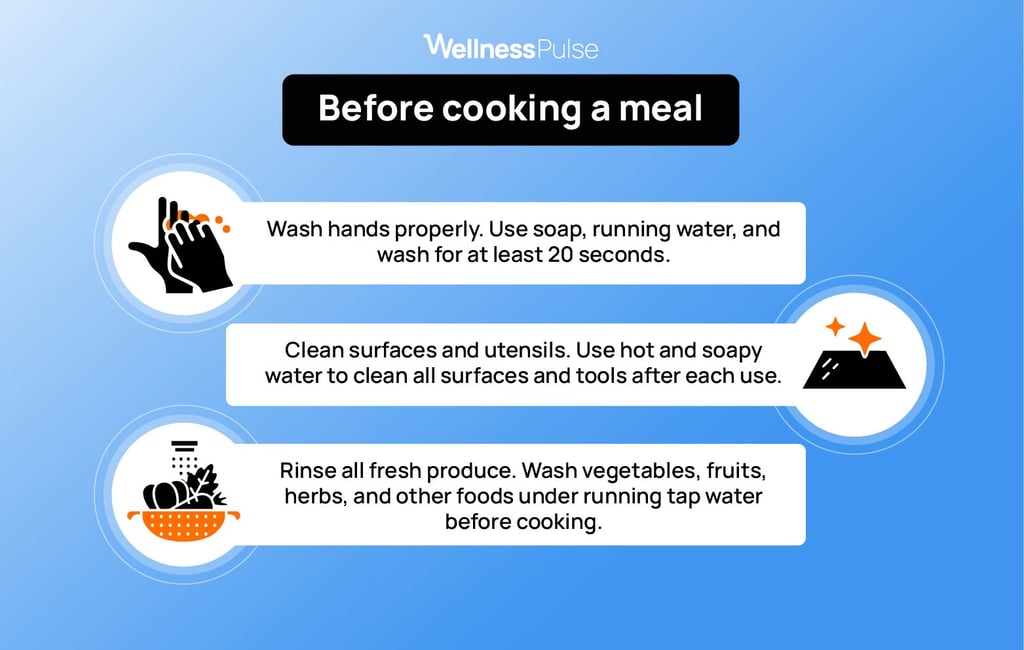
Make sure to wash your hands properly before and after handling the food, especially if you’re prepping raw meat, eggs, or seafood. Also, wash your hands before and after using gloves, before eating, or after wiping the counters or cleaning other surfaces before cooking.
Proper handwashing includes soap and warm running water for at least 20 seconds with a good scrub between fingers and ideally under your nails.
Clean surfaces and utensils regularly
Cross-contamination (when bacteria can transfer between surfaces) is one of the major culprits of potential contamination. Various bacteria and microorganisms, especially from raw foods, can transfer to cutting boards, countertops, and utensils.
The U.S. Department of Agriculture (USDA) encourages the use of hot, soapy water to clean all surfaces and tools after each use. While paper towels are generally recommended to wipe the surfaces, if you use kitchen towels, make sure to wash them frequently in a hot washing machine cycle.
Rinse fresh produce
When prepping fresh food like fruits or vegetables, washing them under running tap water is recommended before eating. This will remove any lingering dirt that may not be noticeable at a glance.
There is a growing trend of washing or even disinfecting fresh fruits and vegetables with detergents, soaps, or commercial produce washes. However, this practice is not recommended, as you may simply contaminate the produce with residues of these substances, which can make you ill.
Another recent trend I have noticed in my family and on social media is the use of devices like ultrasonic washers, ozone generators, or ionizing gadgets for ‘properly cleaning’ fresh produce. However, it is important to emphasize that such gadgets are not backed by solid scientific evidence for making the food cleaner than simply washing it under running tap water.
However, when the food is packaged and has a label ‘pre-washed’ or ‘ready-to-eat,’ such produce may be safely eaten without additional washing.
Keeping raw and ready-to-eat foods apart
When the produce you are prepping is clean, another aspect to be mindful of is trying to avoid any potential cross-contamination from surfaces and other foods.
Since bacteria and other potential contaminants can be found on all surfaces, some recommendations should be followed to minimize the risk.
Use separate cutting boards
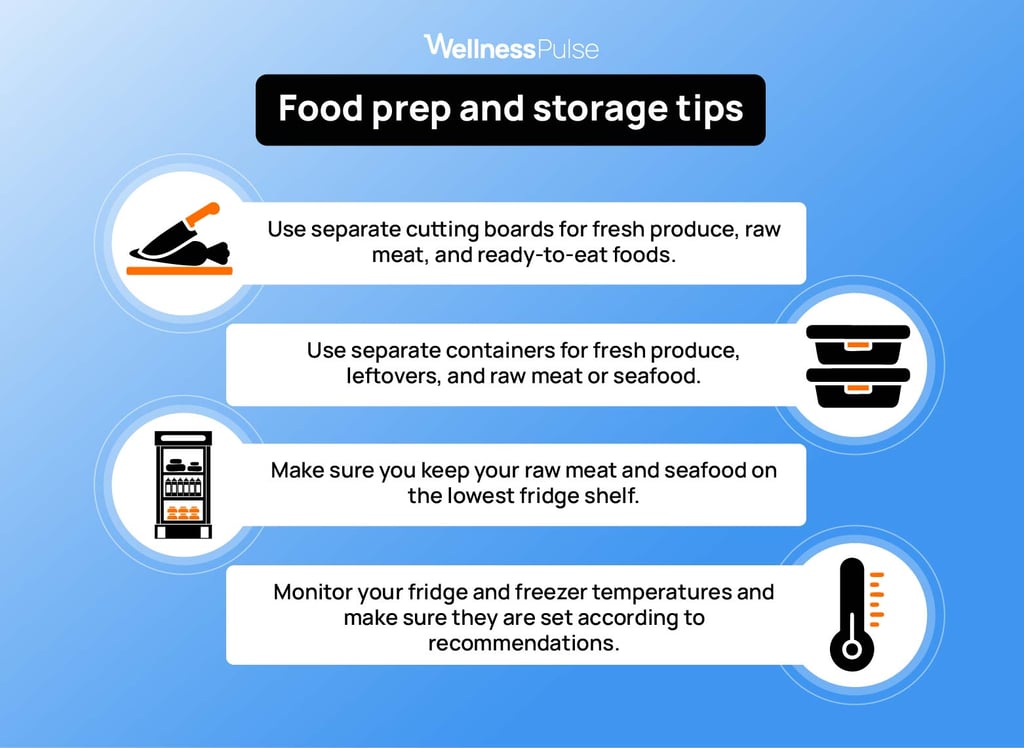
Color-coded boards can be of great help when it comes to safely handling food. Using different boards for raw meat and ready-to-eat foods like fruits or bread is essential to avoid biological contaminants transferring over, especially from raw meat to other products.
The USDA also recommends replacing cutting boards once they develop deep grooves that can harbor bacteria and other microorganisms.
If you are new to cooking, you might be wondering whether to choose plastic or wooden cutting boards. There is no common consensus on which is better, as both types are safe regarding food hygiene if used and cleaned correctly. It comes down to your preference.
Store food properly
The FDA notes that one of the key strategies for minimizing the risk of Listeria and Salmonella is storing raw meat, poultry, and seafood in sealed, separate containers on the lowest shelf of the refrigerator. This prevents juices from dripping onto other foods.
All ready-to-eat foods and leftovers should be stored on the higher refrigerator shelves. Labeling and dating leftovers or prepped perishable foods is a must. Many of us usually place day-old eggs in the refrigerator door. However, spoilage risk may increase each time due to temperature differences, thus it is recommended to keep these products inside the fridge.
Apart from that, make sure you are not overcrowding the fridge. By leaving space between containers, you allow proper air circulation and cooling.
Finally, many home fridges tend to be warmer than recommended, so it is always important to check and set the proper temperatures of your fridge and freezer. Those temperatures are:
- Fridge: 40°F (4°C) or below
- Freezer: 0°F (-18°C) or below
These temperatures may help to further prevent spoilage from microbial growth.
Temperature rules that cannot be ignored
Apart from storing the food in proper temperatures, cooking temperatures are another line of defence against food spoilage.
Raw meat and poultry, especially chicken, turkey, and other meats, need some extra caution and attention when cooking. Raw meat may be contaminated with Campylobacter or Salmonella, which leads to a bacterial illness causing diarrhea, fever, and abdominal cramps, among other symptoms.
This is why, when prepping meals that contain meat or other raw animal-based products, internal cooking temperatures are essential to reduce the risk of harmful bacteria growth.
Internal cooking temperatures in most common meats should reach:
- Poultry: 165°F (74°C)
- Ground meats: 160°F (71°C)
- Beef, pork, lamb: 145°F (63°C), with a 3-minute rest
- Fish: 145°F (63°C)
Tips for safe food prep
If you are planning to get into the trend of food prep, there are a few tips that may help you follow food hygiene and safety recommendations.
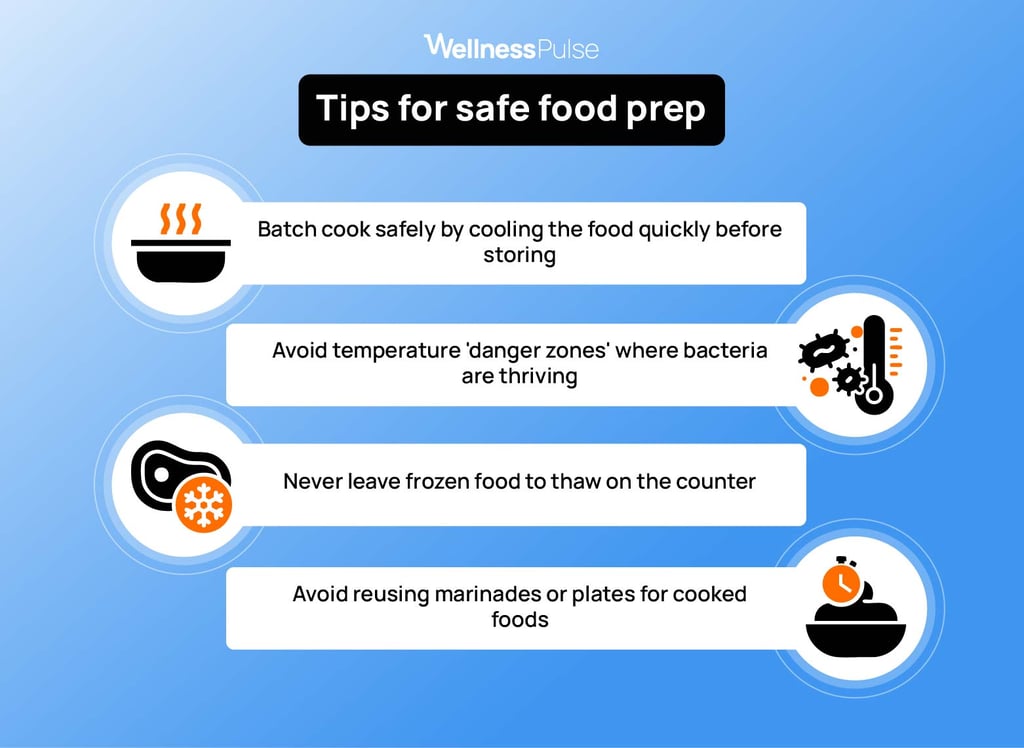
- Batch cook safely by cooling the food quickly before storing. In order to cool the food, divide it into smaller containers.
- Avoid temperature ‘danger zones’ where bacteria are thriving. These temperature danger zones include 40–140°F (4–60°C).
- Never leave frozen food to thaw on the counter, as this encourages uneven warming and bacterial growth. Properly thaw food by either leaving it in the refrigerator, submerging sealed food in cold water, which should be changed every 30 minutes, or microwaving if you are planning to cook the food right after.
- Avoid reusing marinades or plates for cooked foods. Marinades used for raw meat should never be used again. It’s also not recommended to place cooked food onto the same plates where raw food, especially raw meat, has been stored.
These tips, alongside other food safety recommendations, may help you minimize the risks of food contamination and foodborne illnesses.
Recognizing food spoilage and risks
Let’s be honest, sometimes even when you follow all of these safety and hygiene recommendations, food can still go bad, which, if not recognized, could make you ill. This is why recognizing spoilage signs is essential for kitchen safety.
While it's good to use our senses to check for signs of spoilage, I recommend not relying solely on your sense of smell.
Some ‘harmful’ bacteria like E. coli usually do not change the smell, taste, or appearance of food. This is why sensory checks are not enough. For this reason, always try to pay attention to ‘use-by’ and ‘best-by’ dates on the food labels.
- ‘Use-by’ date determines the safety of the food. Food should be consumed before this date.
- ‘Best-by’ date determines the quality rather than safety, meaning that such foods may still be safely eaten past the date. However, their taste or other properties may be altered.
Some foods may need more attention as they are more prone to spoilage and bacterial growth. These include foods like cooked rice, pasta, Deli meats, soft cheeses, eggs, dairy, and any cooked leftovers. Remember — most leftovers can be safely stored in the fridge for 3–4 days.
When any food has sliminess, stickiness, mold, sour or rancid smell, discoloration, or spots that are not normally present on particular food, or the packages of the foods are swelling due to gas, make sure to throw such food out.
In any other cases, it is best to remember that when in doubt, throw the food out. While food waste is another topic for another time, it is better to ensure safety and reduce the risk of health complications due to foodborne illness.
Bottom line
Even though most of us know the initial basics of food safety and hygiene, real food safety lies in the details. It is important to monitor how we wash and store food, and the way we cook and handle leftovers.
By following simple, science-backed food safety practices recommended by trusted organizations, we can significantly reduce the risk of foodborne illness at home.
FAQ
Do you need to wash raw meat or poultry before cooking?
No. The USDA emphasizes that washing or rinsing meat or poultry may increase the risk of cross-contamination in the kitchen, which could increase the risk of foodborne illness. Also, never use soaps or detergents on meat or poultry products.
Is it safe to eat food that was left out overnight if it looks and smells fine?
No. Even if the food smells and looks fine, leaving perishable items for more than two hours in the ‘danger zone’ temperatures allows ‘harmful’ bacteria to multiply to unsafe levels. This is why the leftovers should be stored properly according to recommendations.
How often should I clean and disinfect my refrigerator?
If you notice any spills, you should wipe them up immediately. A full clean is recommended every 1–2 weeks with warm, soapy water, but this may depend on how you are storing the food. In any case, try cleaning your fridge regularly to prevent any potential mould, bad odor, or cross-contamination from spoiled items or raw product juices.
14 resources
- CDC. How food gets contaminated: the food production chain.
- Academic Press. Handbook of food bioengineering: food products and food contamination.
- National Environmental Agency. Food handler’s handbook.
- CDC. About handwashing.
- British Food Journal. Determinants of cross-contamination during home food preparation.
- USDA. Cutting boards.
- USDA. Washing food: does it promote food safety?
- FDA. Selecting and serving produce safely.
- FDA. Consumer updates: are you storing food safely?
- Clinical Microbiology. Global epidemiology of Campylobacter infection.
- Diseases of Poultry. Salmonella infections.
- Food Safety. Safe minimum internal temperatures.
- USDA. Danger zone.
- USDA. Food product dating.



Your email will not be published. All fields are required.