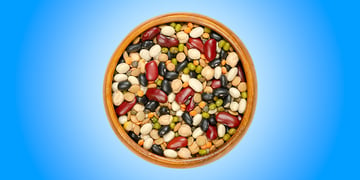
With plant-based diets, such as the Green Mediterranean diet, on the rise, we encounter the word 'pulses' more often. And no, we are not talking about your heartbeat. Pulses are edible plant seeds that, spoiler alert, may be good for your heart.
In this article, we will take a closer look at why it is essential to include pulses in your diet and what benefits they provide.
-
Pulses are rich in fiber, protein, and other nutrients that may provide health benefits, including support for vascular, metabolic, and gut health.
-
Even though canned beans are not as nutrient-dense as dry and cooked beans, eating them still may have a positive effect on your health.
-
Gradually incorporating pulses into your diet may help reduce bloating.
What exactly are pulses?
People often use 'pulses' and 'legumes' as if they mean the same thing, but they actually refer to different parts of the plant.
A legume is defined as any plant belonging to the Fabaceae family, including its leaves, stems, and pods. Pulses are the edible seeds of legume plants. For example, a bean pod is a legume, but the bean inside the pod is the pulse. Pulses also include lentils, peas, chickpeas, lima beans (butter beans), pinto and black beans, and way more.
Health benefits of pulses
Health Secretary Robert F. Kennedy recently announced new dietary guidelines that focus on protein, vegetables, healthy fats, fruits, and whole grains. Though pulses are considered vegetables, they often get overlooked at mealtime. Considering their benefits, we should give them more attention in our diets.
A 2024 review found that pulses may help manage chronic health conditions. While more research is needed in different groups, current evidence suggests legume seeds may support diabetes management and heart health.
Simply replacing current proteins with 1.5 to 2 cups of pulses per week may reduce cholesterol by more than 10%. Even though Robert F. Kennedy praises red meat consumption, switching refined grains for higher amounts of pulses or combinations of protein foods could increase fiber, iron, magnesium, potassium, and copper in a healthy 2,000 kcal diet.
Earlier studies further support these perspectives. Research from 2016 suggests that increased pulse intake may reduce the risk of cardiovascular problems due to its favorable effects on blood pressure, diabetes, and glycaemia.
As we can see, legume seeds are a nutritious powerhouse. But let’s briefly step away from broader studies and take a look at some seeds separately. Here are potential benefits they may provide:
- Consumption of dried, cooked pinto beans (half a cup) four times a week may decrease cholesterol in healthy individuals.
- Chickpeas have demonstrated a beneficial effect on blood sugar control compared to other common foods. Furthermore, some research suggests that chickpeas may also positively affect insulin levels.
- Whole peas are rich in macronutrients, proteins, starches, and fiber. Because of their bioactive ingredients, peas offer various health benefits, including antioxidant, anti-inflammatory, and antimicrobial effects.
- Lentils are rich in immune-boosting vitamins and minerals. Their consumption may be linked to reduced incidence of diabetes, obesity, and cardiovascular diseases. Lentil proteins may have a beneficial impact on hypertension control.
- Black bean and red kidney bean consumption may contribute to vasorelaxation (widening of blood vessels) in healthy adults, helping blood flow and deliver more oxygen and nutrients to tissues.
Nutritional density of pulses
The Dietary Guidelines for Americans recommend that, for every 1,000 kcal, you need 14 g of fiber daily. The exact amount you need depends on your calorie intake, which is affected by gender, physical activity, and age.
However, on average women need about 22–28 g of fiber a day, and men need 28–31 g. Even so, about 90% of women and 97% of men in the U.S. do not get enough fiber.
The guidelines also say that women need about 46 g of protein each day, and men need about 56 g. Carbohydrates should make up 45–65% of your daily calories. For a 2,000-calorie diet, that means 225–325 g of carbs, but this can change based on your activity, age, and goals.
Eating a variety of foods is important for a healthy diet. The picture below shows the nutritional content of different pulses to help you meet your daily needs.

Pulses are also rich in various micronutrients. Use the following picture of pulses to identify the daily value (%DV) of vitamins and minerals per cup.
Canned beans as an alternative
Preparing dry beans can be time-consuming. You have to soak them overnight, then boil for 1–2 hours. Naturally, to save time, people grab canned beans from the shelves. Due to their convenience and ease of preparation, canned beans account for around 60% of total bean consumption in the U.S. As it belongs to the processed food category, some might question whether it is as healthy as dried beans.
If we look at the nutritional density of home-cooked and canned beans, we can see slight differences. Canned beans have a reduced amount of protein and fiber compared to those that are dried and then cooked, according to a 2018 study.
Additionally, the brine in the cans contains a high amount of salt. As a result, canned beans rank lower on the nutrient density scale. This score is generally calculated by balancing beneficial nutrients (protein, fiber, and similar) against their negative ones (added sugars, sodium, saturated fats).
That means draining and washing can be beneficial, as it may reduce sodium intake by up to 50%. With that, the nutrient density score of canned beans goes up almost twice.
Some variation in nutrition is normal, but it's essential to focus on the overall picture. These studies look at even minor differences between home-cooked and canned beans. While nutrition numbers matter, the health benefits are just as important.
A 2025 study found that replacing other protein foods with 1–2 servings of canned beans each day in the U.S. diet may help to improve intakes of fiber, iron, potassium, magnesium, and folate. While canned and rinsed beans have a lower nutritional density score, they still may benefit your health.
Avoiding bloating after eating pulses
Most legumes and pulses contain high amounts of dietary fiber and resistant starches. Those elements are not the easiest for our stomachs to digest. As a result, bacteria in our guts start to ferment it, leading to gas and an uncomfortable belly.
Some evidence suggests that eating pulses daily may help your body adapt, naturally reducing gas over time. But if eating beans still frightens you, try adding them to your diet gradually.
In a recent WellnessPulse article about fibermaxxing, nutrition experts suggest adding 5 g of fiber at a time over a few days, spread throughout the day rather than all at once. As fiber works best when it can absorb fluid and move smoothly through the digestive system, it is recommended to drink water when eating beans.
The takeaway
Pulses are full of fiber, protein, and other micronutrients, making them a great choice for your meals. They are not only nutritionally dense but may also help improve your overall health.
There are many types of pulses to suit different tastes, and if cooking them takes too much time, canned pulses are a convenient alternative.
14 resources
- U.S. Department of Agriculture (USDA). Dietary Guidelines for Americans (DGA).
- Nutrients. Pulse consumption and health outcomes: a scoping review.
- Journal of Food Science and Technology. Bioactive constituents in pulses and their health benefits.
- Nutrients. Effect of adding pulses to replace protein foods and refined grains in healthy dietary patterns.
- Nutrients. Nutritional composition and bioactive content of legumes: characterization of pulses frequently consumed in France and effect of the cooking method.
- Food and Nutrition Sciences. Comparison of nutrient density and nutrient-to-cost between cooked and canned beans.
- The European Society of Medicine. Replacing protein foods for canned beans increases shortfall nutrient intakes and improves diet quality in adults.
- Nutrition Journal. Perceptions of flatulence from bean consumption among adults in 3 feeding studies.
- Harvard T.H. Chan. Legumes and pulses.
- International Journal of Molecular Science. Polyphenol-rich dry common beans (Phaseolus vulgaris L.) and their health benefits.
- Nutrients. Effectiveness of chickpeas on blood sugar: a systematic review and meta-analysis of randomized controlled trials.
- Foods. A comprehensive review of pea (Pisum sativum L.): chemical composition, processing, health benefits, and food applications.
- Current Research in Physiology. Health-promoting benefits of lentils: anti-inflammatory and anti-microbial effects.
- Nutrition, Metabolism & Cardiovascular Diseases. Black beans and red kidney beans induce positive postprandial vascular responses in healthy adults: a pilot randomized cross-over study.






Your email will not be published. All fields are required.