
Controversial topics usually become a matter of debate. Quite recently, while enjoying dinner with family, I witnessed the lab-grown meat debate and understood that while the term is known to most people, what is behind cultivated meat is poorly understood.
Meat without animals may sound like science fiction, but it’s becoming science fact. In recent years, lab-grown meat, also known as cultivated, cultured, or cell-based meat, has moved from research labs to the edges of supermarket shelves.
While companies and investors are pouring billions into its development, and early regulatory approvals may be in place in certain parts of the world, proponents suggest it could revolutionize how we produce protein.
However, some questions are crucial for us as consumers: Is lab meat healthy? Is it nutritionally sound, microbiologically safe, and free of unwanted chemicals or potential health risks? In this article, I will try to uncover and break down what cultivated meat is, how it’s made, why it was developed in the first place, and what science tells us so far about its nutritional properties and potential health impact.
-
Cultivated meat may be biologically similar to conventional meat, but nutritional quality, especially micronutrients, may vary unless fortified or engineered.
-
There is limited independent scientific data on the long-term safety, digestibility, and health effects of cultivated meat, and current approvals may rely heavily on industry-provided data.
-
Reducing meat intake through traditional plant-based eating patterns remains a proven, evidence-based strategy for supporting both overall health and potentially lowering environmental impact.
What is lab-grown meat, and how is it made? Understanding the science behind
Lab-grown meat is made by cultivating animal cells in a controlled environment. Such an idea popped up in researchers’ minds due to ethical and environmental considerations involving animal welfare and growing population, and food demand all around the world.
Unlike plant-based alternatives, which use soy, peas, or wheat to mimic meat, cultivated meat is made with real animal cells, which are grown into muscle tissue, fat, and eventually something that looks and tastes like conventional meat.
How is cultivated meat grown?
The process of lab-grown meat involves producers extracting a small number of stem or satellite cells from a living animal, usually through biopsy. These cells can replicate and differentiate into the type of tissue found in meat, primarily muscle and fat.
Then, the cells are placed in a nutrient-rich liquid called culture medium. This contains amino acids, sugars, vitamins, minerals, salts, and growth factors — ingredients that mimic the animal’s internal environment.
The cells are grown in large stainless steel tanks, somewhat like those used in brewing beer. They are called bioreactors. These tanks control temperature, oxygen, and pH to create optimal conditions for cell growth and tissue development.
For the lab-grown meat to have structure, growing cells need scaffolds, which are edible and biodegradable frameworks that provide shape and structure. Usually, such scaffolds are made from plant fibers, collagen, or alginate.
Finally, after sufficient growth, the cell mass is ‘harvested’ and may be further used for processing by adding flavors, binders, oils, and other additives to produce products like burgers, meatballs, nuggets, and other meat-based products.
In one of his interviews, Joe Balagtas, Professor at Purdue University College, says: “We used various surveys to understand how people feel about cultured meat. What’s interesting is that when we dig deeper into why people are willing or not willing to try lab-grown meat, a few things stand out, such as the potential flavor of such meats, the concerns about the healthiness of such meat.”
While we are not able to assess the perceived taste of lab-grown meat in this article, let’s explore the ‘healthiness’ part.
Nutritional value of cultivated meat
There is very little scientific research detailing the nutritional profiles of lab-grown meat, which makes it difficult to evaluate whether this meat production process may benefit health, at least purely from a nutritional standpoint.
Protein
Some scientific evidence suggests that since cultivated meat is derived from real animal muscle cells, meaning it may contain real muscle protein, when grown under optimal conditions, the total protein content per 100 grams of cultivated meat, specifically beef, may be comparable to traditional meat.
Similarly, it is suggested that the amino acid profile of cultivated meat may be similar to that of traditional meat. However, it is highlighted that protein and amino acid content in cultivated meat may also depend on certain factors like the types of cells taken to grow the meat, the degree of tissue maturation before ‘harvesting,’ and also the processing stage.
On the other hand, certain aspects related to proteins in lab-grown meat have been questioned. These include protein bioavailability and digestibility, as well as a lack of independent and transparent data on its nutritional composition. For now, much of it is simply hypothetical.
Fat
In conventional meat, fat is integrated within the muscle or around it. Meanwhile, in cultivated meat, fat cells may be grown together with muscle cells or grown separately and later on combined during processing. This allows producers a very flexible approach in terms of total fat content or fatty acid composition.
Theoretically, the fat content and other aspects may be altered. However, it is not clear whether cultured meat may contain as much, less, or no cholesterol compared to conventional meat. Additionally, there is ongoing debate about fat quality and the potentially costly supplements needed to achieve the promised ‘healthy fat’ in cultured meat.
Micronutrients
In theory, like traditional meat, cultivated meat may also contain micronutrients such as iron, zinc, vitamin B12, selenium, and phosphorus, among many others.
However, there are concerns over the micronutrient content that may naturally occur. For example, vitamin B12 may be synthesized by bacteria, not by animal cells themselves, meaning that without additional fortification, cultivated meat may lack this vitamin.
Another aspect is the form and amount of iron, which may vary greatly in cultured meat compared to traditional meat. It is suggested that iron in lab-grown meat may contain less myoglobin, thus less heme (more bioavailable) iron, especially in early stages or unstructured meat products.
The same questions are raised for other micronutrients as well as their potential bioavailability (how the body absorbs the nutrients) in cultivated meat, as no long-term studies are available.
Is lab-grown meat safe to eat? Health perspective
While the idea of growing meat in a lab is quite novel and in some sense exciting, health authorities are already scrutinizing lab-grown meat through safety and regulatory lenses.
In 2020, Singapore became the first country to support cultivated chicken meat for sale. Meanwhile, in 2023, the FDA and USDA jointly cleared two companies, GOOD Meat and UPSIDE Foods, to potentially begin selling cultivated chicken.
It is important to note that, to date, regulatory agencies rely solely on data provided by the industry itself, as independent third-party scientific assessments are still lacking.
In Europe, it is determined that the existing food framework is not fit for evaluating ethical, social, environmental, and other challenges posed by cultivated meat. Many countries, including Italy, Austria, France, and eleven other EU members, issue notes expressing concerns over the safety of cultivated meat. In 2023, a law banning the commercialization and production of cultivated meat in Italy was released.
One argument regarding the food safety of cultivated meat is that, by eliminating potential risks from farm to fork and instead producing the meat in a controlled environment, there is less chance for meat contamination with pathogens that may cause foodborne diseases. However, scientists agree that we lack large-scale data to understand whether there is an increase in unknown potential food safety risks due to this meat production type.
On the other hand, some scientific research presents counterarguments that cell-cultured meat or seafood production may rely on manufacturing methods not yet commonly used or fully understood in food production. As a result, byproducts and other aspects in each step may require separate safety considerations.
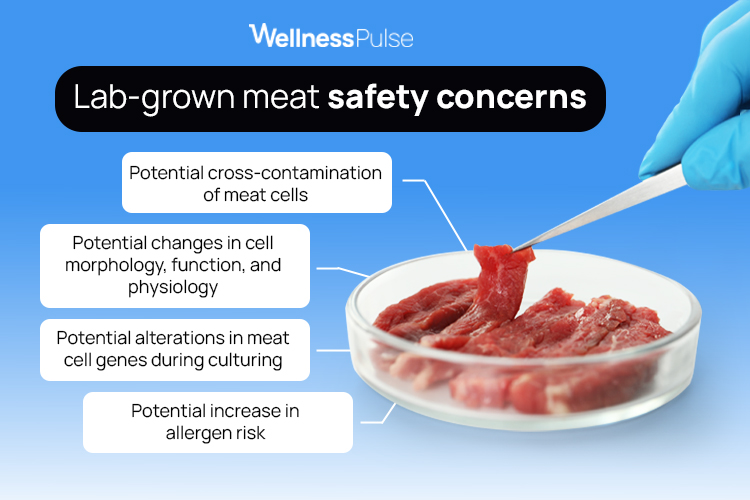
Some of the safety concerns that are raised include:
- Potential contamination or cross-contamination of the meat cells used to cultivate the lab meat.
- Potential changes in cell morphology, function, and physiology, which may result in a final product that has characteristics and health impacts different from those of conventional meat.
- Alterations in the types of genes during culturing the meat from cells may result in genetic drifts, which may not be safe for consumption.
- Increased risk of allergens and allergenicity due to processing the meat and adding various ingredients to mimic the texture or flavor of the conventional meat products.
As of now, we do not know the long-term and short-term health effects of consuming such meat.
Reducing meat consumption the old-fashioned way
Before lab-grown meat entered the discussion, many individuals and public health organizations were already advocating for a simpler, more established strategy, which is eating less meat. This ‘old-fashioned’ approach doesn’t rely on bioreactors or stem cells, but more on conscious dietary choices often centered around plant-based foods.
In terms of health, instead of trying to include new meat production methods, reducing red and processed meat altogether, especially in Western diets, has consistently been linked with lower risks of cardiovascular disease, type 2 diabetes, and other health issues.
Moreover, environmentally, plant-based eating may require fewer resources and produce fewer emissions. For example, it is suggested that transitioning to plant-based diets has the potential to reduce diet-related land use by 76% and diet-related greenhouse gas emissions by 49%, among other environmental factors.
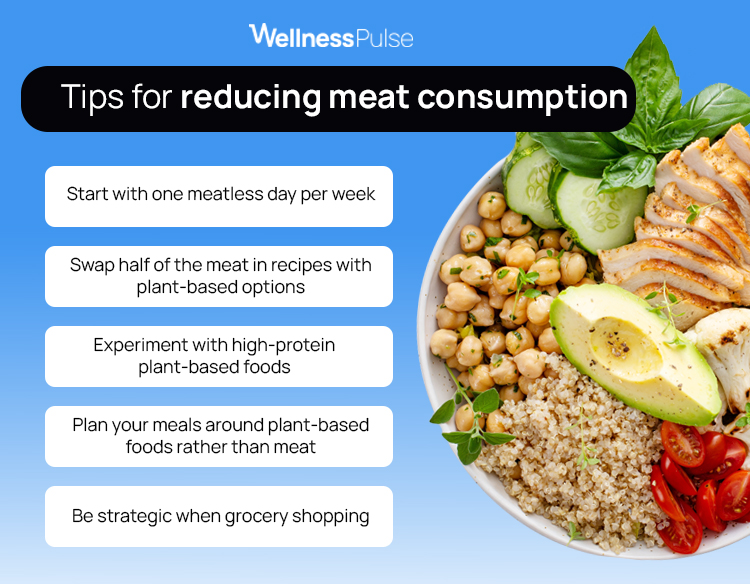
For those who are looking for ways to reduce animal-based meat consumption altogether, here are some tips:
- Start with one meatless day per week. Dedicate one day a week to eating entirely plant-based meals. You can try meals like chickpea salad, tofu stir-fry, vegetable chili, or lentil curry, to name a few.
- Swap half of the meat in recipes with plant-based protein. For some meals, like pasta sauces, tacos, and stews, replacing half of the meat with lentils, beans, mushrooms, or finely chopped vegetables could help the transition to reducing meat intake.
- Experiment with high-protein plant-based foods. Whole-plant foods like legumes, tofu, edamame and soy products, quinoa, buckwheat, and many more foods are quite versatile, so with some experimentation with spices and cooking methods, you may find recipes that you enjoy, even if they do not have meat.
- Plan your meals around plant-based foods rather than meat. Instead of wondering what meat you will have for your daily meals, try planning your meals around grains, legumes, and vegetables, with some meat as a side or flavoring, if at all. For example, a roasted vegetable grain bowl with tahini instead of a steak-based dinner.
- Be strategic when grocery shopping. Shop with meat intake reduction in mind and stock up on canned or dry beans or lentils, frozen vegetables or stir-fry mixes, whole grains, and try including some meat alternatives, whether that would be tofu, tempeh, or plant-based meat alternatives like sausages, burger patties, or ground plant-based meat.
These tips, alongside other techniques and some planning in advance, may help you transition from animal-based to primarily plant-based nutrition. You don’t need to completely change your diet, but reducing meat consumption to some extent may help support both your health and the environment.
Bottom line
While lab-grown meat offers a promising technological solution to ethical and environmental issues of meat production, its potential health impacts remain largely theoretical. Current research suggests that while cultivated meat may mimic the nutritional profile of conventional meat, it may fall short in certain key micronutrients unless modified or fortified.
Without independent long-term studies on human health outcomes and the safety of consuming lab-grown meat, it may be assumed that it’s premature to call it a nutritionally superior option. Until more research is available, reducing conventional meat intake through plant-based alternatives remains a more established and scientifically supported approach for both personal and planetary health.
FAQ
Can lab-grown meat be classified as ‘natural’?
Lab-grown meat is produced using advanced technologies and artificial environments, which may challenge the traditional understanding of ‘natural.’ The processing of such meat may also disqualify it from being perceived as ‘natural’ in a conventional understanding.
May lab-grown meat also require the use of antibiotics like conventional meat often does?
Lab-grown meat is typically produced in a sterile lab environment without the need to raise whole animals, which may theoretically minimize the risk of microbial contamination that would otherwise require antibiotics. However, there is still a risk of contamination and cross-contamination, so antibiotics may be used as a preventative measure. The exact mechanisms and conditions of growing such meat are still not entirely clear.
Is lab-grown meat suitable for vegetarians or vegans?
While lab-grown meat does not involve slaughtering animals, it still comes from animal cells and is an animal-derived product. This is why it may not align with the ethical or dietary standards of vegetarians or vegans.
19 resources
- Appetite. Strategies to reduce meat consumption: a systematic literature review of experimental studies.
- Nutrients. Plant-based dietary patterns for human and planetary health.
- The Permanente Journal. Nutritional update for physicians: plant-based diets.
- Cellular Agriculture. Food safety of fermented proteins and cultivated meat and seafood.
- Comprehensive Reviews in Food Science and Food Safety. Food safety considerations and research priorities for the cultured meat and seafood industry.
- Comprehensive Reviews in Food Science and Food Safety. Cultured meat microbiological safety considerations and practices.
- NPJ Science in Food. A perspective on the regulation of cultivated meat in European Union.
- Congress.GOV. Cell-cultivated meat: an overview.
- Journal of Animal Science and Technology. Current technology and industrialization status of cell-cultivated meat.
- StatPearls. Dietary Iron.
- Meat Science. Cultured meat from stem cells: challenges and prospects.
- Frontiers in Nutrition. The myth of cultured meat: a review.
- Frontiers in Nutrition. Tissue engineering for clean meat production.
- Applied Sciences. Consumer acceptance of cultured meat: an updated review (2018-2020).
- Annals of the New York Academy of Sciences. An alternative animal protein source: cultured beef.
- Trends in Food Science and Technology. Bringing cultured meat to market: technical, socio-political, and regulatory challenges in cellular agriculture.
- Critical Reviews in Biotechnology. Scaffolds for the manufacture of cultured meat.
- Engineering in Life Sciences. Cultivated meat manufacturing: technology, trends, and challenges.
- Trends in Food Science and Technology. Challenges and possibilities for biomanufacturing cultured meat.






Your email will not be published. All fields are required.