If you look at search trends for ‘boost testosterone,’ you’ll notice a clear increase. And it’s not only men with clinically low levels driving that interest. More healthy men are exploring ‘natural’ ways to increase testosterone for a range of reasons, whether that’s muscle gain, faster recovery, sharper focus, or higher libido.
Shilajit, a substance with a somewhat unusual appearance and a long history of traditional use, has recently surfaced as one of such options. Some male influencers promote it as a go-to supplement for a testosterone boost and even call it ‘nature’s Viagra.’
In this article, we’ll take a brief look at modern scientific evidence to see how well these claims hold up.
What is shilajit?
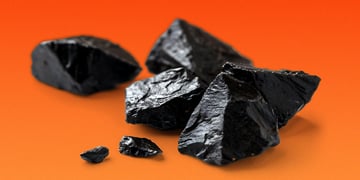
Shilajit is a dark, sticky, tar-like substance found high in the mountains, most commonly in the Himalayas. It forms over centuries as plant matter and other organic materials slowly decompose under heat and pressure between rock layers. Eventually, this gooey, blackish-brown paste seeps out of rock surfaces.
Most of shilajit (about 85%) is made up of humic substances. The rest contains minerals such as calcium, potassium, and magnesium, along with smaller amounts of other organic compounds. Its main bioactive properties are thought to come primarily from fulvic acid and a group of molecules called dibenzo-α-pyrones.
How shilajit is used
Traditionally, shilajit was dissolved in warm liquids like water or milk before being consumed. Today, it is available in several forms:
- Raw resin. This is the most traditional form and can be soft and sticky or sun-dried into a hard, tar-like chunk.
- Tablets. Resin compressed into more standardized doses.
- Powders or capsules. Can come as a raw powder or packed into capsules.
- Gummies or flavored sticks. A newer option for those not keen on the original earthy, bitter taste.
Traditional and modern health claims
Shilajit has been used in ayurvedic and Tibetan medicine for centuries as a rejuvenating substance believed to support energy, resilience, and healthy aging.
In modern wellness contexts, shilajit is promoted for a wide range of effects, such as boosting energy, improving cognitive function, enhancing physical performance, supporting male fertility, and promoting healthy aging. However, these claims are not necessarily backed by clinical evidence in humans.
What does science say?
Despite its long history, clinical research on shilajit is still in its early stages. A review about a decade ago concluded that evidence for its biological effects in humans was limited. A few studies have emerged since then, but the overall research landscape is still small and developing.
Does shilajit boost testosterone?
At this point, evidence for shilajit’s effects on testosterone is insufficient.
The earliest human study, from 2010, involved men with low sperm count oligospermia (oligospermia). Participants took 200 mg of shilajit daily for 90 days, and the researchers reported significant increases in their testosterone.
While the study was pioneering, its findings should be taken with caution. It included only 28 men, had no control group, and neither the participants nor the researchers were blinded. The study was also funded by the company that made the supplement. With these limitations, placebo effects and bias cannot be ruled out.
A few years later, the same research group conducted a randomized controlled trial (RCT), which remains the only RCT on this topic. In the study, 75 healthy, middle-aged men took either 500 mg of shilajit or a matched placebo for three months. Those taking shilajit experienced a significant increase in testosterone compared to both the start of the experiment and the placebo group.
This study is stronger, but it still shares a key limitation: it was funded by the manufacturer and used their patented product. No independent team has reproduced these findings.
Thus, shilajit may influence testosterone levels, but current evidence is too small and too closely tied to a single company to draw firm conclusions. One industry-funded RCT is a starting point, but it should be seen as a signal of potential rather than proof.
Safety considerations
Until more robust evidence and clinical trials are available, the decision to try shilajit may come down to weighing the potential benefits against the risks.
For healthy adults, short-term use appears to be well tolerated. Both human trials reported no adverse effects during three months of supplementation (250–500 mg per day).
However, there are a few important points to keep in mind. First, these studies only cover short-term use, and since long-term studies are not yet available, we don’t know if prolonged use is safe. Second, both human studies on testosterone were industry-funded, which means side effects could have been underreported.
Shilajit is sold as a supplement, not a regulated medication, so quality can vary widely between products. As with many supplements, one of the biggest concerns is the purity of the product.
Additionally, as shilajit is collected from natural rock formations, it can contain heavy metals, mycotoxins, or other environmental contaminants. If you decide to try it, consider choosing products from reputable sources that have been third-party tested.
Finally, keep in mind that shilajit’s composition isn’t standardized. Labels may list fulvic acid content or percentages of humic substances, but with research still in its early stages, it’s unclear what these numbers actually mean for effectiveness or safety.
Final word: shilajit for boosting testosterone
Traditional remedies with long histories can sometimes prove effective once research catches up, and sometimes they don’t.
Shilajit may carry some biological potential, and early studies hint at a possible effect on testosterone. But right now, the evidence is simply too limited to say it definitely works.
If you decide to try it, consider product quality and talk with a healthcare professional, especially if you plan to use it long-term or have any health concerns.
7 resources
- Critical Reviews in Analytical Chemistry. A comprehensive review on shilajit: what we know about its chemical composition.
- Journal of Ethnopharmacology. Review on shilajit used in traditional Indian medicine.
- Andrologia Clinical evaluation of spermatogenic activity of processed Shilajit in oligospermia.
- Andrologia. Clinical evaluation of purified shilajit on testosterone levels in healthy volunteers.
- Phytotherapy Research: PTR. Safety and efficacy of shilajit (mumie, moomiyo).
- International Journal of Impotence Research. Do “testosterone boosters” really increase serum total testosterone? A systematic review.
- International Journal of Alzheimer's Disease. Shilajit: a natural phytocomplex with potential procognitive activity.






Your email will not be published. All fields are required.