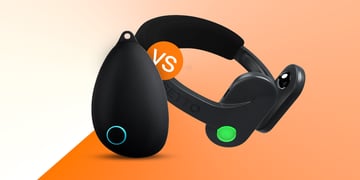
Are you trying to decide which health tech device for relaxation, nervous system regulation, and sleep improvement is actually worth it in 2026? You’re in the right place.
In this Pulsetto vs. Sensate comparison, I break down how these two popular brands measure up. I cover their positioning, device features, underlying technology, pricing, and real user experiences. Let’s dive in and figure out which device is a better fit for you.
Side-by-side comparison
Before getting into a more detailed Sensate vs. Pulsetto comparison, here’s an overview of both brands:
| Brand | Placement | Best for | Price | Key features | App connectivity | Rating |
| Pulsetto | Neck | Stress-related symptoms management | From $269.00 |
| ✅ Yes | 4.1 |
| Sensate | Chest | Nervous system regulation support | From $278.40 |
| ✅ Yes | 4.0 |
About Pulsetto
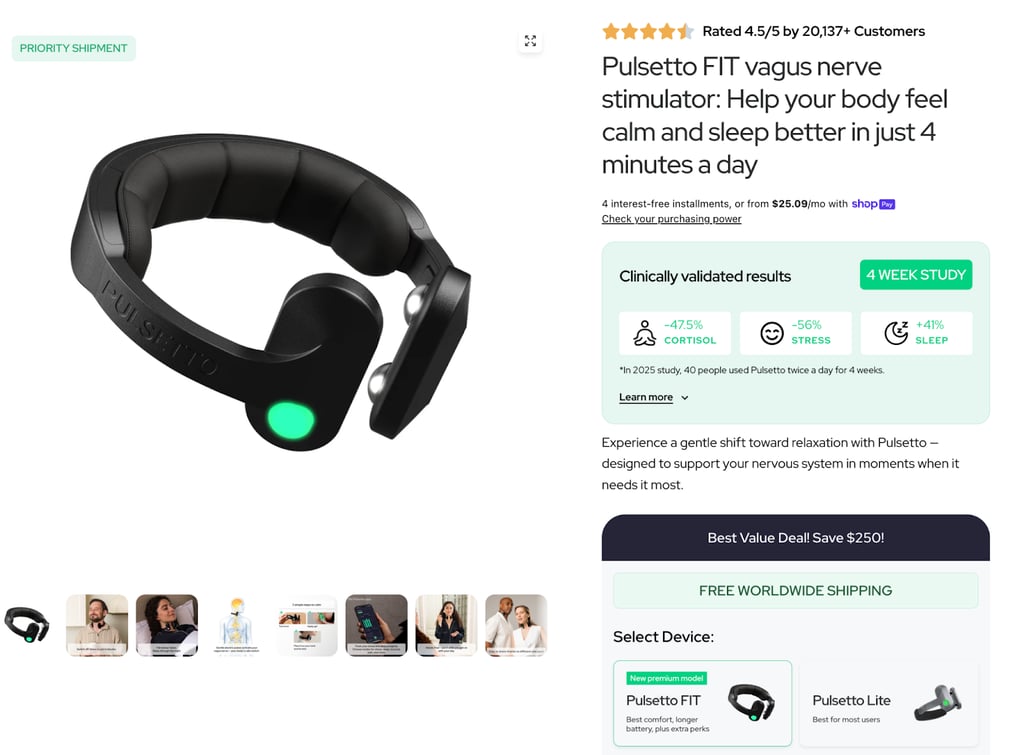
Pulsetto is a Lithuanian startup company that aims to bring clinically-inspired non-invasive vagus nerve stimulation (nVNS) devices into everyday life. For that reason, the brand developed Pulsetto Lite and Pulsetto FIT, hands-free nVNS products designed to sit against the neck.
Both devices deliver electrical pulses to both sides of the neck through electrodes. They are lightweight and have cushioned interiors to help maintain comfort during sessions. Although the brand reports that the FIT model has a bit more of a snug fit than Pulsetto Lite.
According to the company, Pulsetto devices may help support stress-related symptoms, and users may feel calmer and more relaxed within a few minutes of use. With regular sessions, sleep quality, focus, digestion, and overall mood may also improve.
The devices connect to a free Pulsetto Wellness app, where you can control settings, choose programs, and adjust intensity. A 30-day trial of the premium subscription is included with purchase. The membership unlocks additional programs, guided meditations, and breathing exercises, but it isn’t required for core device functionality and can be cancelled at any time.
About Sensate
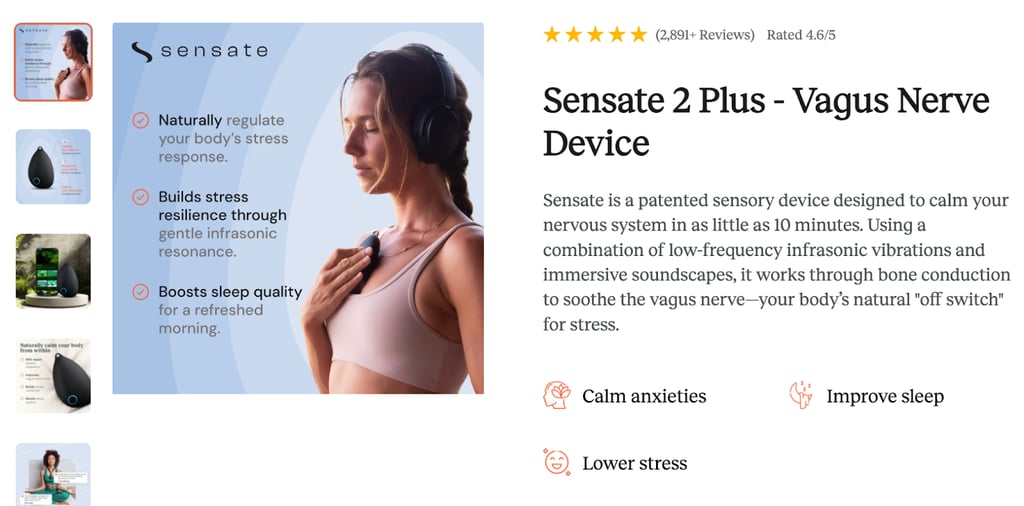
Sensate is a wellness technology brand based in the UK. This rapidly growing company’s goal is to develop stress-relief devices that support nervous system regulation at home without requiring extensive training.
The Sensate device is a pebble-shaped handheld designed to deliver low-frequency infrasonic vibrations synchronized with calming soundscapes. During use, it is placed on the sternum, which limits movements. However, a lanyard is included, allowing for more flexibility, so laying down is not strictly necessary.
According to the brand, the device may calm the body, encouraging the nervous system to shift into a deeply relaxed state. However, note that the vagus nerve is not directly located at the sternum, and due to mechanism differences, Sensate deviates from conventional vagus nerve stimulation devices.
Overall, Sensate is best described as a relaxation tool rather than a nVNS device like Pulsetto or Nuropod. Nevertheless, it may bring similar benefits and serve as an alternative to those looking to support the nervous system.
The device also relies on a companion app for full functionality. The Sensate app connects via Bluetooth and allows users to control the device, select soundscapes and guided sessions, and track usage. A paid subscription is available to unlock a broader library of content, though it isn’t required for basic use.
Pulsetto vs. Sensate: features and performance
Technical specifications and performance are among the most important aspects when choosing a health tech device. They help clarify the product’s purpose and the type of benefits it may deliver.
Below is a comparison of Pulsetto and Sensate features based on the available information I collected:
| Feature | Pulsetto | Sensate | Why it matters |
| Design | Neck wearable | Pebble-shaped handheld | Comfort |
| Technology | Non-invasive vagus nerve stimulation | Vibroacoustic therapy | Benefits |
| Portability | Weighs ~0.73 lb | Weighs ~0.17 lb | Convenience |
| App integration | Pulsetto Wellness, Apple Health, Spike API | Sensate, Apple Health | Usability |
| Guided sessions | ✅ Yes | ✅ Yes | Consistency |
| Session duration | 4–10 minutes | 10 minutes | Routine adherence |
Overall, if you’re specifically looking for a nVNS device, choose Pulsetto. It delivers electrical pulses through the electrodes placed on both sides of the neck, targeting the main vagus nerve. Its wearable design also allows for some movement during sessions, proving to be a more comfortable option for long-term use.
In comparison, Sensate offers advantages in portability and simplicity due to its handheld design. While placement on the sternum limits movements during sessions, it may be suitable for those wanting more flexible routines. Pulsetto requires 4–10-minute sessions twice a day, whereas Sensate generally recommends one 10-minute session per day.
Differences in technology
The two devices have significantly different approaches to nervous system regulation, changing what you can expect from each one. Pulsetto is a consumer nVNS device designed to stimulate the vagus nerve directly through the neck, while Sensate uses acoustic vibrations to promote relaxation.
Non-invasive vagus nerve stimulation is quite well-studied and widely explored for its potential to support nervous system regulation, brain function, and certain aspects of cardiovascular and digestive health. The Pulsetto devices operate at around 25–30 Hz, aligning with commonly studied frequency ranges. It also stays within the studied session length, suggesting that Pulsetto may produce effects comparable to medical nVNS devices.
By contrast, Sensate uses infrasonic vibrations combined with soundscapes. It delivers low-frequency vibrations in the 20–120 Hz range, which travel through the chest via bone conduction. This approach is known as vibroacoustic therapy (VAT). Research in this area suggests that lower frequencies around 20–60 Hz show the most promise for relaxation and stress reduction, but results vary.
It’s important to note that currently, there is no strong, conclusive evidence that vibroacoustic therapy reaches the vagus nerve. However, it may still help release tension and regulate the nervous system indirectly.
Pulsetto vs. Sensate: benefits and effectiveness
Overall, it’s difficult to say which device is more effective. Both brands promote similar benefits, but the way these effects are achieved and experienced differs. Keep in mind that neither Sensate nor Pulsetto products are medical devices, so results can vary from research-based ones.
Pulsetto focuses on a physiological approach, aiming to reduce stress and anxiety by activating the parasympathetic nervous system response. This may be especially relevant for those dealing with chronic stress.
Sensate also targets stress management, but through low-frequency vibrations and audio. While the exact mechanism is not defined, vibroacoustic stimulation has shown potential to support psychological and physiological stress markers.
Beyond that, both brands claim to support better sleep, particularly when used before bedtime. Pulsetto offers structured sleep programs with specific pulse patterns and breathing exercises, whereas Sensate relies on calming soundscapes, leaning more toward meditation and mindfulness.
Who should avoid these devices
Because of their difference in technology, Pulsetto and Sensate have distinct side effects, yet share similar safety restrictions.
Pulsetto’s electrical pulses may cause skin irritation, headaches, and throat discomfort. However, stop use if you notice more serious symptoms like changes in heart rate, difficulty breathing, or increased drowsiness. Sensate’s effects are typically milder, including temporary discomfort, overstimulation, or occasional anxiety during sessions — especially for people with stress-related conditions.
Avoid use or consult a healthcare professional if you are:
- Pregnant or trying to conceive
- Under 18
- Have a pacemaker or any electronic implant
- Diagnosed with heart conditions
- Have epilepsy
Pulsetto vs. Sensate: value for money
Both Sensate and Pulsetto are priced quite similarly. That said, there are other factors to consider when deciding which device offers better value for money.
| Device | Price | Subscription | Accessories | Warranty | Refund window |
| Pulsetto FIT | $260.00 | $139 per year |
| 2 years | 30 days |
| Pulsetto Lite | $269.00 | $139 per year |
| 2 years | 30 days |
| Sensate | $278.40
| $49.99 per year |
| 1 year | 90 days |
Since both brands offer optional app subscriptions, it’s worth factoring in their costs and whether you’ll actually need them for the full experience. Pulsetto’s Premium subscription is significantly more expensive than Sensate’s, costing nearly twice as much.
However, Sensate’s subscription arguably comes with fewer features. It mainly unlocks a larger library of soundscapes and keeps you up to date with new releases. Beyond that, the added value is limited.
Pulsetto Premium includes access to additional programs, guided meditations, breathing exercises, affirmations, an AI Carechat, and integration with wearables like Oura Ring and WHOOP. Overall, both devices come with great accessories and solid customer protections, so the better value depends on personal preference.

Pulsetto vs. Sensate: what do users think?
Both brands have a large amount of positive feedback, though there are some recurring complaints. Their ratings on Trustpilot are very close, with Pulsetto slightly ahead at 4.1 compared to Sensate’s 4.0.
All devices are frequently praised for promoting relaxation, improving sleep, and reducing stress. However, Pulsetto devices appear to have a higher number of reviews highlighting significant benefits. Users also praise its long battery life, sleek design, and guided sessions, which improve the overall experience.
Criticism for Sensate centers around customer support, with users reporting slow response times and issues with refund and warranty policies. Pulsetto commonly receives negative reviews about its app functionality, including glitches, data loss, and a less intuitive interface.
Final verdict
The best wellness device for relaxation ultimately depends on your individual goals, concerns, and budget, especially when considering long-term use.
Pulsetto may be a better option if you’re specifically interested in neck area vagus nerve stimulation. The brand offers two wearable models designed for comfort and convenience. While its yearly subscription is on the higher end in terms of cost, it includes a wide range of features and can be cancelled at any time.
If you prefer a gentler approach to relaxation and want to incorporate mindfulness into your routine, choose Sensate. It provides a variety of soundscapes combined with soothing vibrations that may feel more comfortable than electrical stimulation from Pulsetto. It’s also generally more budget-friendly in the long run, with optional subscriptions priced at $49.99 per year and no need for additional products like conductive gel.
FAQ
Can Pulsetto or Sensate improve sleep?
Potentially, yes. Both brands claim sleep improvements, and research on the underlying technologies suggests modest benefits for sleep quality.
Which device is better for anxiety and stress?
It depends. Pulsetto may be better in the long run, as it directly stimulates the vagus nerve and affects the nervous system. Sensate, on the other hand, may offer more immediate relaxation during stressful moments.
Does Pulsetto reduce cortisol?
Potentially, yes. Research on nVNS shows some cortisol reduction, but while Pulsetto is based on medical nVNS, individual results may vary.
Does Sensate stimulate the vagus nerve?
Not directly. Vibroacoustic therapy may reduce stress, but there is no strong evidence that it actually activates vagal nerve fibers in the same way as Pulsetto’s electrical stimulation.
5 resources
- Applied Psychophysiol Biofeedback. Effects of transcutaneous vagus nerve stimulation, neurofeedback, and their combination on cortisol, anxiety, and depression subtypes in non-clinical adults.
- Frontiers in Neuroscience. A review of parameter settings for invasive and non-invasive vagus nerve stimulation (VNS) applied in neurological and psychiatric disorders.
- Frontiers in Human Neuroscience. International consensus based review and recommendations for minimum reporting standards in research on transcutaneous vagus nerve stimulation (version 2020).
- Frontiers in Psychology. Effect of low frequency sound vibration on acute stress response in university students-Pilot randomized controlled trial.
- Sensors. Effects of vibroacoustic stimulation on psychological, physiological, and cognitive stress.

Your email will not be published. All fields are required.