
Have you ever wondered why some people reach milestones in professional sports, while for you, running a 100 m feels like an impossible mission? Some people would say it is a lack of determination. While there is some truth in these words, maybe a deeper answer is hidden in your DNA.
Even though sports genomics isn’t really a new field of study, it still has unanswered questions. In this article, we explore how gene testing in sports works, why it is beneficial, what its limitations are, and whether you should try it.
-
The global direct-to-consumer genetic testing market is projected to reach $8.8 billion by 2030.
-
A total of 253 genetic variants have been linked to athlete status, indicating whether you may have potential in endurance or power sports.
-
Various genetic variants associated with injuries may help alter training plans to avoid accidents.
-
AMPD1, known as the ‘Neanderthal gene,’ may slow your improvement in athletic performance.
The rise of DNA testing
People's curiosity about DNA is expanding day by day. The global direct-to-consumer genetic testing market is projected to reach $8.8 billion by 2030.
Accordingly, it's affecting the sports sector too. In 2014, Uzbekistan introduced genetic testing into its Olympic-talent identification program. In China, athletes who wanted to represent their country in the 2022 Winter Olympic Games also had to undergo genetic testing.
Even some high-level athletes and their coaches appear interested in using genetic information to enhance performance. For example, Olympic long-jump champion Greg Rutherford told BBC Radio that DNA analysis helped him make better decisions.
What does sports genomics do?
By collecting and testing saliva samples, people can gain insight into these main categories:
- Endurance or power potential
- Injury risk
- Muscle recovery
- Nutrition needs
Knowledge of genetic advantages in sports may help create an individualized training program. It may be used as a tool to minimize injury risk and achieve optimal performance.
Endurance or power potential
As of September 2023, a total of 253 genetic variants have been linked to athlete status: 115 endurance-related, 96 power-related, and 42 strength-related.
Angiotensin-converting enzyme (ACE), more commonly known as an endurance-related gene, is associated with muscle and cardiovascular function. The ability to perform endurance sports is highly related to aerobic metabolism, or the capacity to use oxygen to produce energy. In other words, your body has to adapt to prolonged physical exertion.
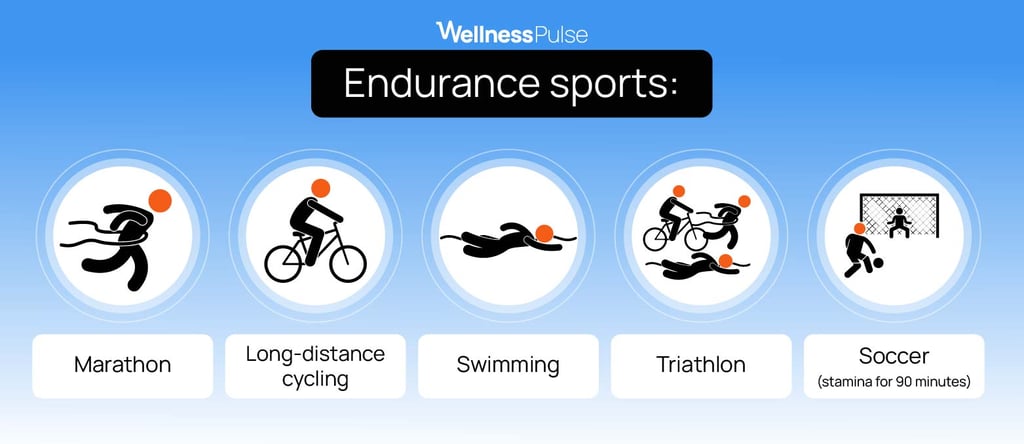
A 2022 genetics and sports performance study found that genetic factors may also influence how individuals respond to training. It suggests that around 50% of VO₂max (maximal oxygen uptake) gains are due to genetics. As a result, professional athletes who carry the ACE gene may use more oxygen during intense exercise.
On the other hand, we have the ACTN3, also known as the ‘speed gene.’ This means some people are just born with genetic traits that may support faster muscle contractions than others. Therefore, it may help them produce a lot of force, which is needed in power/strength sports.

Injury prevention
Injuries can cost teams or individual athletes thousands of dollars, as sitting on the bench is not beneficial. So researchers are looking at how to optimize training plans and reduce the risk of accidents.
Various genetic variants have been identified that may be linked to tendon and ligament injuries, including common anterior cruciate ligament (ACL) tears. Other found variants may be associated with decreased risk of shoulder dislocations and reduced severity of muscle strains.
These findings are already being put to use. In a pilot program of 14 athletes, genetic information was integrated into a personalised injury prevention plan. After 12 months, players noticed that injuries occurred less often. We have to take into consideration that it's a small study and athletes followed only their own plans, but it may show some promise for future studies.
Although a 2019 review explains a different point of view. Researchers tracked hamstring injuries in an elite soccer team over five seasons and combined this with genetic data. They developed a model using five genetic markers that appeared to explain past injuries in that group. Even so, when they tested the model on a new group of players, it could not reliably predict future injuries.
Additionally, those who are genetically linked to muscle damage and require longer recovery from exercises may be at greater risk of developing overuse injuries. Muscle performance likely plays a key role in this situation.
For example, endurance athletes' recovery may be influenced by genes involved in liver metabolism. They may help the body to process and clear substances produced during exercise, which can affect recovery speed.
Altering your fitness plan based on DNA
Starting a gym routine or running outside can feel intimidating. You might not know how your body will respond or how fast you’ll get used to exercise. That’s why you might start thinking about taking a DNA test.
A 2021 study has some evidence that it may be worth doing that. Researchers studied 650 men and women before and 20 weeks after endurance training to assess levels of specific proteins that may indicate how well people respond to exercise regimens.
The results showed that the levels of 147 proteins in the body may show how fit someone is. Another set of 102 proteins may predict if aerobic capacity will improve. Using both may help you adjust your training by showing your current fitness level and how much you may progress.
Can we blame the ‘Neanderthal gene’?
Time passed, and you notice that everyone in your Pilates or running classes has advanced more than you. It might make you question whether a secret lies deeper than your determination.
A new study shows that some modern humans carry the AMPD1 gene, which was inherited from Neanderthals. It’s an important gene for muscle energy production, which doesn’t affect daily life but may affect your athletic performance.
Individuals carrying one non-functional AMPD1 allele may have about a 50% lower chance of becoming elite athletes. It affects both endurance and power sports equally.
However, everyone learns at their own pace, and this shouldn’t discourage you from trying different sports. It’s important to remember that even if you are not going to become a professional athlete, exercise can still benefit your overall health.
Final word
Sports genomics may have significant potential to identify future talent and help them tailor their training. By overseeing injury risk, muscle recovery, and nutrition needs, athletes may achieve better results.
However, if a professional athlete's career is not in your path, sports genomics may still offer insights into your fitness potential and how to improve it. Even so, you have to keep in mind that this field still lacks research, and use the current findings only as recommendations. Remember, a key to training success is not just DNA — other factors matter too.
9 resources
- European Journal of Applied Physiology. Genetics and sports performance: the present and future in the identification of talent for sports based on DNA testing.
- British Journal of Sports Medicine. Predictive genomics profiling in athletics and sports performance.
- Journal of Functional Morphology and Kinesiology. The development of a personalised training framework: implementation of emerging technologies for performance.
- Nature Communications. Muscle AMP deaminase activity was lower in Neandertals than in modern humans.
- Nature Metabolism. Human plasma proteomic profiles indicative of cardiorespiratory fitness.
- PLOS One. Applying personal genetic data to injury risk assessment in athletes.
- Market Analysis Report. Direct-to-consumer genetic testing market (2024 - 2030).
- Indian Journal of Orthopedics. Genetics and the elite athlete: our understanding in 2020.
- Advances in Genetics. Genomic predictors of physical activity and athletic performance.






Your email will not be published. All fields are required.