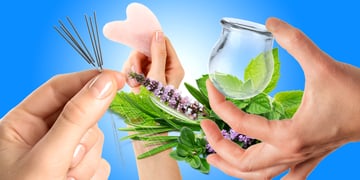
Traditional Chinese medicine (TCM) is a roughly 5,000-year-old holistic system that offers physical, emotional, and spiritual treatment of health problems. It is gaining rapid popularity in the U.S. as Gen Z social media influencers are ‘chinamaxxing’ their wellness rituals.
From drinking warm water in the morning to using gua sha in skincare routines, the internet is full of advice on how to incorporate Chinese wellness practices into daily life.
That is why we decided to look more deeply into some of these practices and see if any are worth the hype.
-
Cupping may provide short-term pain relief. However, the benefits did not consistently last in the long term.
-
Acupuncture has high-quality evidence of a positive effect in 10 conditions. Some of those are chronic pain, low back pain, and knee osteoarthritis.
-
Even though gua sha may improve facial contours by decreasing muscle tension, it does not permanently change facial structure or serve as a substitute for dermatological anti-aging treatments.
-
Some traditional Chinese herbal medicine species may damage the heart or liver function.
What is chinamaxxing?
Trends using the suffix ‘-maxxing’ indicate someone obsessively pursuing a specific activity, training, or lifestyle.
For example, fibermaxxers eat as much fiber as possible, while potassiummaxxers try to eat potassium-rich foods such as bananas, spinach, or coconut water. Looksmaxxing focuses on improving facial or body appearance, while hairmaxxing emphasizes hair.
These days, it is all or nothing online. Chinamaxxing is no exception. It emerged as the U.S. began targeting China’s economy, and people became disappointed with the country's healthcare system.
While Robert F. Kennedy Jr. drinks raw milk, takes cod liver shots, criticizes vaccines, and has a rivalry with Tylenol, people started looking for alternatives in wellness. In this chaos, TCM, once viewed with caution, became a less absurd option than what the official government suggests.
Traditional Chinese medicine wellness practices
A recent scoping review suggests that TCM may be incorporated into Western-style healthcare systems. Reviewing 31 studies, the authors found that TCM practitioners were most often involved in pain relief, symptom management, stroke rehabilitation, and mental health support.
The review also notes that wider integration still faces major hurdles, including safety concerns, limited research, and skepticism from Western-trained clinicians. While TCM therapies cannot be claimed as a cure for all conditions, some studies suggest they show potential for preventing and treating chronic diseases.
Cupping therapy
You may have seen athletes with red circles on their backs and wondered what they are. These marks come from cupping therapy — an ancient healing technique used by some people to ease pain.
“When muscles become tight and inflamed, circulation can decrease, which slows the body’s natural healing process,” says Licensed Acupuncturist Brian Kelly. He adds that cupping comes in handy in this situation because it gently lifts the tissue, helping relax muscle tension, improve local circulation, and encourage recovery. This is why it became popular among athletes as a sports recovery therapy.
However, research on this topic is inconclusive. A 2024 systematic review of 11 trials with 921 participants examined whether cupping helps with lower back pain.
They found that cupping may provide short-term pain relief, as participants reported less pain at 2–8 weeks. However, benefits did not consistently last in the long term, and results varied across studies due to differences in techniques and treatment duration.
The authors say this variability lowers certainty and makes it harder to draw firm conclusions. Broader research is needed to determine whether cupping therapy provides not only short-term but also long-term pain relief.
Acupuncture
Sometimes, acupuncture is a last hope to relieve pain when nothing else helps. It uses thin needles inserted into specific body points to treat various physical and mental health conditions.
“At a biochemical level, acupuncture has been shown to stimulate the release of neurotransmitters such as serotonin and norepinephrine, as well as endogenous opioids, the body’s own natural pain-relieving chemicals,” explains Kelly about the effect of acupuncture. “These substances help regulate how pain signals are transmitted and perceived.”
Even research shows that this TCM therapy may ease pain in some conditions. A 2025 review examined the evolving evidence base for acupuncture, analyzing 862 studies and 184 medical conditions.
The authors found high-quality evidence of a positive effect for acupuncture in 10 conditions: chronic pain, low back pain, knee osteoarthritis, migraines, postoperative nausea and vomiting, cancer‑related fatigue, menopausal symptoms, female infertility (additional to medical reproductive treatment), and chronic prostatitis pain.
For another 82 conditions, there was evidence suggesting potential benefit. As a result, the review concludes that overall evidence for acupuncture’s effectiveness has grown in recent years, though inconsistencies in trial quality and methodology mean that more research is still needed.
Herbal medicine
There is a long list of natural substances used in TCM, but we narrowed it to the three most popular: goji berries, ginseng, and ginger.
Goji berries are packed with antioxidants, vitamin A and C, fiber, iron, and amino acids, making them a good choice to support the immune system. In some studies, they have been linked to anti‑inflammatory, neuroprotective, anti‑obesity, and liver‑protective activity.
Ginseng is a perennial root used for centuries in traditional medicine and is primarily known for boosting energy. There are two main types: Asian and American. In a 2023 review, both are suggested to have potential benefits in areas such as diabetes, cardiovascular health, cognition and mood, and flu. However, the authors note that reported effects are typically mild to moderate, and they emphasize the need for future trials to clarify ginseng’s clinical effectiveness.
Last is ginger. Studies show that ginger may ease nausea and vomiting, improve digestive function, reduce inflammation, improve metabolic markers, and relieve pain.
Tai chi walking
Tai chi is a traditional Chinese martial art with complex, flowing poses. It involves slow, gentle movements paired with deep breathing. Usually, the movements are carefully choreographed in a particular order. This type of mind-body exercise provides various benefits, which you can read about in the latest WellnessPulse article.
Gua sha
In Chinese, gua means ‘to scrape,’ and sha means ‘petechiae,’ which are tiny, red or purple spots on the skin. It came into the spotlight a few years ago when influencers promoted it as a way to reduce facial puffiness and tighten skin.
A small 2025 trial compared gua sha to facial roller massage over eight weeks in 34 women. The results showed that gua sha might improve facial contours by easing muscle tension. However, it does not permanently change facial structure or replace professional anti-aging treatments, and more research is needed.
Gua sha was originally invented for pain relief, not for the face. It is commonly used in Chinese medicine to scrape the skin, often on the upper back. Even though clinical trials on gua sha for pain are growing, there is still a lack of larger studies to confirm its effectiveness. However, some clinical trials suggest that gua sha may help ease chronic low back or neck pain.
Drinking warm water
As part of the chinamaxxing movement on social media, it is said you should start your day with warm water instead of a cold one.
“Warm fluids are believed to support digestion and circulation. Starting the day with water helps rehydrate the body after sleep and may help stimulate the digestive tract, which can be helpful for individuals who struggle with constipation,” says Maggie Bell, RDN, Dietitian from WOWMD, on why she encourages her patients to drink warm water.
It is believed that when foods and drinks are consumed cold, digestion worsens. Some small studies have looked into this topic.
For example, a 2009 study found that meal temperature affects how quickly the stomach empties solid and liquid foods. The researchers found that hotter meals accelerate gastric emptying compared with cooler meals.
Another 2020 study examined how the temperature of water consumed before a meal affects stomach function in healthy young men. Researchers found that drinking 500 ml (16.9 oz) of cold water one hour before eating reduced energy intake by 19–26 % compared with warmer water.
Although further research is needed to demonstrate its effectiveness, the water trend is proving what we already know: water is good for us and should be consumed more often.
Black sesame seeds benefits
As part of the social media movement, people encourage adding sesame seeds to as many meals as possible, especially black ones. They make shakes, desserts, and other dishes packed with them.
It is believed that black sesame seeds nourish the kidneys and promote hair growth. The effect on hair is unclear, but a 2024 review highlights that black sesame seeds are nutrient-dense, rich in healthy fats, protein, minerals, and bioactive compounds.
The authors suggest potential benefits for heart health, metabolic regulation, anti-inflammatory activity, and stress reduction. However, while findings are promising, much of the evidence comes from experimental studies, and more high-quality human trials are needed to confirm long-term health effects.
Although they are healthy, consuming them in large amounts may cause side effects. Sesame seeds are high in healthy fats, but eating too many may contribute to weight gain. Overeating them may also cause stomach discomfort, affect hormone balance, and lead to low blood pressure. Moderate consumption is advised: 1–2 tablespoons per day.
What to avoid?
Not everything in traditional Chinese herbal medicine is healthy or worth trying. Nurse practitioner Aleksey Aronov warns people to avoid Aristolochia and Aconitum species.
Aristolochia has been used in TCM to treat conditions such as arthritis, hepatitis, pneumonia, and even stroke. But there’s a serious catch: it contains aristolochic acid, a powerful toxin. This substance is carcinogenic and may cause severe kidney damage. Because of these risks, many countries have banned or restricted its use.
Aconitum has been used for over 2,000 years to treat pain, inflammation, and heart disorders, but it is also highly toxic and can cause severe cardiac poisoning if taken improperly.
Aronov also notes a recent review highlighting growing safety concerns about liver injuries caused by traditional Chinese herbal medicine. Researchers reviewed publications from 1982 to 2025 and identified 571 reported cases. Herbal formulas accounted for about 73% of cases, mostly involving Polygonum multiflorum, Psoralea corylifolia, and Gynura japonica.
Final word
Trends like chinamaxxing can be interesting, but it’s easy to take things too far. True wellness is about finding what really works for your body and lifestyle, not just copying everything you see online.
Some TCM practices, such as acupuncture or tai chi walking, may offer real benefits, but it’s important to try them thoughtfully. In the end, paying attention to your body and talking to a professional is much more important than following any trend.
17 resources
- Journal of Integrative Medicine. The roles of traditional Chinese medicine within an interdisciplinary team in predominantly Western medical settings: a scoping review.
- Complementary Therapies in Medicine. The effectiveness of cupping therapy on low back pain: a systematic review and meta-analysis of randomized control trials.
- Complementary Therapies in Medicine. The state of evidence in acupuncture: a review of meta-analyses and systematic reviews of acupuncture evidence (update 2017–2022).
- Journal of Cosmetic Dermatology. Comparative effects of facial roller and gua sha massage on facial contour, muscle tone, and skin elasticity: randomized controlled trial.
- Journal of Gastroenterology. Gastric emptying of liquid and solid meals at various temperatures.
- European Journal of Nutrition. The effects of water temperature on gastric motility and energy intake in healthy young men.
- Food Chemistry. Lycium barbarum (goji berry): a comprehensive review of chemical composition, bioactive compounds, health-promoting activities, and applications in functional foods and beyond.
- The American Journal of Chinese Medicine. Pharmacological effects of ginseng: multiple constituents and multiple actions on humans.
- Nutrients. Ginger on human health: a comprehensive systematic review of 109 randomized controlled trials.
- Scientific Reports. The current situation and factors influencing the use of traditional Chinese medicine therapies among patients with chronic disease in China: a cross-sectional study.
- Journal of Ethnopharmacology. Aconitum in traditional Chinese medicine: a valuable drug or an unpredictable risk?
- Journal of Herbal Medicine. Herbal products containing aristolochic acids: a call to revisit the context of safety.
- Trends in Food Science & Technology. Black sesame seeds: nutritional value, health benefits, and food industrial applications.
- Journal of Ethnopharmacology. Review on traditional Chinese medicine-induced liver injury.
- Complementary Therapies in Clinical Practise. Gua sha therapy for chronic low back pain: a randomized controlled trial.
- Nutrients. Sesame (Sesamum indicum L.): a comprehensive review of nutritional value, phytochemical composition, health benefits, development of food, and industrial applications.
- The American Journal of Chinese Medicine. Randomized controlled pilot study: pain intensity and pressure pain thresholds in patients with neck and low back pain before and after traditional East Asian gua sha therapy.






Your email will not be published. All fields are required.