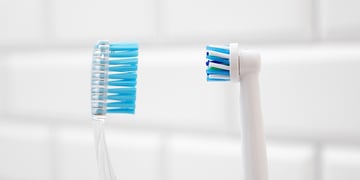
Beyond simply the feeling of having our pearly whites in pristine condition, good dental hygiene is incredibly important for our overall health, preventing cavities, gum disease, and bad breath. And, it’s getting a lot easier to achieve thanks to electric and sonic toothbrushes. But do sonic toothbrushes really clean better than our trusty old manual ones?
-
Research suggests that both sonic and oscillating electric toothbrushes remove significantly more plaque than manual brushing when used correctly.
-
Both sonic and rotating brushes improve gum health, though rotating brushes may have a slight edge in plaque removal.
-
Proper technique when brushing our teeth is incredibly important for improving and maintaining our dental hygiene.
How do sonic toothbrushes work?
Although they don't look like they are moving very much, a sonic toothbrush uses a staggering 30,000 to 40,000 high-frequency vibrations per minute to clean our teeth. This rapid movement pushes our toothpaste and saliva between our teeth and along our gumlines in a way that manual brushing couldn’t match, even if it tried.
Whereas rotating and manual brushes can often lose their bristle shape over time, sonic toothbrushes tend to maintain theirs due to the way they move and vibrate in the mouth.
They also come packed with various high-tech features to help us brush our teeth in the most gentle and effective way. I’ve used sonic toothbrushes that let out an unearthly squeal the second you press too hard. Some have multiple modes for sensitive teeth and gum care. And, I’ve even tried one that played a little jingle at the two-minute mark, ensuring I brushed for the recommended time.
How good are sonic toothbrushes?
There are a lot of bold claims from manufacturers about sonic toothbrushes, so looking at the scientific support can help us separate fact from marketing fiction.
Recent research suggests that their plaque removal capabilities are quite a lot better than manual brushing. It could be to do with the fact that most people don’t have a particularly good technique when it comes to regular brushing. Or, it might be because the high-frequency vibrations get into those harder-to-reach spots that we often miss with a manual toothbrush.
Whatever the reason, it’s pretty clear to see that the cleaning power of an ultrasonic toothbrush is superior to our below-par efforts with the manual type. However, given that they’re often at the more expensive end of personal dental care, I wanted to look a bit further into the science to see if sonic toothbrushes are better than their oscillating competitors.
Which is better: ultrasonic or rotating toothbrushes?
Research published in the Dentistry Journal proposes that both sonic and oscillating-rotating brushes significantly outperform manual brushing for plaque removal and gum health.
The difference between sonic and rotating brushes is much less dramatic. However, according to a 2024 meta-analysis of available research, oscillating toothbrushes consistently performed better in the plaque reduction department.
I personally prefer the sensation of a rotating toothbrush. My whole mouth just feels cleaner. But, I don’t suffer at all with sensitive teeth or gums, and there’s some interesting research suggesting that sonic toothbrushes might be better if you’ve got dental sensitivities.
Head-to-head comparison: ultrasonic, rotating, and regular brushing
The table below gives an easy-to-understand comparison of the main features of each type of brush:
| Feature | Sonic/ultrasonic | Rotating/oscillating | Manual |
| Cost | $50–300 | $30–200 | $2–10 |
| Plaque removal | Excellent | Excellent (slightly better than sonic) | Good when used with proper technique |
| Gum health | Excellent | Excellent | Good when proper technique is applied consistently |
| Ease of use | Very easy, does most of the work for you | Very easy, does most of the work for you | Requires learning proper and effective techniques |
| Sustainability | Requires charging and replacement of heads | Requires charging and replacement heads | Most eco-friendly, but needs replacing every 3 months |
| Learning curve | Minimal | Minimal | Requires mastering proper technique to get an effective clean |
Final thoughts on sonic toothbrushing
Based on the scientific evidence, sonic toothbrushes deliver better results than manual brushing for most people. They remove more plaque buildup, improve gum health, and don’t require a massive amount of technical skill to use properly.
However, when it comes to choosing the ‘best’ type of toothbrush, I really think it comes down to personal preference. For example, if you are anything like me, you might find the noise from electric toothbrushes slightly troublesome. I’ve found that using one in the morning, then switching to a manual at night, works best for my lifestyle.
But everyone is different. Consider your dental needs, budget, and sustainability values when it comes to choosing your brush. And don’t forget that consistency and technique matter much more than how fancy your toothbrush is.
FAQ
Can sonic toothbrushes remove plaque?
Yes, sonic toothbrushes effectively remove plaque. Research demonstrates they remove significantly more plaque than manual brushing, particularly along the gumline and between teeth where plaque accumulates most.
Do dentists recommend sonic toothbrushes?
Yes, a lot of dentists recommend sonic and electric toothbrushes, especially for patients with mobility issues, gum disease, or inconsistent brushing habits. They're particularly helpful for people who struggle with proper manual brushing technique.
What is the downside of a sonic toothbrush?
The main downsides include higher cost, environmental impact from batteries and plastic heads, bulk for travel, and potential gum irritation if used incorrectly. They also require regular charging and head replacements.
4 resources
- Dentistry Journal. Dental plaque removal by ultrasonic toothbrushes.
- Healthcare. The effect of different electric toothbrush technologies on interdental plaque removal: a systematic review with a meta-analysis.
- International Journal of Dental Hygiene. Efficacy of sonic versus manual toothbrushing after professional mechanical plaque removal: a 6-month randomized clinical trial.
- Journal of Innovations in Medical Research. Critical analysis of electric toothbrushes: implications for oral care and recommendations for specific user groups.





Your email will not be published. All fields are required.