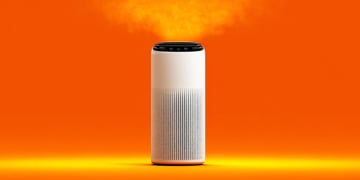
If you’ve been checking the U.S. air quality index in 2026, you might be more than a little concerned. An alarmingly high number of Americans are living in areas with unhealthy levels of ozone or particle pollution, making it harder than ever to take a deep breath of fresh, clean air.
Air purifiers are marketed and sold as a solution, but are these gadgets truly worth the money? Let’s explore what you should know before you go ahead and buy one.
-
Air purifiers with HEPA filters may reduce indoor particulate matter by an impressive 49–79%, providing measurable health protection especially during high-pollution events.
-
Units with activated carbon filters excel at removing odors and gases.
-
It’s probably best to avoid ozone-generating air purifiers as they may harm your lungs and create additional indoor pollutants.
Do air purifiers really make a difference?
According to the American Lung Association’s State of the Air 2025 report, nearly half of the population lives with unhealthy levels of pollution. As such, air purifiers are becoming increasingly popular.
The good news is that research suggests that well-manufactured air purifiers can significantly improve indoor air quality, which has potential benefits for our homes, schools, and workplaces.
A 2024 study found that portable air cleaners equipped with high efficiency particulate air (HEPA) filters reduced primary room particulate matter concentrations by 78.8% and secondary room concentrations by 57.9%. However, this was one small study performed in only 29 homes over the course of two days, and while the results are certainly promising, it’s important to consider more in-depth research.
A 2024 meta-analysis of 148 studies found that filters cut small particle numbers by only about half on average, which is considerably less than what many manufacturers often claim in their advertising. Having said that, the same report established that there was a meaningful reduction in airborne biological pollutants when using air purifiers, which may be reassuring if you are worried about spreading illnesses.
The effectiveness of your air purifier depends on several different factors, including:
- Room size
- Purifiers' clean air delivery rate (CADR)
- Consistency of use
- Filter maintenance
Vulnerable populations like children, elderly individuals, and people with asthma may also find air purifiers helpful. A 2024 study conducted in Hong Kong suggested that long-term use may benefit the cardiovascular system in elderly people. Another 2024 study of 38 under-18-year-olds, all diagnosed with allergic asthma, showed that HEPA air purifiers improved their symptoms and quality of life.
Common types of air purifiers
The air purifier market is full of a variety of different technologies, each tailored to a particular purpose. Knowing the key functions of each type of device can help you decide which one might be best suited for your personal needs.

Air purifiers with HEPA filters
HEPA filters are the gold standard for removing particles from the air in our homes. They are generally best for capturing dust, pollen, pet dander, mold spores, and even virus particles. If you are concerned about allergies, asthma triggers, or general particle pollution in your home, then a HEPA filter is probably going to be the best choice for you.
Air purifiers with activated carbon filters
Activated carbon filters are good investments for treating gases, odors, and volatile organic compounds (VOCs). They use specially treated carbon with a large surface area that can trap odor molecules and chemical gases through the mechanism of absorption. You may find them particularly useful in urban areas, where you might be more exposed to vehicle emissions, smoke, or persistent indoor odors.
However, the carbon amount in your air purifier matters significantly. If there isn’t enough, it’s not going to make a great deal of difference — unfortunately, the case with many budget devices. A good quality unit should offer you several pounds of activated carbon for effective chemical and odor removal.
Combined filtration systems
Many of the higher-quality air purifiers use multiple technologies within one device. For example, a unit might feature a combination of HEPA and activated carbon filters, which ultimately offers you full-spectrum protection against both particles and gases.
Are there any dangers with air purifiers?
While most air purifiers are considered safe, some types do pose legitimate health concerns. The California Air Resources Board strongly advises against using ozone generators in spaces occupied by people or animals.
Unfortunately, ozone generators are still marketed as air cleaners, despite the fact that they intentionally produce ozone, which is the main component of smog. Breathing in even relatively small amounts of ozone may cause coughing, chest tightness, and shortness of breath. Recommendations by the U.S. Environmental Protection Agency suggest avoiding air purifiers that intentionally produce ozone, as it’s classed as a lung irritant.
Poorly maintained air purifiers can also become problematic. If you don't replace filters regularly, they can become breeding grounds for mold and bacteria, potentially releasing these contaminants back into the air in your home. To avoid this, always follow recommended filter replacement schedules as directed by the manufacturers.
Final thoughts on air purifiers
The fact that nearly half of all Americans are affected by air quality is deeply concerning. Air purifiers were once seen as luxury items, but now, they’re on the rise to become practical health investments to protect the lungs from harmful contaminants.
Personally, if you are worried about the air quality where you live, it may be good to look into air purifiers that fit the needs of you and your family. Creating a healthier indoor environment is important, especially if you have or live with someone who has a weakened immune system or lung condition. Always do your research, read reviews, and consider which features matter to you the most before investing.
FAQ
Are air purifiers good for babies?
Yes, air purifiers may benefit babies by reducing exposure to airborne particles, allergens, and pollutants that could affect their developing respiratory systems. If you live in an area that’s particularly affected by poor air quality, then a HEPA-based unit without ozone generation, placed safely away from the baby’s crib, may reassure you that the air around your child is as free from potentially harmful contaminants as possible.
Should I close the window when using an air purifier?
Yes, keeping the windows closed allows your air purifier to work most effectively by preventing outdoor pollutants from constantly entering the room. However, during periods of good outdoor air quality, opening windows for natural ventilation might be the most beneficial. If the outdoor conditions permit, it’s likely best to balance air purifier use with occasional fresh air, too.
Do air purifiers help with asthma?
Air purifiers with HEPA filters have been the most studied for their ability to help people with asthma. They remove common triggers like dust mites, pollen, pet dander, and mold spores from indoor air, which might help reduce symptoms. But they should be used in conjunction with, and not as a replacement for, proper medical attention and treatment for asthma.
6 resources
- American Lung Association. State of the air 2025.
- Aerosol and Air Quality Research. Real-world effectiveness of portable air cleaners in reducing home particulate matter concentrations.
- Science of the Total Environment. A systematic review and meta-analysis of field studies of portable air cleaners: performance, user behavior, and by-product emissions.
- Environmental Research. Effects of long-term indoor air purification intervention on cardiovascular health in elderly: a parallel, double-blinded randomized controlled trial in Hong Kong.
- United States Environmental Protection Agency. Guide to air cleaners in the home.
- California Air Resources Board. Hazardous ozone-generating air purifiers.




Your email will not be published. All fields are required.