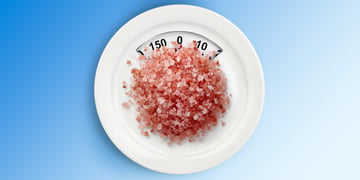
The pink salt water trick has been appearing on social media, enticing users to try yet another weight loss trick.
The premise is simple: add a pinch of Himalayan salt to water, squeeze some lemon juice, and voila — your pink salt drink is ready.
Supporters of the trend suggest that pink salt water can ‘boost metabolism,’ ‘flush toxins,’ or ‘control appetite.’ However, there is no scientific evidence to support these claims. In fact, high sodium intake is more often linked to health concerns like hypertension and kidney strain rather than weight loss.
-
The ‘pink salt water trick’ is a viral trend involving water, Himalayan pink salt, and sometimes lemon juice, often consumed in the morning.
-
There is no scientific evidence that this trick can help lose weight.
-
Himalayan pink salt contains trace minerals, but in negligible amounts.
-
Most people don’t need extra electrolytes after exercise; fruits, vegetables, or simple foods like milk can replenish nutrients more effectively and safely.
What is the pink salt water trick?
The so-called pink salt water trick is a viral drink made with just a few simple ingredients: water, Himalayan pink salt, and often a squeeze of lemon juice. Some versions recommend mixing the salt into warm water and drinking it first thing in the morning on an empty stomach.
While influencers claim this practice can jumpstart metabolism, aid digestion, and even promote weight loss, the science behind it is null.
Why is it trending?
Together with the oatzempic drink and the ice water hack, the pink salt water trick is blowing up with no scientific evidence to support it.
“The reason? Probably a combination of 1) it sounds much easier and more effortless than changing one's eating style and becoming more active, and 2) it's sensational, and that gets eyeballs. Meanwhile, there is no scientific justification for it because it doesn't work. Full stop,” says Dr. Keith T. Ayoob, EdD, RD, FAND, Associate Clinical Professor Emeritus at the Albert Einstein College of Medicine.
The trick may seem effective to some people, but that’s likely because of the water, not the salt. Research suggests that drinking more water can help curb appetite. For example, one study found that overweight and obese older adults ate about 13% less when they drank 500 ml of water before a meal. Another small study showed that young adults who drank water before eating consumed less food without feeling less full.
However, this does not mean that drinking water alone will give you any significant results unless you combine it with a caloric reduction.
Is pink salt water good after a workout?
While some influencers promote this drink for weight loss, others are less bold and claim it helps them recover after long and strenuous gym sessions. As claimed by them, they use it instead of an electrolyte drink or similar supplements.
While salt does replenish sodium that is lost during a sweat-heavy workout, most people do not need to worry about sodium loss.
“Very few people need electrolyte drinks after exercise. Only if you're exercising vigorously for 60 minutes or more do you need to think about this. Even then, there are plenty of hacks for replacing electrolytes without doing pink salt or even sports drinks,” explains Dr. Ayoob.
As the professor suggests, it is better to rely on fruits and vegetables to replenish your electrolyte storage.
“Melon and berries are loaded with potassium, but so are citrus fruits and lots of veggies, like green leafy vegetables, even white and sweet potatoes,” he says.
You don’t need complicated mixtures to restore balance; simple options work just as well. For example, a smoothie packed with fruit can do the job, but even 100% orange juice diluted with water (1:1) provides easily absorbed potassium. And when it comes to sodium, something as simple as a handful of pretzels is enough.
“Want potassium, plus some sodium, AND protein? A terrific hack most people don't know: a glass of milk. Seriously. Its potassium rivals that of bananas, and there are an additional 12 nutrients, including calcium and vitamin D. And it's really economical and fast. Get lactose-free milk if that's an issue. Be aware that plant-based milks are not a nutritional equivalent here,” he adds.
As for sodium, most people already consume more than enough. For smoothies, bananas add potassium, but berries and kiwi are excellent additions too — just don’t forget protein. Greek yogurt or cottage cheese are great options to blend in.
“Greek yogurt or cottage cheese are dynamite go-tos for smoothies. Me? After exercising, I love a big chunk of melon, especially watermelon. It's almost like eating your water, but getting potassium and lots of minerals as well, even with some fiber. And yes, I drink my share of milk as well,” shared Dr. Ayoob.
What is the difference between pink and white salt?
Pink salt, also known as Himalayan, behaves similarly in cooking and seasoning as the more common white salt.
Himalayan salt is often marketed as a ‘healthier’ alternative because it is less processed, but this may be deceiving. “Pink Himalayan salt contains trace minerals like magnesium, calcium, potassium, and iron, but the amounts are very small — too low to have a meaningful impact on your health,” explains Helen Tieu, Registered Dietitian.
“Regular table salt, on the other hand, is fortified with iodine, an essential nutrient that helps prevent thyroid disorders. If you switch exclusively to pink Himalayan salt, you could risk not getting enough iodine in your diet,” she adds.
For most people, the best approach is to use salt in moderation, focusing on overall diet quality rather than chasing trendy salt varieties.
Consuming too much salt?
One of the reasons why the pink salt trick is not only ineffective but potentially risky is that it encourages extra sodium intake. Most Americans already consume too much, averaging over 3,300 milligrams daily.
The American Heart Association advises that most adults consume no more than 2,300 mg of sodium per day, with an ideal target of 1,500 mg daily.
High sodium consumption can lead to increased blood pressure, water retention, and strain on the kidneys. While a small pinch of pink salt is harmless for most people, making a habit of drinking salt water daily could push sodium intake well above recommended levels, without delivering any weight-loss benefits.
Bottom line
When it comes to weight loss tips found online, the pink salt trick stands out for its ineffectiveness.
It offers no proven benefits for metabolism, appetite control, or toxin removal, and regularly consuming it could increase sodium intake unnecessarily.
Sustainable weight loss is better supported by balanced nutrition, proper hydration, and regular physical activity rather than trendy salt water drinks.
2 resources
- Journal of the American Dietetic Association. Water consumption reduces energy intake at a breakfast meal in obese older adults.
- Clinical Nutrition Research. Effect of pre-meal water consumption on energy intake and satiety in non-obese young adults.






Your email will not be published. All fields are required.