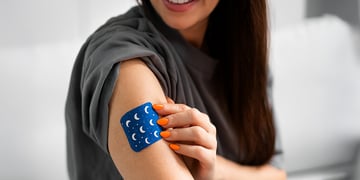
In these tumultuous times, getting a good night's sleep may not be an easy task. But can melatonin, CBD and similar patches for sleep help?
About one in three American adults does not regularly get the recommended amount of uninterrupted sleep necessary to maintain their health.
Unsurprisingly, 8.2% of Americans report using sleeping aids, which can range from prescription medications to over-the-counter remedies like melatonin sprays and valerian root pills.
Transdermal sleep patches were introduced around 2020, and their global market is estimated to be valued at $696.2 million this year. However, despite their widespread use, the effectiveness of sleep patches isn't strongly supported by science.
-
Sleep patches are attached to the skin and release active ingredients like melatonin or valerian root, which promise to improve sleep quality.
-
Skin allows only small fat-soluble molecules like melatonin or cannabinoids to be absorbed, while blocking bigger molecules, such as magnesium and vitamin B12.
-
There is little clinical evidence to support the safety and effectiveness of sleep patches; however, theoretically, they should provide a more sustained release of active ingredients.
-
The evidence for the effectiveness of melatonin, valerian, and CBD for improving sleep is inconclusive.
What are sleep patches?
Transdermal sleep patches are attached to the skin to deliver a specific dose of a drug through the skin into the bloodstream.
The technology is best known for nicotine patches that are approved by the US Food and Drug Administration (FDA) to help people quit smoking, as well as contraceptive patches for pregnancy prevention.
There is only one FDA-approved sleep patch, SANSA. However, it is used to diagnose sleep-related breathing disorders rather than to aid sleep.
Sleep patches containing melatonin dominate the market, while other common ingredients are valerian root extract, cannabidiol (CBD), magnesium, and passion flower.
How do sleep patches work?
Once attached, sleep patches supposedly allow the active ingredient to pass through the skin's layers into the bloodstream.
This allows bypassing the gastrointestinal tract, which–at least in theory–should increase the bioavailability and provide sustained release of the active ingredient.
Within patches, the active compounds are stored in a reservoir that is adhesive to the skin on one side and enclosed with an impermeable backing on the other side. The compounds are either dissolved in a gel or liquid-based reservoir or dissolved into a solid polymer matrix, a technology that holds materials together.
Where do you put sleep patches?
Manufacturers recommend attaching transdermal patches to dry, clean, and hairless areas of the skin.
Because skin greatly varies in thickness, users may want to choose areas with thinner skin, such as the wrist or the tender area behind the ear, to allow better absorption.
Patches may also be attached to the upper arm or lower abdomen, according to the manufacturers.
Do sleep patches really work?
Brian Clark, a certified registered nurse anesthetist at United Medical Education, says there is a lack of hard clinical data to indicate that transdermal patches are as effective.
Skin is not necessarily the most effective means of administering some compounds into the blood system, and it is difficult to tell exactly how much your body is getting out of a patch.
Brian Clark
Some of the most robust evidence comes from a 2009 study that included eight healthy volunteers who used patches containing either 2.1 mg melatonin or a placebo before daytime sleep to resemble jet lag or shift workers' sleep patterns.
The study found that users who used melatonin patches had elevated levels of melatonin in the blood and increased the duration of REM, the phase of rapid eye movement sleep associated with dreaming. However, due to the small study size, its findings should be generalized with caution.
Some experts emphasize that skin is an effective barrier, which blocks not only bacteria but also most drugs from entering the bloodstream. While it allows fat-soluble molecules like nicotine and estradiol, larger molecules, such as magnesium and vitamin B12, are blocked.
Molecules of melatonin and certain cannabinoids are small and fat-soluble; therefore, they may at least theoretically be absorbed through the skin.
Melatonin vs valerian vs CBD
While there aren't many studies evaluating the effectiveness of different types of sleep patches, let's examine the evidence for three common ingredients—melatonin, valerian root, and CBD—when administered in different routes.
Melatonin is a hormone that the body produces, which plays an important role in sleep cycle regulation. Melatonin supplements provide a synthetic version of the hormone, promising to improve sleep duration and quality.
The evidence of melatonin supplementation's impact on sleep is mixed. A 2013 systematic review of clinical trials involving over 1,300 participants with primary sleep disorders found that melatonin supplementation led to modest decreases in the time needed to fall asleep after going to bed, increased total sleep time, and improved overall sleep quality.
However, a 2022 review indicates that melatonin supplementation doesn't appear to be effective in adults with chronic insomnia but might be effective in children and adolescents with the condition.
The American Academy of Sleep Medicine says melatonin can be a treatment option for some problems related to sleep timing, such as jet lag disorder and shift work disorder. However, it advises against using it for the treatment of chronic insomnia.
A 2024 review of evidence suggests that valerian appears to be effective in improving subjective sleep quality, which is an individual's own perception and evaluation of their sleep. However, the review emphasises that valerian's effectiveness has not been demonstrated with quantitative or objective measurements.
At the same time, a small clinical trial that involved 16 older women indicated that taking 300 mg of concentrated valerian extract increased the time needed to fall asleep. Again, the study was small in size, and the effects in older women may not necessarily reflect the broader population.
The evidence is similar for CBD, a chemical compound found in the cannabis plant that doesn't produce a psychoactive effect, unlike THC. According to a 2023 systematic review, CBD alone or with equal quantities of THC may be beneficial in alleviating the symptoms of insomnia.
However, the authors noted that there's a need for future studies exploring CBD's effectiveness in patients, specifically with insomnia, using validated subjective and objective measures.
Such findings may not apply when the active ingredients are administered transdermally. In other words, taking melatonin spray or valerian root extract drops may have different effects than patches containing these compounds.
Are sleep patches safe?
Clark says the most frequently reported problem with sleep patches is skin irritation, including sensitive-skinned individuals who can be allergic to the adhesive or ingredients.
"There is also the issue of irregular absorption – the amount of the supplement that your body absorbs may vary individually. Because most of these products are technically supplements, not drugs, they are not regulated as closely regarding quality or labeling," Clark explains.
While there are barely any clinical trials examining the safety of sleep patches, let’s look at the studies evaluating the side effects of individual ingredients when administered in different routes.
Adverse events associated with melatonin use are generally rare, and the most commonly reported events include daytime sleepiness, headache, dizziness, and hypothermia.
Valerian root consumption has been associated with rare liver injury cases, usually when combined with other botanicals such as skullcap or black cohosh. Side effects of valerian root may also include headache, upset stomach, drowsiness, and dry mouth.
The most common side effects associated with oral CBD administration are gastrointestinal symptoms like diarrhea, drowsiness, sedation, and loss of appetite. Most of these side effects were observed when CBD was used in combination with anticonvulsant medications, raising questions about potential drug interactions.
However, it is unclear if patches containing melatonin, valerian root, and CBD would cause the same side effects as observed in the studies examining oral administration of these active ingredients.
Nevertheless, individuals considering trying sleep patches should be aware of potential drug interactions. For example, melatonin may interact with drugs that prevent blood clots, blood pressure drugs, and diabetes medications, among others.
CBD should be taken cautiously with medications that cause sleepiness, such as opioids and antidepressants. There also may be potential interactions with stimulants, the diabetes drug metformin, and certain heartburn drugs.
Discuss the use of any sleep aid, including sleep patches, with your healthcare provider, especially if you have any health conditions or take any medications.
Sleep patches vs pills
Clark says patches can be more comfortable or less harsh than pills or gummies, especially for those who are allergic to taking anything orally at night. However, oral supplements continue to present more dependable dosing and evidence-based efficacy.
Sleep patches may be worth an attempt as an additional measure, yet they cannot substitute effective treatment forms.
Brian Clark
Takeaway
Sleep patches aren't well studied in clinical trials; therefore, there isn't sufficient evidence to support their safety and effectiveness. Moreover, evidence for their common ingredients – melatonin, valerian root, and CBD – is inconclusive when administered orally.
Supplements shouldn't replace prescribed treatments or lifestyle changes necessary to ensure quality sleep. Individuals with chronic conditions or those taking herbal supplements or prescription medications should be especially cautious.
17 resources
- National Heart, Lung, and Blood Institute. Sleep health.
- Sleep Foundation. Sleeping pills: medications & prescription sleep aids.
- Pharmacology, Toxicology and Pharmaceutical Science. Transdermal patch.
- FDA. Want to quit Smoking? FDA-approved and FDA-cleared cessation products can help.
- FDA. Birth control.
- Experimental Dermatology. Recent advances in delivery of transdermal nutrients: A review.
- Metabolism Open. Peeking into the future: Transdermal patches for the delivery of micronutrient supplements.
- Asian Journal of Research in Medical and Pharmaceutical Sciences. An overview of transdermal patches: opportunities and obstacles in modern drug delivery.
- Clinical Pharmacology & Therapeutics. Use of transdermal melatonin delivery to improve sleep maintenance during daytime.
- PLOS One. Meta-analysis: melatonin for the treatment of primary sleep disorders.
- Sleep Medicine Reviews. Efficacy of melatonin for chronic insomnia: Systematic reviews and meta-analyses.
- American Academy of Sleep Medicine. Missing the mark with melatonin: Finding the best treatment for insomnia.
- European Neuropsychopharmacology. Does valerian work for insomnia? An umbrella review of the evidence.
- Cannabis and Cannabinoid Research. Use of cannabidiol in the management of insomnia: A systematic review.
- CNS Drugs. Adverse events associated with melatonin for the treatment of primary or secondary sleep disorders: A systematic review
- LiverTox: Clinical and Research Information on Drug-Induced Liver Injury. Valerian.
- Pharmaceutics. Adverse effects of oral cannabidiol: An updated systematic review of randomized controlled trials (2020–2022).



Your email will not be published. All fields are required.