
The beauty industry is huge, profitable, and sometimes just a bit too confusing. Especially when you’re just starting out and have no experience with what products will work for you. Moringa supplements and other beauty products are in high demand as a nutrient-dense superfood. Despite this, there is limited clinical evidence supporting their efficacy.
The question arises: can these supplements actually help with hair growth, or are they just another beauty industry trick? In this article, we’ll discuss whether moringa is worth considering for your hair routine.
-
Almost every part of moringa can be utilised for health benefits.
-
The moringa plant is used in medicine, nutrition, agriculture, and cosmetics.
-
There are no consistent adverse side effects of consuming moringa, yet some sensitive groups should be wary.
-
Moringa supplements for hair growth are understudied.
What is the moringa plant?
Moringa oleifera, also known as drumstick or horseradish tree, is a tree native to India, though it is now grown almost everywhere in the Southern Hemisphere. Because it grows rapidly and is drought-resistant, it thrives in tropical and subtropical regions.
Moringa is sometimes regarded as a ‘miracle tree,’ as almost every part of the plant is edible and can be used in a variety of products. It's filled with vitamins, minerals, macronutrients, bioactive compounds, antioxidants, and fatty and amino acids, making it a great asset in creating nutritional food alternatives and supplements.
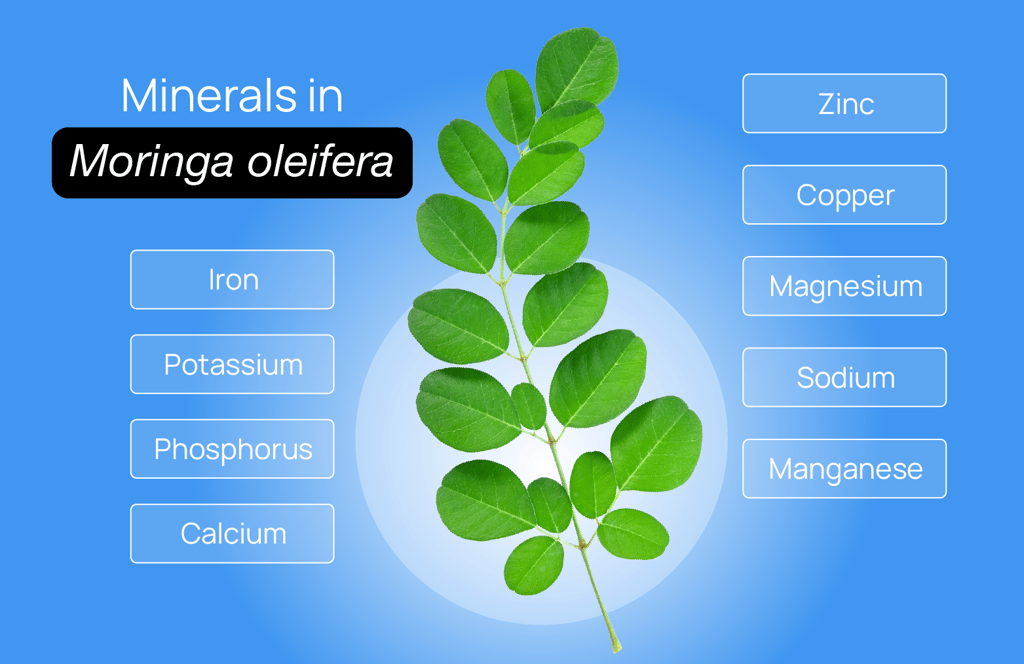
That said, there are a total of 13 recognized species of this plant, with Moringa oleifera being the most well-known and used in hair growth supplements. It stands out due to its potential benefits for the immune system and cellular health.
Benefits of moringa
While the moringa plant is utilized in many areas, including nutrition and cosmetics, its benefits are still being studied. Still, the amount of scientific curiosity it has inspired makes it worth a closer look.
1. Antimicrobial properties
In lab studies, moringa has demonstrated antimicrobial effects against many common pathogenic bacteria. It stores bioactive phytochemicals in its roots, leaves, and seeds, which may inhibit the growth of bacteria, viruses, and fungi.
Altogether, these findings suggest moringa’s potential usefulness in the development of treatments for infectious diseases — an alternative especially relevant due to the increase in antibiotic-resistant bacteria. As such, moringa may offer a more natural substitute or addition to antibiotics, though current findings are limited and human trials are necessary to say for certain.
2. Anti-inflammatory properties
Moringa has displayed significant anti-inflammatory effects on lab injury models. Several in vivo studies reported improved healing, with locally applied moringa extracts closing excision wounds within two weeks.
These findings propose that Moringa oleifera extracts might promote collagen production in the body needed for tissue regeneration. That said, it’s important to note that most clinical trials were conducted in animals, and the results might differ in humans.
Besides this, moringa’s anti-inflammatory effects might be helpful for supporting diabetes, arthritis, and cancer treatments. A study conducted in 2025 showed that Moringa oleifera extracts exhibited moderate toxicity to gastric cancer cells. While the research is new and limited, there’s potential for moringa to complement existing therapies for stomach, breast, and skin cancers in the future.
3. Agricultural properties
Moringa has displayed some agricultural uses as well — different parts of the plant can be applied as a fertilizer for crops. Moringa oleifera extract was used as a growth booster on okra in a four-month field experiment. An increase in height, number of branches, and leaves was recorded, and ultimately, okra produced three times the usual crop yield.
Similar conclusions showed up in studies with other crops, including common wheat, corn, soybeans, and more. Overall, it might become a low-cost and environmentally safe option for agriculture. Small farmers in particular may benefit from it, as moringa is thought to retain the same soil quality over time.
4. Nutritious properties
Filled with beneficial vitamins, minerals, and antioxidants, Moringa oleifera can be considered a nutritious food. Yet, its fresh leaves have an unpleasantly bitter taste, deterring people from eating or cultivating it on a larger scale.
Despite that bitter taste, its leaf powder has the potential to be utilized in the food industry as a natural preservative.
This was successfully demonstrated in a ketchup experiment, which also showed that consumers found ketchup containing moringa powder to be acceptable. This hints at moringa’s potential for use in canned products, pickled vegetables, and beverages in the future.
In South Asian and African traditions, it is primarily used for its medicinal properties. To make it edible, native communities ground moringa leaves and mix them with spices, chocolate, or use them in baked goods. While moringa might increase the nutritional value of most meals, it’s best to use it in flour-based products that help mask the taste.
5. Cosmetic properties
Moringa oils and extracts can be found in many beauty products, including skincare, makeup, haircare, and body care. It’s an especially popular ingredient in moisturizers for dry skin. There are fatty acids that have hydrating effects, as well as antioxidants that prevent cellular damage from UV and strengthen the skin barrier.
Although there aren’t many studies of moringa’s cosmetic properties, existing evidence backs up its nutritious, anti-inflammatory, and moisturizing qualities, which support its value as a skin and hair supplement.
Side effects of moringa
Apart from all the positives, moringa may have some unwanted effects, too. The recommended dose for healthy adults is up to 7 g per day, as larger amounts might cause gastrointestinal complications.
Unexpected side effects might occur when moringa is mixed with other medications. Additionally, some sensitive groups might want to hold off on using moringa, like pregnant individuals, small children, and people with metabolic or endocrine conditions.
Research suggests that Moringa oleifera could have abortifacient qualities — a study on rats recorded an increase in uterine contractions. Findings presumed a 96.6–100% effectiveness in preventing pregnancy and 58–80% effectiveness in fetal abortion.
Still, other studies uphold the idea that consuming moringa during later stages of pregnancy may be beneficial. Iron and various vitamins might increase the amount of hemoglobin, helping with fetal development. High amounts of calcium in moringa might improve milk production needed for breastfeeding.
If you are pregnant or trying to conceive, it is crucial that you consult with a doctor before starting any sort of supplementation, especially moringa. Since studies show conflicting results, its effects on fetal health are still unclear.
Moringa supplements for hair growth efficacy
Although supplementation for hair growth itself is not a bad practice, the motivation behind taking it is often aesthetics. That’s why companies and influencers use this factor as an excuse to make deceptive claims.
Moringa supplements are no exception, since evidence for their hair growth efficacy is limited. Still, Moringa oleifera has an abundance of amino and fatty acids, vitamins, minerals, and antioxidants, which are known to provide general benefits. For that reason, moringa supplements are unlikely to worsen hair condition, yet they may not deliver the expected hair growth results.
Nutrients found in Moringa oleifera that have shown support for hair growth include:
| Nutrient | Supportive health function | Role in hair health | *Amount of M. oleifera leaf powder (per 100 g) |
| Vitamin A | Vision, immune system, cellular health | Improves scalp health, prevents damage | ~16.30 mg |
| Vitamin B3 | Metabolism, energy production | Reduces inflammation, promotes hair growth | ~8.20 mg |
| Vitamin B6 | Energy and blood cell production | Stimulates hair growth, prevents water retention | ~1.70 mg |
| Vitamin B9 | Blood cell production, cellular health | Stimulates hair growth | ~1.20 mg |
| Vitamin C | Immune system, antioxidant, collagen production | Protects hair follicles from damage | ~17.30 mg |
| Vitamin E | Antioxidant, cellular health | Protects hair follicles from damage | ~113.00 mg |
| Zinc | Immune system, cellular health | Stimulates hair follicle formation | ~3.00 mg |
| Calcium | Bone structure, muscle function | Strengthens hair structure, sustains hair color | ~2,003.00 mg |
| Magnesium | Insulin metabolism, muscle function | Cofactor for healthy hair | ~368.00 mg |
| Copper | Iron metabolism, energy production | Improves hair elasticity | ~0.57 mg |
| Manganese | Antioxidant, cofactor for macronutrient metabolism | Stimulates hair growth, prevents UV damage | ~7.81 mg |
| Tyrosine | Protein production | Stimulates hair growth | ~4,000.00 mg |
| Lysine | Protein and collagen production | Stimulates hair growth | ~5,600.00 mg |
| Glycine | Protein and collagen production, antioxidant | Stimulates hair growth, protects hair follicles from damage | ~5,300.00 mg |
| Histidine | Protein and blood cell production | Stimulates hair growth | ~2,200.00 mg |
| Methionine | Protein production, metabolism | Stimulates hair growth | ~1,800.00 mg |
| Linoleic acid | Cell function, metabolism, moisturizing | Stimulates hair growth, improves scalp health | ~500.00 mg |
*Nutrient amount may vary based on the environment
Final thoughts
Moringa oleifera can be given the title of a ‘superfood’ thanks to a wide range of nutrients and its potential uses in medicine, nutrition, agriculture, and cosmetics. Still, most of the research about its proposed benefits is done in labs and on animals.
However, we do know that many of the vitamins, minerals, amino and fatty acids found in moringa are linked to healthier scalp and hair conditions. Thus, it might not be a stretch to assume that it might help with hair growth over time.
That said, moringa supplements aren't a miracle product, and whether they’re worth adding to your hair routine is an individual decision. As with any beauty product, it’s best to try it with caution, set realistic expectations, and understand what claims are actually backed up by science.
FAQ
Is moringa good for you?
Usually, yes. Moringa is highly nutritious and a good source of multiple vitamins, minerals, amino and fatty acids, and antioxidants. However, always consult your doctor for proper use, as moringa may pose risks in sensitive groups or people on medications.
Do moringa supplements help with hair loss?
We can’t say for certain. While the effectiveness of moringa in hair health is understudied, it does have nutrients that have shown support for hair growth.
Is moringa safe during pregnancy?
Moringa use is not recommended for pregnant individuals, as there isn’t enough research on its safety or possible effects on a fetus. Always check with your healthcare provider before adding moringa or any supplement to your routine while pregnant.
14 resources
- African Journal of Pharmacy and Pharmacology. In vivo skin irritation potential of a cream containing Moringa oleifera leaf extract.
- African Journal of Biotechnology. Nutritional characterization of Moringa (Moringa oleifera Lam.) leaves.
- F1000Research. In vitro antitumor capacity of extracts obtained from the plants Plukenetia volubilis (sacha inchi) and Moringa oleifera in gastric cancer.
- International Journal of Food Science. Moringa oleifera is a prominent source of nutrients with potential health benefits.
- International Journal of Molecular Sciences. Moringa oleifera: an updated comprehensive review of its pharmacological activities, ethnomedicinal, phytopharmaceutical formulation, clinical, phytochemical, and toxicological aspects.
- Journal of Agricultural Sciences AGRIEAST. Effect of foliar application of moringa (Moringa oleifera) leaf extract with recommended fertilizer on growth and yield of okra (Abelmoschus esculentus).
- Journal of Public Health Research. Effect of Moringa oleifera supplementation during pregnancy on the prevention of stunted growth in children between the ages of 36 to 42 months.
- Journal of Nutritional Health & Food Science. A scientific hypothesis on the role of nutritional supplements for effective management of hair loss and promoting hair regrowth.
- Molecules Scoping review: evaluation of Moringa oleifera (Lam.) for potential wound healing in in vivo studies.
- Plants. Assessing the usefulness of Moringa oleifera leaf extract as a biostimulant to supplement synthetic fertilizers: a review.
- Plants. Health benefits of uses and applications of Moringa oleifera in bakery products.
- Preventive Medicine Reports. Acceptability of Moringa oleifera leaf powder among healthy adults in the United States.
- South African Journal of Botany. Aqueous extract of Moringa oleifera leaf used in Nigerian ethnomedicine alters conception and some pregnancy outcomes in Wistar rat.
- Turkish Journal of Agriculture. Moringa oleifera: its encapsulation and potential application as a natural preservative in ketchup.






Your email will not be published. All fields are required.