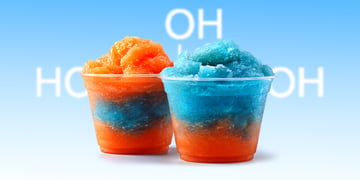
British public health professionals call for more stringent regulation of glycerol-containing slush ice drinks. Here's what you need to know about the potential risks.
In an open letter to the Food Standards Agency (FSA), an independent watchdog for food safety, public health professionals urged the agency to ban the sale and marketing of glycerol-containing slushies to children under the age of 16 and introduce mandatory front-of-pack labelling with clear warnings over glycerol risks.
They also call for enforcing portion size limits and responsible retailing and for delivering a public awareness campaign to protect and educate families.
Slush ice drinks, also called slushies, have a semi-frozen texture in a suspension of liquid and ice crystals. They commonly contain sugar or sweeteners, artificial flavours, and glycerol.
Glycerol, also called glycerin, is a colorless and odorless sugar alcohol commonly used as a sweetener in the food industry in products marketed as 'sugar-free.' Because it prevents the ice from fully freezing, glycerol helps maintain the slush effect in the absence of a high sugar content.
A recent campaign launched by the FSA warned parents against giving slush ice drinks containing glycerol to children under the age of 7. The agency recommended that children aged 7 to 10 have no more than one 350ml slushie drink daily.
In the United States, glycerol is categorized as GRAS, short for Generally Recognized as Safe, when used according to good manufacturing practice.
-
British public health professionals call for banning glycerol-containing slush ice drinks in children under the age of 16.
-
Glycerol is a sugar substitute used in ‘sugar-free’ ice drinks. It provides a sweet taste and prevents the ice from fully freezing.
-
Consumption of glycerol-containing slush ice drinks was associated with dizziness, nausea, or headaches in children.
-
In some, glycerol can cause illness mimicking inherited metabolic diseases. The symptoms may include decreased consciousness, low blood sugar, and low potassium levels.
The risks of glycerol in slushies
Dr. Kezia Joy, RDN and medical advisor for Welzo, says glycerol is considered to be safe in small dosages. However, as children have lower body weights, glycerol's side effects occur faster.
When there is an overload on their systems, some symptoms like dizziness, nausea, or headaches have been reported, Joy tells WellnessPulse.
A recent review looked into 21 children who presented to centres across the UK and Ireland who became acutely unwell shortly after consuming a slush ice drink.
The illness mimicked specific inherited metabolic diseases (IMDs), and their most common symptoms included an acute decrease in consciousness, low blood sugar, and low potassium levels. Urine samples of all children contained glycerol.
The authors suggested that consumption of glycerol-containing slushies may cause a clinical syndrome of glycerol intoxication in young children. They recommended that young children, especially those under the age of 8, avoid slush ice drinks with glycerol.
In her practice, Dr. Maria Knöbel, a GP and an international board-certified specialist in lifestyle medicine, encountered a case of a 6-year-old who experienced severe nausea and confusion after an hour after taking a blue raspberry slushie, putting his parents in a panicking state.
She says children's incomplete liver functioning processes glycerol at half the rate of an adult. This makes a harmless snack a nightmare for the metabolism.
The standard slushies of 3-5 grams overwhelm their systems, causing spikes in blood sugars which simulate diabetic crises.
The reason parents fail to notice the connection is that the symptoms begin to appear 45-90 minutes after, when the treat is forgotten.
Dr. Maria Knöbel
What are glycerol-free alternatives to slushies?
Luckily, there are healthy alternatives to slush ice drinks that can provide a refreshing effect and soothe the sweet tooth.
Joy says homemade fruit smoothies made from whole fruits and low-fat yogurt provide natural sweetness along with fiber, vitamins, and minerals.
These are not only hydrating but also support better energy balance than sugar-laden slushies.
Infused water with berries, cucumber, or citrus slices is another safe and refreshing option. Joy says parents can also prepare homemade ice lollies from diluted fruit juice, giving children a fun, cooling treat without unnecessary additives.
The takeaway
British public health professionals recommend banning the consumption of slush ice drinks that contain glycerol in children under the age of 16 due to health risks. There are documented cases of glycerol causing illness that mimic inherited metabolic illnesses.
4 resources
- Chemical Engineering. Glycerol.
- Food Standards Agency. Summer slush warning: Glycerol in slush ice drinks unsafe for children under 7 and should be limited for children aged 7 to 10.
- Archives of Disease in Children. Glycerol intoxication syndrome in young children, following the consumption of slush ice drinks.
- FDA. Glycerin.






Your email will not be published. All fields are required.