Losing weight is hard. The problem goes beyond pure willpower, as some people experience stronger cravings than others, making weight loss a challenging battle. However, with GLP-1 receptor agonist medications potentially reducing unwanted thoughts about food, weight management strategies are beginning to change.
Still, not everyone is willing to hop on the weight loss medication wagon, so we look for alternatives. Are there any over-the-counter supplements that may do anything even remotely similar? In this article, I explore Gentle Patches (formerly known as GLP-1 patches) and what you can realistically expect.
What are Gentle Patches?

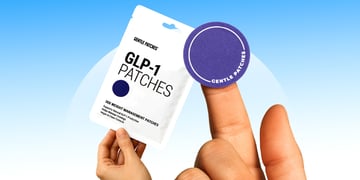
Gentle Patches are transdermal patches marketed as a ‘natural’ way to stimulate GLP-1 production and support weight loss. The brand previously used ‘GLP-1 patches’ as its name, but changed it to better reflect the product’s intended purpose. Now, you will find the brand name (Gentle Patches) and the main ingredient, berberine, mentioned on the package.
The formula includes:
- Berberine extract
- Cinnamon extract
- Green tea extract (EGCG)
- Vitamin B complex (B1, B2, B3, B5, B6, B12)
- Chromium
- L-glutamine
Some of the proposed benefits of Gentle Patches include:
- Weight loss support via reduced cravings
- Bloating reduction
- Energy increase
- Mental health support
Since this is a transdermal patch, it is designed to potentially deliver the ingredients continuously into the bloodstream. However, we lack data on whether this method can efficiently administer all the active ingredients.
Can berberine help you lose weight?
Berberine stands as a main ingredient in Gentle Patches. While berberine for weight loss is a trending topic, studies have shown mixed results.
A 2022 review suggested berberine may help reduce body weight and body mass index (BMI), but mostly in studies using higher doses (over 1 gram daily) and lasting more than two months. Even then, many of the studies were considered low quality.
Meanwhile, a 2020 meta-analysis found no significant effect of berberine on body weight or BMI, but did find an effect on the waist-to-hip ratio.
So, while the data is intriguing, we would need more clinical trials to assess the effects of berberine for weight management.
More importantly, most studies examined oral berberine supplements, not transdermal patches. There is no direct evidence showing that berberine delivered through the skin meaningfully leads to clinically significant weight loss.
There is also the question of dosage. In clinical trials showing berberine’s potential metabolic effects, participants typically consumed standardized oral doses. With a transdermal format, we simply do not have robust human data confirming how much berberine actually enters the bloodstream, or whether it reaches levels associated with measurable weight changes.
What about the other ingredients?
The remaining components in Gentle Patches are frequently found in metabolic and energy-support supplements.
- Green tea extract (epigallocatechin gallate or EGCG) has been studied for its role in fat oxidation and thermogenesis. While it may provide a small metabolic lift, the effects are modest and unlikely to drive dramatic weight loss on their own.
- Cinnamon and chromium are often included for blood sugar support. Some evidence suggests they may help improve insulin sensitivity in certain populations, particularly those with blood sugar dysregulation.
- Vitamin B complex plays an essential role in energy metabolism. But unless someone is deficient, supplementing B vitamins does not automatically translate to significant changes.
- L-glutamine is sometimes promoted for food cravings, yet clinical evidence linking it directly to meaningful appetite suppression remains limited.
In summary, the ingredient list includes compounds with potential benefits, but their overall effect may be minimal. Moreover, the dosage and delivery method differ, making it even harder to say whether this product may have similar effects to those seen in clinical trials.
Safety of Gentle Patches
The company states that Gentle Patches are produced in facilities compliant with Good Manufacturing Practice (GMP). That signals adherence to recognized manufacturing quality systems. Additionally, according to the seller, every batch is third-party tested for purity, potency, and skin compatibility. Independent testing is a positive step toward ensuring the product contains what it claims.
However, it does not mean that the product is suitable for everyone and safe in real-life settings.
For instance, berberine is known to interact with a wide range of prescription medications, including some drugs prescribed for diabetes and blood thinning. Cinnamon, on the other hand, may cause a rash where it touches the skin.
It is best to consult your healthcare provider to ensure you can use Gentle Patches, especially if you are taking any medications.
Bottom line
While the ingredient list for Gentle Patches (formerly GLP-1 patches) seems promising, especially with the bold claims you see on their official website, the true results may not match the expectations.
Although the active ingredient list has been at least somewhat studied for weight management, appetite, or blood sugar control, the findings are mixed or show only a small difference.
Weight loss can be achieved via creating a consistent caloric deficit, so even if you are using Gentle Patches or similar products, it is advisable to be mindful of your overall diet and exercise routine. If you are struggling to lose weight, seek professional help for further assistance.
11 resources
- National Center For Complementary and Alternative Medicine. Berberine and weight loss: what you need to know.
- Metabolism Open. Peeking into the future: transdermal patches for the delivery of micronutrient supplements.
- Frontiers in Nutrition. The effects of berberine supplementation on cardiovascular risk factors in adults: a systematic review and dose-response meta-analysis.
- Complementary Therapies in Medicine. Effects of berberine and barberry on anthropometric measures: a systematic review and meta-analysis of randomized controlled trials.
- Clinical Nutrition. Therapeutic effect of high-dose green tea extract on weight reduction: a randomized, double-blind, placebo-controlled clinical trial.
- Annals of Family Medicine. Cinnamon use in type 2 diabetes: an updated systematic review and meta-analysis.
- Biological Trace Element Research. Effect of chromium supplementation on blood glucose and lipid levels in patients with type 2 diabetes mellitus: a systematic review and meta-analysis.
- Inflammopharmacology. The effect of glutamine supplementation on serum levels of some inflammatory factors, oxidative stress, and appetite in COVID-19 patients: a case–control study.
- Frontiers in Psychology. Food craving: new contributions on its assessment, moderators, and consequences.
- The Permanente Journal. B vitamins: functions and uses in medicine.
- Cureus. Quieting "Food Noise": How GLP-1s and Mindfulness Rewire the Default Mode Network (DMN) and Reward Circuits.





Your email will not be published. All fields are required.