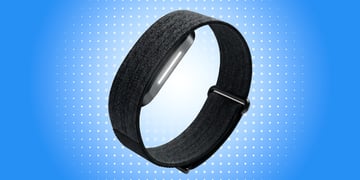
Wearable health trackers have evolved beyond simple step counting, now offering countless data points you can track. But let's be real: most of them are bulky or fall short on features.
Hume Health, creator of Hume Band 2.0, claims to offer the best of both worlds: a slim, barely-there band that packs all the sought-after features. So, is it really the best deal on the market right now?
In my Hume Band 2.0 review, I share my insights regarding this product and compare it to other popular options.
Quick overview of Hume Band 2.0
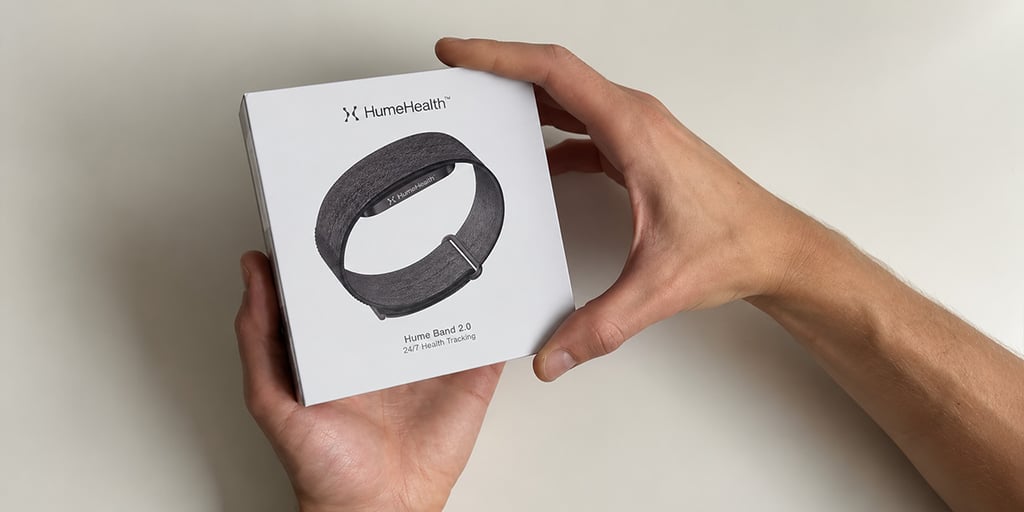
Before we go into more details, I prepared a quick overview of what Hume Band 2.0 is:
| Key tracked metrics | Heart rate, heart rate variability, blood oxygen levels, blood pressure trends estimates, respiratory rate, sleep (including stages, quality, and efficiency), activity levels, movement patterns, strain and recovery, and skin temperature |
| Battery life | Around 14 days on a single charge |
| Water resistance | IP68, meaning it is water-resistant at depths up to 1 meter (roughly 3.2 feet) for 2 hours |
| Sensors | 5 LEDs and 4 photodiodes |
| Price | $199.25 |
| App subscription | Not required, but can be upgraded to the premium version |
What makes Hume Band 2.0 stand out
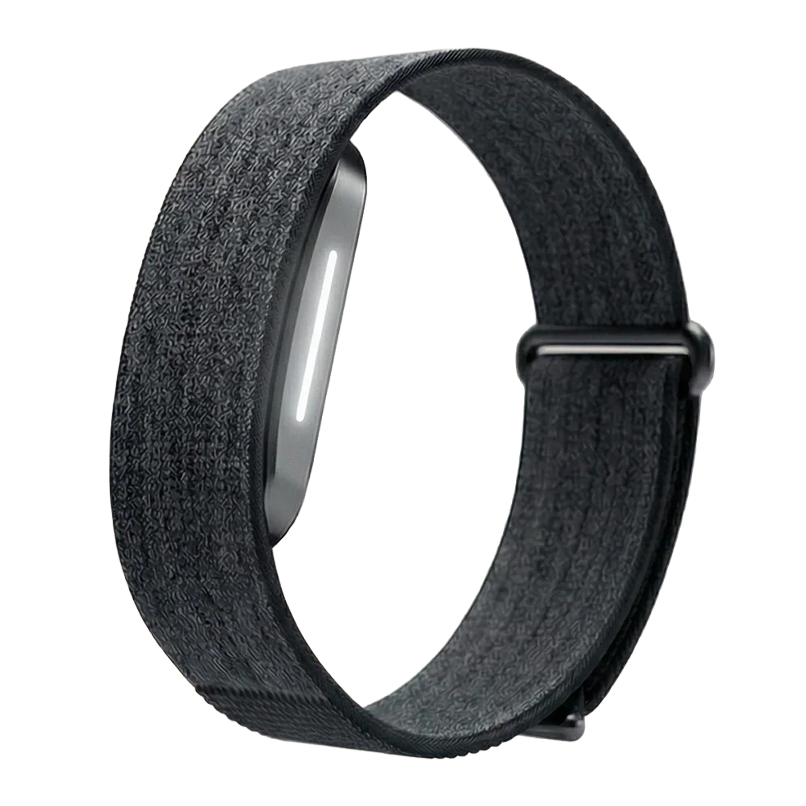
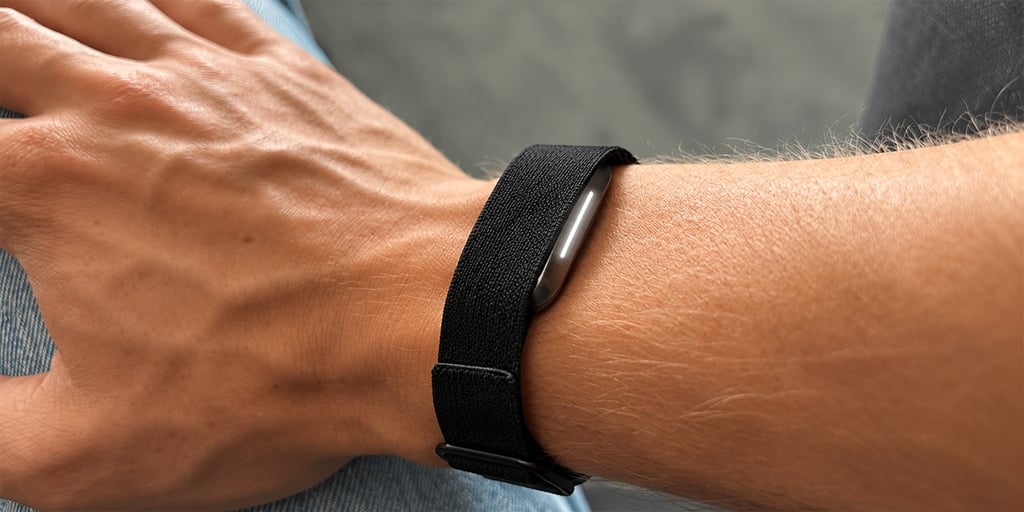
At first glance, Hume Band 2.0 looks minimal, a device you can wear 24/7 without it feeling intrusive. But beneath that simple design is a solid array of sensors that continuously monitor various health metrics.
It tracks your heart rate, heart rate variability, skin temperature, blood oxygen saturation, blood pressure trends estimates, and sleep cycles. The real value, however, comes from how the Hume Health app translates all that data to help you understand your body readiness to handle stress or intense training.
For instance, if your HRV is lower and your skin temperature is slightly elevated, the app might suggest taking it easy, perhaps focusing on mobility or stretching rather than a high-intensity workout. On good days, it’ll encourage you to push harder, using motivational prompts.
If your goal is to improve your wellness and lifestyle, Hume Band 2.0 is a great choice due to the insightful and actionable nudges it provides based on your data. In other words, it feels more like a personal wellness coach than a mere tracker.
Is Hume Band 2.0 the best tracker out there?
Now, even if you want to buy a fitness tracker, you might be wondering if Hume Band 2.0 is actually the best option. For this reason, I compared it with a few similar providers below.
Hume Band 2.0 vs. WHOOP
Both screenless fitness trackers focus on recovery, sleep, and overall body readiness.
Hume Band 2.0 is a clear winner for those who prefer a one-time purchase without ongoing fees, since WHOOP requires a subscription to access any of its features. Though, I should say that some of the more advanced Hume Band 2.0 metrics are only available with a premium version of the app as well.
WHOOP is positioned as a premium option designed for athletes. It also offers slightly better battery life, lasting just over 14 days on a single charge, while Hume Band 2.0 needs to be charged roughly every two weeks.
Hume Band 2.0 vs. Oura Ring 4
Oura Ring 4 is another fitness tracker popular for its minimalistic design. While the most obvious difference can be spotted just by looking at these trackers (Oura is a smart ring), they offer very similar features.
While Oura is often sought after for its aesthetically pleasing design, it comes with a higher price tag, especially if you want exclusive ring finishes. While both generally can be used for free, Hume offers more functionality on their basic version, yet it’s advisable to get the subscription for Oura to access important features.
Both are screenless devices, but since Hume Band 2.0 is worn on the wrist, it may be more comfortable for users accustomed to traditional fitness trackers.
Hume Band 2.0 vs. Apple Watch
If you are looking for a passive fitness tracker only, Hume Band 2.0 is probably the better option, as it has a longer battery life. Moreover, while Apple Watch tracks many of the same health metrics, it falls short in one area: personalized guidance.
Apple Watch functions as a full smartwatch, so you are getting other features that are not available on Hume Band 2.0, including apps, notifications, and calls. This could be seen as an advantage, depending on your needs.
Besides that, Apple Watch can only be paired with an iOS device, while Hume Band 2.0 can be used on Android and iOS phones.
How accurate is Hume Band 2.0?
Accuracy is one of the first things people consider when choosing a fitness tracker.
Fitness trackers estimate metrics like heart rate, steps, and calories burned using sensors and algorithms, rather than directly measuring what’s happening inside your body. This makes them convenient for everyday use, but not as precise as medical-grade devices.
For example, heart rate monitors in a lab or energy expenditure measured via indirect calorimetry provide far more exact readings than a smartwatch. But most people do not have quick access to these, making fitness trackers a suitable substitute.
The key strength of fitness trackers lies not in absolute precision, but in consistency.
Tracking trends over time, like whether your heart rate is improving with exercise or your daily steps are increasing, offers valuable insights for health and fitness. Even if a tracker slightly overestimates or underestimates a single workout, the overall patterns it captures can guide adjustments to exercise routines or activity goals.
In other words, fitness trackers may not match medical-grade accuracy, but they are useful for monitoring lifestyle trends, motivating movement, and identifying patterns over weeks or months.
Hume Band 2.0 can capture a wide range of data points, giving users insight into patterns in activity, heart rate, and energy use, but these should be interpreted as estimates rather than exact values. In addition, it does offer recommendations and personalized insights for longevity.
User reviews
Since Hume Band 2.0 was released quite recently, there aren't many comments on this specific device, so I decided to look at the overall outlook on the company and its previous Hume Band 1.0 model. As always, there are mixed reviews regarding Hume Health online.
Among the positive points, some Reddit users mention the metabolic insights as especially helpful, even helping them to catch conditions such as the common cold. Many users appreciate how this data helps them better plan their workouts, recovery, and rest days.
However, a concern that came up frequently was slow customer support. Several users noted delays in receiving help, with response times sometimes taking over a day.
On Trustpilot, the original Hume Band reviews often appeared alongside feedback for Hume Body Pod, with some reviewers noting that while the Body Pod met their expectations, the band didn't quite reach the same level of satisfaction as a complementary device to the Hume Health ecosystem. But whether the same sentiment of users will remain with Hume Band 2.0, is still unknown.
Final word
Hume Band 2.0 is a solid health wearable designed with longevity in mind. Its unique Metabolic Momentum metric, paired with AI-driven insights, may help you tune your training, recovery, and sleep to support long-term well-being.
The main drawback is its price tag. While the starting price is similar to other high-tech fitness trackers, for the full functionality, you do need to get their premium version of the app.
While it is featured in our best fitness trackers article, whether it is suitable for you will depend on various factors. I encourage you to check out other devices before committing to one. This will help you understand your needs better.






Your email will not be published. All fields are required.