Countless shampoos, conditioners, hair serums, oils, and medications claimed to stimulate hair follicles can quickly add up to a significant expense. Even worse, many of these methods are ineffective, leaving users frustrated and demotivating over time.
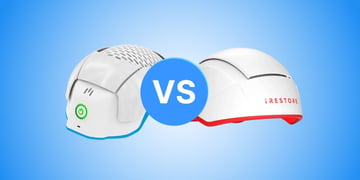
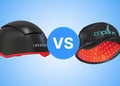
That’s why I’ve decided to review two of the most popular low-level laser therapy (LLLT) hair growth devices of 2026. In this Theradome vs. iRESTORE comparison, we’ll cover key specifications, pricing, benefits, design, and user experiences. So, let’s dive in and find out which device is the best solution for hair loss.
Quick rundown
Before breaking down each device in detail, here’s a brief rundown of the key specifications for Theradome and iRESTORE hair growth caps:
| Brand | Theradome | iRESTORE |
| Price | From $695.00 | From $1 899.00 |
| Available models | EVO LH40 and PRO LH80 | Essential, Professional, and Elite |
| Financing | Financing via Affirm starting $47 per month | Financing via Affirm starting $44 per month |
| Diodes | 40–80 lasers | 120–500 lasers and LEDs |
| Wavelengths | 680 nm red | 625 nm, 655 nm, and 680 nm red (Elite model) |
| Warranty | 1 year with optional extension to 5 years | 3 years with optional extension to 5 years |
| Money-back guarantee | 6 months (extendable) | 12 months |
| Rating | 4.6 | 4.7 |
What is Theradome?
Created by a former NASA Kennedy Space Center Biomedical Engineer Tamim Hamid, Theradome specializes in FDA-cleared laser helmets for hair growth. This American company specializes exclusively on laser-based LLLT devices.
According to Theradome, laser diodes have more potential for stimulating hair follicles compared to LEDs. However, current scientific research on LLLT shows mixed results and there is no conclusive evidence that lasers are definitively more effective.
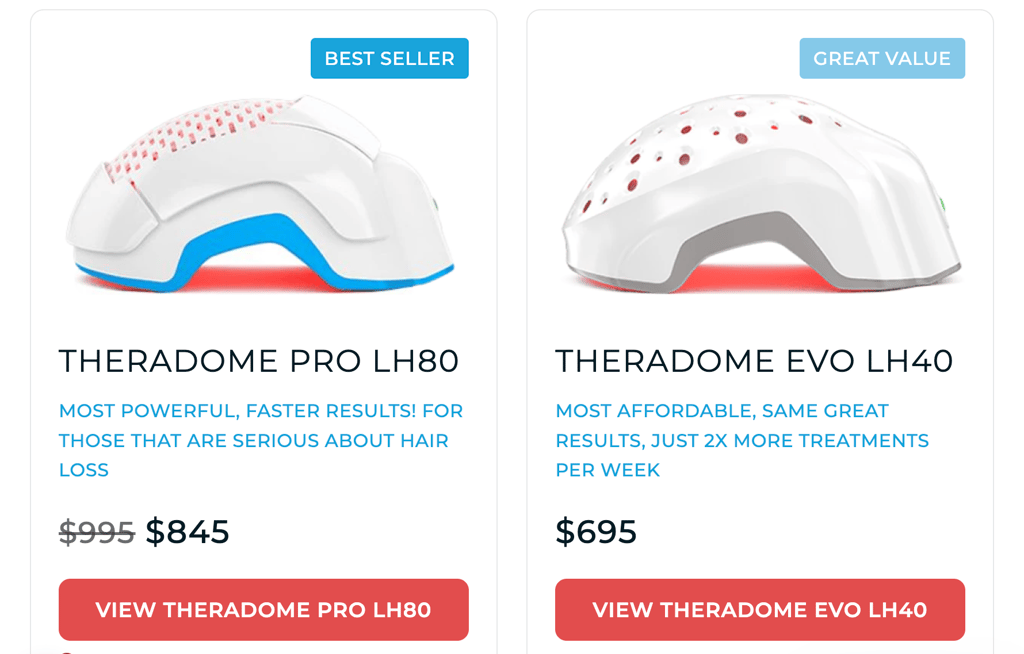
Theradome offers two LLLT helmets designed for hair growth treatments: EVO LH40 and PRO LH80. While the devices look similar at first glance, the PRO model uses twice as many lasers and delivers greater power. Because of that, it requires fewer treatment sessions per week.
A standard session lasts around 20 minutes, and the provider recommends 2–4 treatments per week depending on a model. With regular use, users may notice improvements in hair density and thickness within 30 days. That said, results may vary depending on consistency, scalp condition, genetics, and other external factors.
What is iRESTORE?
iRESTORE is also a well-established wellness company based in the United States. Founded by a team of medical professionals, engineers, and hair care experts, iRESTORE focuses on developing non-invasive LLLT devices for home use.
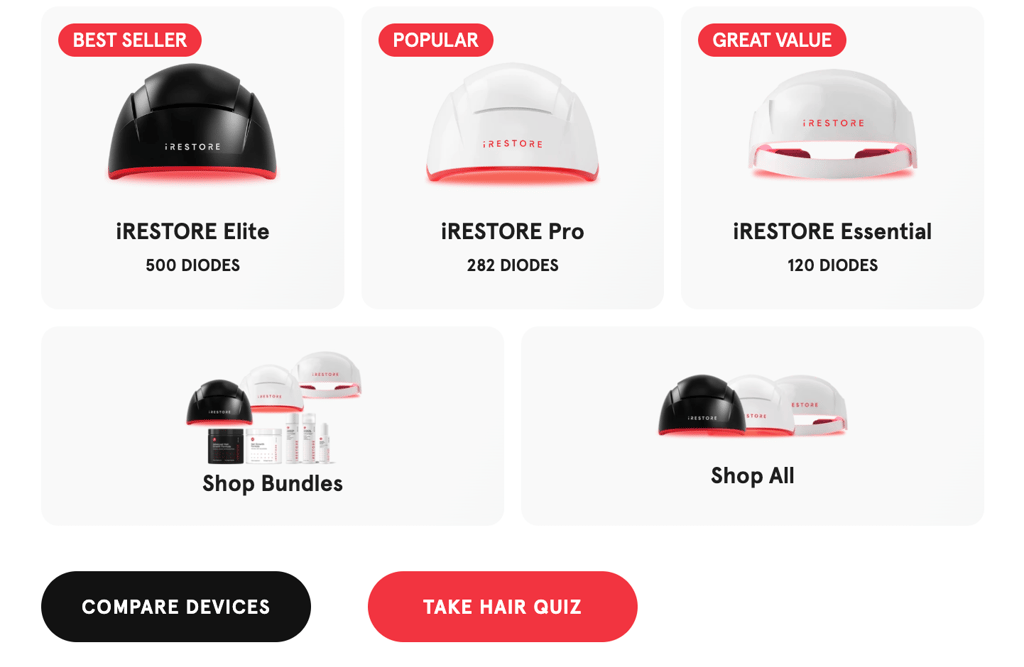
When it comes to hair growth tools, iRESTORE offers a lineup of three helmet devices designed for different customer needs. The models include Essential, Professional, and Elite, with the latter being the most advanced and expensive option.
To support hair growth and thickening, the company recommends 12–25 minutes of daily use depending on the model. Initial improvements may become visible within three months, but timing varies. To reach optimal results, iRESTORE suggests using the device consistently for 12–24 months, as strengthening hair follicle takes time.
Theradome vs. iRESTORE: features
Understanding technical specifications of LLLT devices is both essential and challenging. Most important factors to consider are wavelengths, diodes, and irradiance, as they determine how effectively the device can deliver light to the hair follicles. To make things clearer, let’s take a look at the key features of iRESTORE vs. Theradome.
iRESTORE Elite is the most advanced helmet in the lineup. It uses red light at 625 nm, 655 nm, and 680 nm wavelengths, which are commonly studied in LLLT research. This combination may offer a wider spectrum of therapeutic benefits and potentially improve light distribution across the scalp.
Another standout feature of the Elite model is its diode count. It features 300 lasers and 200 LEDs, for a total of 500 diodes. The device also comes with extended side and back panels that help maximize scalp coverage. Its total power output reaches 2,500 mW, which translates to an irradiance of around 4.90 mW/cm². This level falls within the range often used in clinical hair growth applications.
Of course, iRESTORE Elite comes with a premium price tag, so, for those looking for a more affordable option, the brand offers the Essential model. It features 51 lasers and 69 LEDs, adding up to 120 diodes in total. The device operates at a 655 nm red wavelength and delivers irradiance around 3 mW/cm².
Because the intensity is lower, treatment sessions with the Essential model are longer than those with Elite. However, some recent studies suggest that intensity as low as 2.34 mW/cm² may still produce measurable hair growth results.
Now, let’s look at one of the more advanced Theradome devices — the PRO LH80 helmet. As mentioned earlier, Theradome exclusively uses lasers rather than combining them with LEDs. The PRO model boasts 80 proprietary VL680 lasers that work at 680 nm red wavelengths.
During treatment, the device delivers relatively high fluency, resulting in an irradiance of around 5–6 mW/cm² at contact. This is slightly higher than what the iRESTORE Elite provides. Although Theradome devices use fewer diodes, higher intensity can potentially produce results faster.
Theradome vs. iRESTORE: build and design
In general, Theradome and iRESTORE helmet designs are quite similar. Both brands offer lightweight devices with breathable builds and cushioned interiors for comfortable at-home treatments.
iRESTORE helmets feature plastic shells and padded medical-grade interior. Also, each comes in wired or wireless versions, though the cordless option requires purchasing a rechargeable battery. One notable design difference appears in the Elite model, which allows users to swap padding inserts for smaller or larger sizes.
Another design difference lies in scalp coverage. While the Elite and Professional models include extended side and back panels, the Essential model focuses on the top, hairline, and crown areas. That said, the Essential helmet is less bulky and more affordable.
The Theradome PRO and EVO helmets offer a similar design of plastic exterior and interior foam fitting pads that help stabilize the device. Both devices are adjustable and measure approximately 10.75 × 7.72 × 6.77 inches.
Theradome devices also incorporate a specialized ventilation system. The company uses a 24K gold heat sink alongside IntelliDose technology to maintain safe temperatures. Unlike iRESTORE, Theradome helmets come only in cordless versions and include a rechargeable battery in the package.
Theradome vs. iRESTORE: value for money
As both companies offer several hair growth helmet models, it’s helpful to first compare firstly their price, warranty, and refund policy.
| Model | Theradome PRO LH80 | Theradome EVO LH40 | iRESTORE Elite | iRESTORE Professional | iRESTORE Essential |
| Price | $845.00 | $695.00 | $1 899.00 | $899.00 | $499.00 |
| Warranty | 1 year | 1 year | 3 years | 2 years | 2 years |
| Refund window | 6 months | 6 months | 12 months | 12 months | 12 months |
| Payment via Affirm | Starting at $47/month | Starting at $58/month | Starting at $66/month | Starting at $44/month | Starting at $46/month |
| HSA/FSA eligibility | ✅ Yes | ✅ Yes | ✅ Yes | ✅ Yes | ✅ Yes |
Looking at the table above, iRESTORE clearly provides a wider range of options. The lineup spans from the high-end Elite helmet, to the more budget-friendly Essential model. Theradome prices are rather close to each other, although the EVO model offers noticeably fewer lasers and intensity compared to the PRO LH80.
iRESTORE also includes stronger financial protection. The brand provides 2–3-year warranties at no additional cost, along with a 12-month money-back guarantee. In comparison, Theradome offers a 1-year warranty and a 6-month refund window.
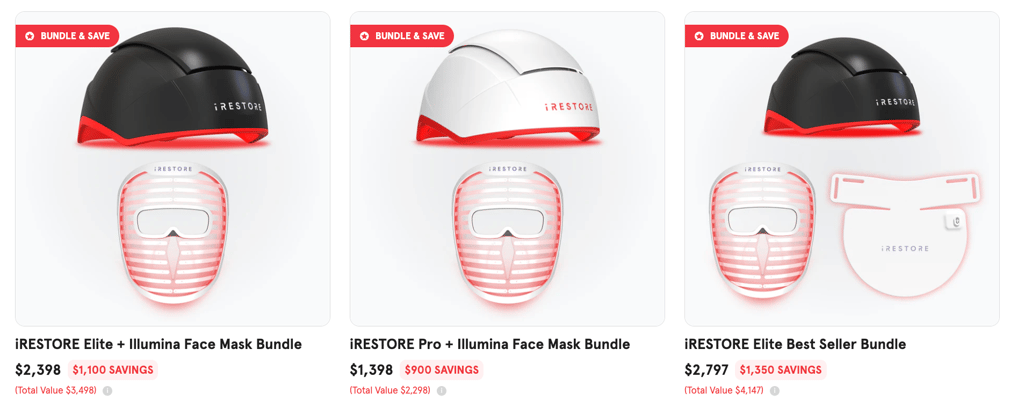
Because Theradome sells only two helmet models, the brand doesn’t provide bundle packages. Though, there are occasional promotional discounts, so it may be worth checking its website. iRESTORE, on the other hand, sells a broader range of products in addition to helmets. As a result, the brand frequently offers bundles, discounts, and other promotions, giving customers more ways to save.
Theradome vs. iRESTORE: customer reviews
The last factor I looked into when comparing Theradome vs. iRESTORE was real-world user experiences with these brands and their helmets. Overall, both companies are well-liked and receive generally positive reviews.
Theradome has a slight edge in ratings, with 4.4 out of 5 stars on Trustpilot and 4.2 on Amazon. Although the total number of reviews is relatively small, many users report noticeable improvements with both PRO and EVO models. Some reviewers note seeing less hair shedding within a few weeks and better long-term results with consistent use.
Common complaints include the high price and the lack of publicly available clinical data. Some EVO users also mention that the lower number of lasers may lead to slower results, compared to the PRO model.
iRESTORE products have significantly more reviews, with ratings typically ranging from 4.1 to 4.4 on Amazon and 3.5 on Trustpilot. Customers frequently praise the brand’s customer support and reliable warranty service.
In general, user experiences vary by model. The Elite helmet receives positive feedback for improving hair thickness and reducing shedding, though many mention its high price. The Professional model is often described as offering good value for money, yet some users report slower results. Meanwhile, the Essential model is praised as an affordable option for early hair thinning, despite its more limited scalp coverage.
How hair growth helmets works
Hair growth helmets, caps, and other similar devices are typically based on photobiomodulation (PBM). Also known as low-level laser or red light therapy, this treatment works by emitting photons that reach hair follicles and stimulate their activity. While it can’t create new hair follicles or repair severely damaged ones, it may support blood flow and cellular health in the scalp.
LLLT devices are generally considered safe, though treatment outcomes vary. Some clinical trials suggest that red light therapy caps may increase hair growth by around 35–37%, while also helping slow hair loss.
Ultimately, results with hair growth helmets depend on several factors, including the device used, genetics, scalp health, and treatment consistency.
Safety considerations
Although LLLT hair growth helmets are considered safe for at-home use, there are a few precautions worth keeping in mind. Some mild side effects may occur during treatment, like scalp redness or initial increase in hair shedding. These reactions are usually short-lived and shouldn’t be worrisome.
However, if you experience stronger irritation, persistent discomfort, or headaches, it’s best to pause treatment and consult a healthcare professional. Certain individuals should avoid using LLLT hair growth devices all together. This includes people who:
- Have an active cancer diagnosis or a history of cancer, as photostimulation may stimulate malignant cell activity
- Are pregnant or trying to conceive, since research on how LLLT may affect fetuses is limited
- Have photosensitivity disorders or take medications that increase sensitivity to light
- Have epilepsy, as flashing light may trigger seizures
- Have thyroid conditions, as LLLT is generally not recommended over the thyroid gland
- Have active scalp psoriasis or severe dermatitis, since LLLT may worsen inflammation
Final verdict
Considering all the categories above, I believe both Theradome and iRESTORE brands are well-worth trying. The ultimate decision depends on the specific model, your expectations, and budget.
Choose Theradome if you’re looking for a device with good build quality and higher light intensity. Many users report stable, consistent results, and the pricing remains relatively reasonable compared with iRESTORE Professional or Elite models.
On the other hand, iRESTORE offers more variety. The Elite model is a high-end device, with advanced features and multiple wavelengths that fall within commonly studied ranges for hair growth. The Professional helmet provides a solid balance between performance and price, while the Essential model is a more affordable option that retains many core features.
In the end, the best device is the one that fits your needs. While user reviews and comparisons can be helpful, the goal of a hair growth helmet is to help you feel more confident and comfortable with your hair appearance.
FAQ
Can I use Theradome or iRESTORE with other hair loss treatments?
Usually, yes. Many users report better results after combining laser therapy helmets with other treatments, serums, or medications. However, it’s always best to check with a healthcare professional first to make sure it’s the right choice for you.
Can multiple people share the same hair growth helmet?
Yes. iRESTORE and Theradome devices can be shared with family and friends, as the device doesn’t touch the scalp directly.
Is a warm sensation normal during hair growth helmet treatment?
Yes, a mild feeling of warmth during treatments with a hair growth helmet like iRESTORE or Theradome is usually normal. However, if the heat becomes painful, stop the treatment immediately, cool the area, and contact a healthcare professional.
5 resources
- The Journal of Dermatological Treatment. Meta-analysis of photobiomodulation for the treatment of androgenetic alopecia
- Lasers in Medical Science. Low-level laser (light) therapy (LLLT) for treatment of hair loss.
- Lasers in Medical Science. Low-level laser therapy for the treatment of androgenetic alopecia in Thai men and women: a 24-week, randomized, double-blind, sham device-controlled trial.
- Facial Plastic Surgery & Aesthetic Medicine. The effectiveness of low-level light/laser therapy on hair loss.
- The Journal of Clinical and Aesthetic Dermatology. A systematic review and meta-analysis of randomized controlled trials of United States food and drug administration-approved, home-use, low-level light/laser therapy devices for pattern hair loss: device design and technology.



Your email will not be published. All fields are required.