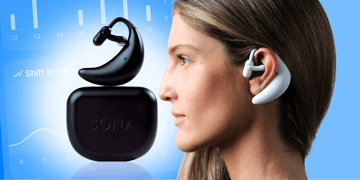
Upon hearing about SONA, I was instantly intrigued by its unique proposition of individualized vagus nerve stimulation (VNS). It makes sense that personalization may affect outcomes, since the nervous system responds differently from person to person. So, SONA, being one of the first devices to use AI-driven algorithms to personalize stimulation, is definitely an interesting product.
But when I started digging deeper, I realised that SONA is still relatively new to the market and lacks online reviews. For this reason, I decided to take a closer look at it, hoping to provide a clearer, more informed perspective for others who are on the fence.
How does vagus nerve stimulation work?
Before we discuss SONA, let’s start at the beginning: what is the vagus nerve, and why do we hear about it so often these days?
The vagus nerve is part of the autonomic nervous system, responsible for many involuntary bodily processes. Some of these include breathing, heartbeat, and digestion. The vagus nerve, in particular, is used to send signals from the brain to organs when the body needs to ‘rest and digest.’
This ‘rest and digest’ state is achieved by slowing down the heart rate, reducing blood pressure, and, in general, promoting calmness and relaxation. In other words, it is the opposite of the well-known ‘fight or flight’ state during which our bodies are under stress to cope with external threats.
Now, while our vagus nerve does that on its own, stimulating it may help our nervous system cope with stress better. And this is no longer just a theory, as emerging studies show that using non-invasive vagus nerve stimulating devices may help support the body’s natural ability to regulate stress. The potential benefits include:
- Sleep support
- General mood improvement
- Higher heart rate variability (HRV)
- Focus and energy support
- Pain reduction, such as migraines
- Gut health support
Currently, non-invasive vagus nerve stimulation is attracting more attention due to increased research. In the past, studies were conducted on invasive devices (implanted surgically), but similar effects were noted in studies on non-invasive options as well. Since non-invasive procedures are cheaper and easier to implement, researchers are increasingly exploring them as a possible alternative.
What is SONA?
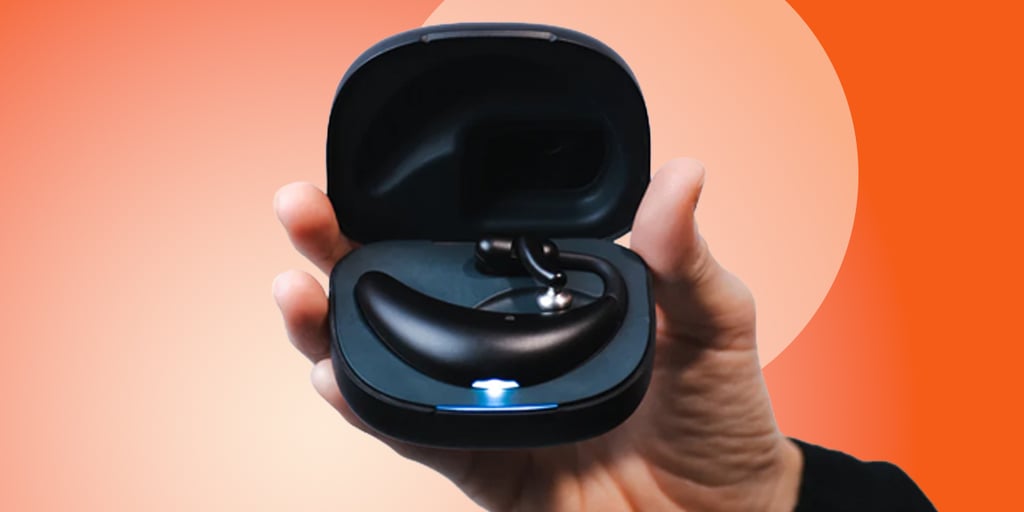
SONA is one of the non-invasive vagus nerve stimulators available for consumer use. It stimulates the external ear using gentle electrical currents. The device targets the nerve's auricular branch in the ear and can be used without medical assistance.
What makes SONA unique is that it tracks heart and breathing rates. And it doesn’t do that merely to track, but to adapt the stimulation in real time. According to the manufacturer, the adaptation helps avoid over- or under-stimulation.
This approach continues beyond a single session. With longitudinal tracking, SONA learns from you and builds personalized protocols that are claimed to be specific to your nervous system.
Who is behind the SONA device?
SONA was developed by MindSpire, a neurotechnology company based in London.
MindSpire’s team consists of neuroscientists and engineers conducting clinical evaluations through NHS-supported trials. At the moment, the results from these trials are not yet publicly available.
What should you know about SONA before the purchase
Since there is no one-size-fits-all approach to any of the problems SONA claims to help with, personalized vagus nerve stimulation sessions do sound enticing. However, the brand’s claims are difficult to evaluate, as no clinical trials have been conducted on personalized vagus nerve stimulation.
While innovative, this device may have effects similar to those of other non-invasive vagus nerve stimulators available on the market. And with the current price of $937.00, it is not the cheapest vagus nerve stimulation device.
SONA: pros and cons
When I was evaluating SONA, these were the main aspects I liked:
- Personalized approach. As the device can track heart and breathing rates, it adapts in real time. This is done, as per the brand, not only to adjust the current session, but also to learn from you and adapt over time with AI-driven tools.
- Easy to use. SONA easily clips onto the ear and is ready for use, unlike some vagus nerve stimulation devices that require learning. The app is straightforward, offering a variety of goals to choose from. It also allows you to see your progress, which can be motivating for some, as consistency is crucial when it comes to vagus nerve stimulation.
- Multi-sensory experience. Users can take advantage of the in-app guided audio and breathing exercises during relaxation sessions.
- Has obtained several certifications. The list of certifications includes CE Mark, UFCC, and RoHS compliance. These certifications demonstrate a commitment to quality and regulatory standards.
- Personal support. The company offers an onboarding call after purchase, followed by weekly check-ins via email or WhatsApp. While the product is easy to use without any support, it is still a nice-to-have.
- No subscription or gel required. Using SONA requires no additional gels or app subscriptions, making it a single purchase product. Similarly, the device is rechargeable and will receive software updates over time.
However, buyers should be aware of these drawbacks:
- Lack of clinical trials. While the brand cites a wide range of clinical trials on its website, these were conducted using other non-invasive vagus nerve stimulators. This is common in the vagus nerve stimulator market, but because each product is built differently, the actual results may also vary. Moreover, the personalized approach, which is the main selling point of the device, has not yet been tested in any clinical settings.
- Steep price. Priced at $937.00 in the U.S. market, SONA is not the cheapest vagus nerve stimulation device out there. This is a one-time purchase price, as no further subscription is needed to use SONA and its application.
SONA vs. similar devices
If you are considering buying a VNS device, you might be wondering how SONA compares to popular alternatives.
| Device | Price | Technology | Worn on | Money-back guarantee | Warranty | Our review |
| SONA | $937.00 | taVNS | Ear | 30 days | 1 year | |
| Pulsetto | $269.00 | tcVNS | Neck | 30 days | 2 years | Pulsetto review |
| Nuropod | $810.00 | taVNS | Ear | 30 days | 2 years | Nuropod review |
| Hoolest | $199 | tVNS | Manual placement on your preferred area, e.g., neck, arm, or leg | 60-day | 1-year | Hoolest review |
Bottom line
SONA stands out as an ambitious vagus nerve stimulation device. Its AI-driven personalization and real-time physiological tracking set this brand apart from the competitors.
Its ease of use, lack of ongoing subscription fees, and strong focus on user support make it an appealing option for those curious about personalized VNS devices.
However, the device’s high price and the absence of clinical trials specifically validating its personalized approach mean that its promised advantages remain largely theoretical.
For early adopters who value innovation and are comfortable investing in personalization features, SONA may be a compelling choice; for more cautious buyers, less expensive alternatives may offer a better starting point.
FAQ
What is the warranty of the SONA device?
SONA is covered by a 1-year warranty. As per the official website, if anything stops working, the company will either repair or replace the device within this period.
Who should not buy SONA?
It is not recommended for people seeking a solution for medical conditions. SONA cannot be used instead of medical care. If you are unsure if SONA is the right fit for you, it is best to consult your healthcare provider regarding vagus nerve stimulation.
Is SONA FDA-approved or FDA-cleared?
No. Since SONA is classified as a low-risk general wellness device, it does not require regulation by the FDA. Non-invasive vagus nerve stimulating devices are not meant to diagnose, cure, or prevent any diseases.
5 resources
- Surgery (Oxford). An overview of the nervous system.
- Brain Stimulation. Non-invasive vagus nerve stimulation in healthy humans reduces sympathetic nerve activity.
- Frontiers in Neuroscience. Critical review of transcutaneous vagus nerve stimulation: challenges for translation to clinical practice.
- Journal of Personalized Medicine. Application of noninvasive vagal nerve stimulation to stress-related psychiatric disorders.
- Gastroenterology Report. Efficacy of vagus nerve stimulation in gastrointestinal disorders: a systematic review.


Your email will not be published. All fields are required.