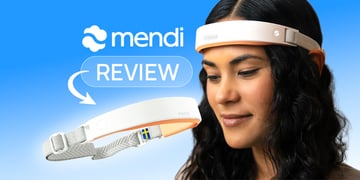
With the world pushing us to move faster, focusing on a single task feels increasingly difficult. Over time, constant stimulation may become exhausting and can lead to reduced attention span. That’s where the Mendi neurofeedback headset presents itself as an intriguing solution.
If you’re not familiar with it, this article is for you. I’ve gathered insights on Mendi’s features, performance, technology, benefits, user feedback, and overall value to bring you this 2026 Mendi review.

Mendi overview
Here’s a quick overview and evaluation of Mendi’s neurofeedback brain training system:
| Price | Description | Technology | Battery life | App services | Warranty |
| $279.20 | Mendi is a neurofeedback device that monitors prefrontal cortex activity and may help enhance certain brain functions | Functional near-infrared spectroscopy | Up to 5 hours |
| 1 year |
What is Mendi?
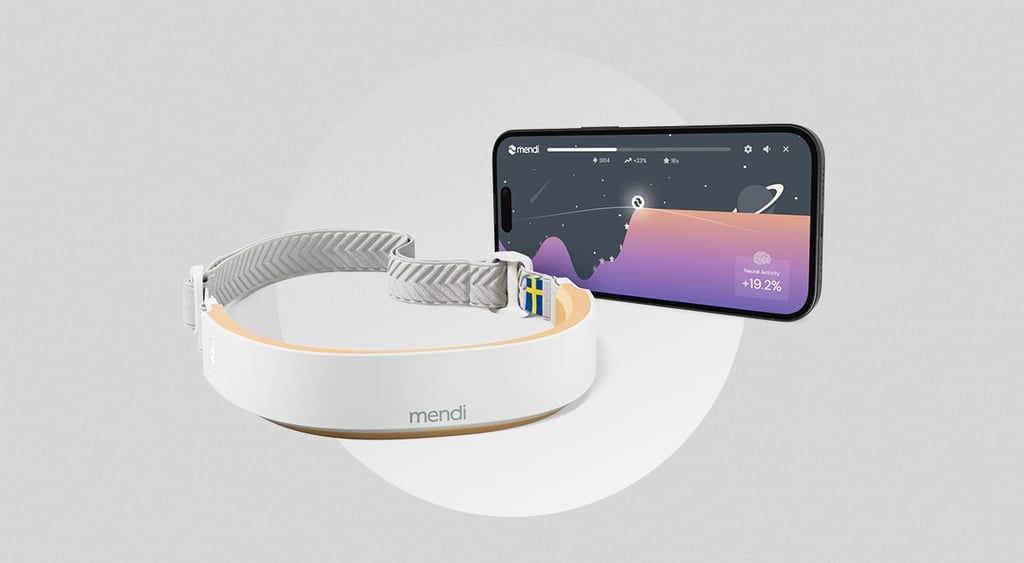
Mendi is a Swedish wellness brand focused on developing products that may support long-term brain health and make cognitive training accessible for everyday use. While cognitive fitness itself isn’t a new concept, Mendi aims to modernize it through gamified tracking of prefrontal cortex (PFC) activity.
The Mendi system consists of a headband and a companion app. The headband is lightweight, doesn’t require gels or wires, and sits comfortably on the forehead without causing irritation. The app is intuitive, featuring a clean, user-friendly interface, and its mindfulness-style game adds an engaging aspect to the treatment.
The company positions itself at the intersection of consumer health technology and behavioral science, citing partnerships with various research institutions. While the scientific part of the Mendi device warrants further scrutiny, the underlying technology does have some moderate evidence suggesting potential benefits.
Mendi review criteria
With this review, my main goal is to analyse the Mendi headset and the technology it uses, to provide up-to-date information. Before making such purchases, it’s always important to collect as many insights as possible, to know what to expect from the product and how it can benefit your health. For that, I set several criteria:
| Technology and scientific validations | Technology Mendi uses and how closely it aligns with the studied parameters |
| Performance and benefits | How Mendi treatment works and what potential health benefits it provides |
| Value for money | Mendi’s price, discounts, and financial protections |
| User experiences | User reviews of the Mendi headband and app |
Technology behind Mendi
The underlying technology of the Mendi headset is based on functional near-infrared spectroscopy (fNIRS) and neurofeedback. Speaking simply, fNIRS is a non-invasive brain imaging method that measures changes of blood oxygenation in the PFC, while neurofeedback provides real-time insight into that activity.
During a session, an fNIRS device shines near-infrared light into the scalp and measures the light that is reflected back. Because oxygenated and deoxygenated hemoglobin absorb light differently at specific wavelengths, the device can estimate their concentration. These changes are connected with the activity of certain brain regions.
Scientific validation
You may wonder where the game aspect fits in. The Mendi headband measures PFC activity, and the app translates that activity into numerical data, which is then typically displayed in the game.
During the game, the user's goal is to make the chosen visual element rise by maintaining focus, calm, and steady breathing. Over time, the brain may learn to associate this behavior with positive consequences, potentially making it easier to repeat in everyday situations.
Games are generally more engaging than numbers or graphs, providing additional motivation and positive reinforcement. Research on fNIRS suggests that individuals can learn to influence specific brain regions and their activity with training, although it depends on certain factors.
A study conducted in 2020 compared the Mendi headset to a laboratory-grade fNIRS device. The results show that the signal quality and patterns are relatively similar, indicating that Mendi may measure brain activity accurately. However, this study has some limitations, including a potential bias, a small sample size, and a lack of independent peer review.
Overall, it’s important to keep in mind that Mendi isn’t a medical device but a wellness product, and its effectiveness may vary from person to person.
Where to start
Using the Mendi headset for the first time is simple, but it may feel a bit overwhelming. So, the package includes a user manual that should be followed closely to ensure your safety, comfort, and the device’s longevity. If you’d like to get familiar with the process before purchasing, here are the basic steps:
- Charge your Mendi headband. It takes around an hour to fully charge, and the battery lasts up to five hours.
- Download the Mendi App. It’s available on both the App Store and Google Play Store.
- Set up the app. Create an account using your email, then turn on the headband and pair it with the app via Bluetooth.
- Put on the device. Position the headband across your forehead so the lower edge aligns with your eyebrows. It should feel secure but still comfortable.
- Start a session. Sit in a comfortable position and stay still. Click the ‘Get started’ button in the app and play the neurofeedback game for 5–15 minutes.
- Keep consistency. Begin with shorter 5-minute sessions a few times per week. As you get more comfortable, increase both the frequency and duration.
- Aftercare. After finishing a session, wipe down the sensors with a damp cloth and store the headband in a cool, dry place.
Benefits of the Mendi headset
Mendi reports several potential benefits, including improved mental well-being, cognitive performance, and overall brain health. According to the brand, consistent use may also support focus, attention span, nervous system regulation, and sleep quality over time.
However, beyond user-reported experiences, Mendi hasn’t published clinical trials to support these claims. Still, because the device is based on fNIRS neurofeedback technology, it’s worth examining what current studies suggest.
| Benefit | Scientific findings | Quality of evidence | Limitations |
| Cognitive performance |
| Moderate | Short study durations |
| ADHD management |
| Low | Very small sample sizes, limited research |
| Emotion regulation |
| Moderate | Mostly proof-of-concept studies |
Mendi pricing
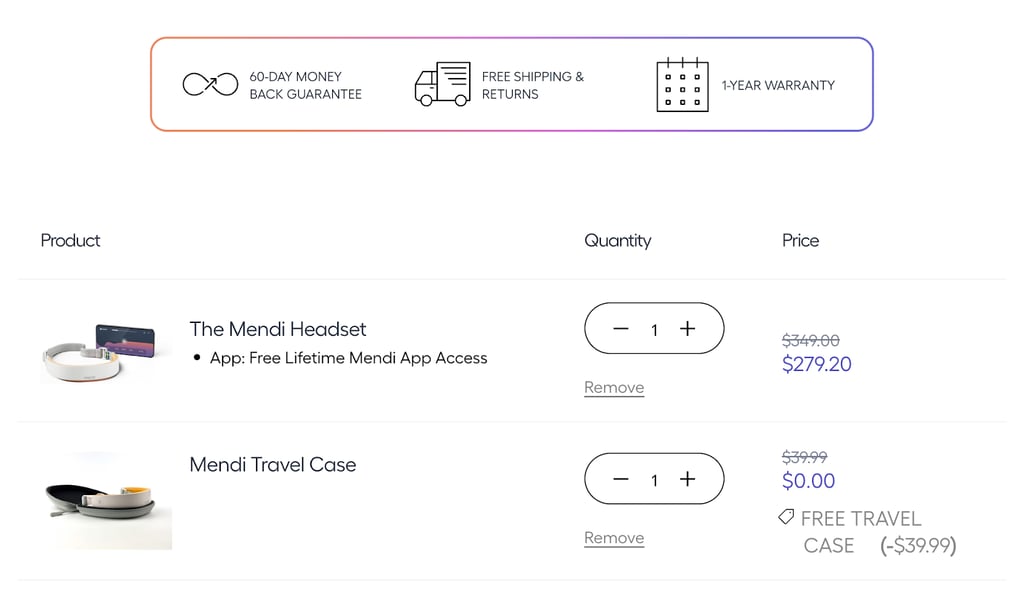
The Mendi headset is relatively affordable compared to many competing devices, currently priced at $279.20. This price includes the headband, a USB-C charging cable, a travel case, and full access to the companion app.
Beyond the included accessories, Mendi also provides solid buyer protections: a 1-year warranty and a 60-day risk-free trial. If you decide to request a refund, you’ll need to return the device along with all add-ons in the original packaging.
Shipping is another noticeable advantage. Mendi offers free international delivery, including to the United States, Canada, Australia, and most European countries.
User experiences with Mendi
User sentiments are an important factor to look into before purchasing Mendi. While many Reddit discussions are somewhat old, a consistent theme among users is improvement in focus, attention to detail, and emotional regulation.
Reported timelines vary, with some users noticing changes within a few weeks, while others require several months of consistent use. The app experience is also frequently praised, highlighting its mindfulness-style gameplay that feels engaging without creating pressure or anxiety.
At the same time, a common complaint is the lack of noticeable results within the money-back guarantee period, along with reported difficulties getting a refund. In response, Mendi has extended its risk-free trial to 60 days.
A small number of users, especially those with a history of mental health issues or trauma, report sometimes experiencing dissociative symptoms during use. These situations appear to be rare, and there is currently no clear scientific explanation. So, these reports should be viewed as individual experiences.
Functional near-infrared spectroscopy vs. vagus nerve stimulation
If you’re exploring health tech to support relaxation and nervous system regulation, it may be worth considering alternatives to Mendi. One such option is non-invasive vagus nerve stimulation (nVNS) — a widely studied approach that targets the autonomic nervous system through the neck or ear. Devices like Pulsetto and Nuropod use this method and are often positioned similarly to Mendi.
| The Mendi Headset | Pulsetto FIT | Nuropod | |
| Price | $279.20 | $269.00 | $900 |
| Technology | fNIRS neurofeedback | Transcutaneous cervical VNS | Transcutaneous auricular VNS |
| Placement | Forehead | Neck | Ear |
| Potential benefits | Sleep, stress, and focus support | Relaxation, sleep support, nervous system regulation | Stress resilience, cardiovascular and mental health support |
| App integration | ✅ Yes | ✅ Yes | ❌ No |
| Warranty | 1 year | 2 years | 2 years |
The key difference is how these devices work. Mendi focuses on brain training and habit-building over time through neurofeedback. In contrast, nVNS devices like Pulsetto and Nuropod stimulate the vagus nerve and may produce results faster.
Nuropod is the most expensive option that claims broader, long-term benefits, while Pulsetto offers a more accessible alternative. Ultimately, if your priority is immediate relaxation, Pulsetto or Nuropod may be worth further exploration.
Bottom line
Mendi may be an appealing solution for improving attention and focus for different age groups. It’s generally considered safe and uses low-energy near-infrared light for short 5–15 minute sessions.
The device combines both the fNIRS neurofeedback technology and behavioral principles to support habit-building, emotion regulation, and cognitive performance. Ultimately, whether Mendi is worth it depends on your goal and consistency — though it’s certainly a solid option to consider.
FAQ
What is the difference between vagus nerve stimulation devices and Mendi?
Non-invasive vagus nerve stimulation devices electrically stimulate the vagus nerve through the neck or ear. In contrast, the Mendi headset uses fNIRS neurofeedback — it doesn't stimulate nerves but instead uses low-energy near-infrared light to measure activity in the prefrontal cortex.
What does the Mendi headband do?
The Mendi headband measures blood oxygenation in the prefrontal cortex and turns this data into a neurofeedback game, which may help support focus, stress regulation, and cognitive performance.
Is the Mendi headset legit?
Potentially, yes. Mendi is based on fNIRS technology and has a published validation study showing its signals are comparable to laboratory-grade devices. However, it doesn’t confirm specific health benefits.
Can kids use Mendi?
Potentially, yes. The technology is generally considered safe with no known severe side effects, and the brand states it’s suitable for users aged five and older.
Is Mendi FDA-approved?
No. Mendi is neither FDA-approved nor FDA-cleared.
8 resources
- Frontiers in Neurology. Functional near-infrared spectroscopy for the assessment and treatment of patients with disorders of consciousness.
- Frontiers in Neuroscience. The potential of functional near-infrared spectroscopy-based neurofeedback—a systematic review and recommendations for best practice.
- Department of Psychology, Stockholm University. Validation of a consumer-grade functional Near-Infrared Spectroscopy device for measurement of frontal pole brain oxygenation – an interim report.
- International Journal of Environmental Research and Public Health. Cognitive training with neurofeedback using fNIRS improves cognitive function in older adults.
- Progress in Neuro-Psychopharmacology and Biological Psychiatry. A brief real-time fNIRS-informed neurofeedback training of the prefrontal cortex changes brain activity and connectivity during subsequent working memory challenge.
- Frontiers in Human Neuroscience. Improving emotion regulation through real-time neurofeedback training on the right dorsolateral prefrontal cortex: evidence from behavioral and brain network analyses.
- Psychotherapy and Psychosomatics. Real-time functional connectivity-informed neurofeedback of amygdala-frontal pathways reduces anxiety.
- Brain Sciences. Improving attention through individualized fNIRS neurofeedback training: a pilot study.





Your email will not be published. All fields are required.